Lawmakers take aim at job listings that ghosted you

 Lawmakers take aim at job listings that ghosted you

Photo of a man sitting in front of a laptop, holding his chin in his hands as if he's waiting for something.

Illustration: Morning Brew Inc., Photo: Unsplash

The government can’t do anything about your Hinge matches—unless they run a company that’s posting about roles that may not actually be open, aka ‘ghost jobs.’ These types of listings, which attract applicants but lead to no hiring activity, are running so rampant that lawmakers across the country are working to get ’em banned, the Wall Street Journal reported yesterday.

Your résumé isn’t chopped; you may just be applying to jobs that employers have either already filled or never intended to fill. You can sometimes recognize them as the listings that sound too good to be true and stay posted for months:

  • Roughly one in five listings advertised on online job boards per quarter are ghost jobs, according to the hiring platform Greenhouse.
  • This phenomenon is reportedly getting worse, but it’s been wrecking egos for a while. About 81% of recruiters said in a 2024 MyPerfectResume survey that their employers posted ghost job ads.

Here’s what lawmakers are doing about it

New York state legislators recently passed a bill (now awaiting the governor’s signature) that would fine employers if they don’t mention expected hiring timelines in their job postings. Lawmakers in New Jersey, Pennsylvania, Kentucky, and California are considering similar reforms.

Why do employers even post ghost jobs?

In the corporate version of “hey sorry I’ve been so busy recently,” an employer might’ve approved an opening, nixed it, and then been slow to remove the job post.

But that’s a best-case explanation. According to the 2024 MyPerfectResume survey, 38% of recruiters post fake jobs to stay relevant on job boards when they’re not hiring, while 36% do it to test their listing’s effectiveness. Meanwhile, some job seekers think employers promote ghost jobs to harvest applicants’ data or to convince investors that the company is growing.

Sam Holland - Oak Bay mayor candidate 2026

Sam Holland - Oak Bay mayor candidate 2026
The Times Colonist Sep 18, 2026 8:48 PM Oct 8, 2026 6:41 PM

Sam Holland is running for mayor in Oak Bay. SUBMITTED

Listen to this article
00:07:09


Sam Holland

Municipality where you are running: Oak Bay

Position you are running for: Mayor

Are you associated with or running as part of a slate? If so, which one?

No.

URLs (web addresses/links) for any websites/social media you are using for your campaign.

Website: https://www.samuelholland.ca

Facebook: https://www.facebook.com/samholland01

Instagram: https://www.instagram.com/samuel_dhol/

Bluesky: https://bsky.app/profile/samuelholland.ca

Do you live in the municipality where you are running, and if so, for how long? If not, in which municipality do you live? What is your connection to the community where you are running?

I have lived, studied, worked, and played in and around Oak Bay since 2011, and studied at UVic. I currently live near Royal Jubilee Hospital.

What is your job/profession, and for how long?

I’ve worked as a nonprofit program developer and community organizer since the pandemic. I’ve started and helped administer multiple successful programs, working with municipalities, the province, and non-profits across BC. I know how to get things done with a team, in a timely manner.

Tell us about your previous elected and/or community experience.

I’ve previously been elected to the UVic University Senate and the Students’ Society Board of Directors. I’ve served as the founding Chair of Better Transit YYJ, and served on multiple other nonprofit boards including the Island Aikido Society and Homes for Living. I’ve always tried to prioritize relationship-building and effective action.

If you have previously held office: What have you accomplished that you’re proud of, and how much did it cost the municipality?

N/A

If you have previously held office: What do you wish the municipality had not done under your watch?

N/A

Why are you running? What is your motivation?

I’m running because Oak Bay deserves leadership on addressing the family doctor and nurse practitioner shortage, providing more housing options, and fixing our infrastructure in a timely way. I’m also concerned about the lack of action on basically every Council and District priority, particularly climate action and affordable housing.

Seniors deserve to be able to age in their community, and not have to move to the Westshore to get access to long-term care. Folks who grew up here shouldn’t have to move away because they can’t find a place to rent.

What would you bring to council?

I’m someone who gets things done. I’m not running to keep a seat warm for the next four years.

I’ll bring a focus on results and outcomes, not just updating plans. A collaborative approach to working with the Provincial and Federal governments. A strong belief in building relationships across economic, cultural, social, and political divides.

In your opinion, what are the three most important challenges facing your community?

1) Infrastructure. We have $300-400 million of immediate infrastructure replacement need. With the current plan, we won’t be caught up on sewer, water, and transport infrastructure until the 2070s. I believe we can and need to do better. These improvements should include a focus on safety, so that everyone can drive, walk, and roll safely in the District. I’m a safety-first kind of person.

2) Housing attainability and affordability. We need more housing options in our region. That includes middle-income public housing, affordable seniors’ care, and new rental homes. I will support these housing options.

3) Lack of access to primary care. Folks are leaving problems to worsen to the point of needing to go to the emergency room, because they don’t have access to a family doctor or nurse practitioner. I will bring a family primary care clinic to the District.

What’s your vision for your community in 10 years?

That Oak Bay continues to possess incredible natural, architectural, and urban beauty, while being a welcoming and supportive community for all.

What is one “big idea” you have for your community?

A municipal clinic for Oak Bay. Let’s bring family doctors and nurse practitioners to our community, and make sure everyone has good access to primary care. A clinic could be built using existing commercial space in the short term, and in the middle term be relocated to the Oak Bay Lodge site, when we get that project built.

If elected, how will you balance your goals with fiscal responsibility?

My goals, in essence, all centre around fiscal responsibility. Inaction is an expensive choice, especially when it’s inaction on fixing pipes and sidewalks, and allowing more folks into the District to share our financial load.

Even a municipal clinic can be done extremely cheaply. Past councils have been extremely fiscally irresponsible, which is why we now have a massive infrastructure problem.

Are you in favour of increased development or densification in your community? How would you balance the need for more housing, as mandated by the province for some areas, with local concerns?

We need more housing options and small businesses to increase the tax base. Put simply, we cannot afford the infrastructure we have, and unless we bring more people to the district, taxes will have to keep coming up, and services will continue to worsen. I’m frustrated by the assumption from the current council that we need to keep cutting back on services. Let’s look for efficiencies, but we can and should welcome more people to Oak Bay. We can’t afford the alternative.

Governing is hard. How do you make decisions when the answers aren’t clear?

We can only make decisions with the information we possess.

Firstly, I will endeavour to build prototyping, iteration, and experimentation into how we do government. Not every decision needs to be a 10, 20, or 50 year decision. We can try things, and if they don’t work, we can do something else. As a region, we are not very good at this kind of learning, and we can do better.

Secondly, when making these decisions, I will always be considering the needs of future residents and future generations, and the people who aren’t in the room.

BC Conservatives Hire an Alberta Separatist and Far-Right Media Figure

 BC Conservatives Hire an Alberta Separatist and Far-Right Media Figure

Leader Kerry-Lynne Findlay commits to a MAGA approach to winning power.

Jen St. Denis 17 Jul 2026The Tyee

Jen St. Denis is a reporter and senior editor with The Tyee. You can follow her on Bluesky, Instagram or TikTok.Our journalism is supported by readers like you. Click here to support The Tyee.

SHARE:


110

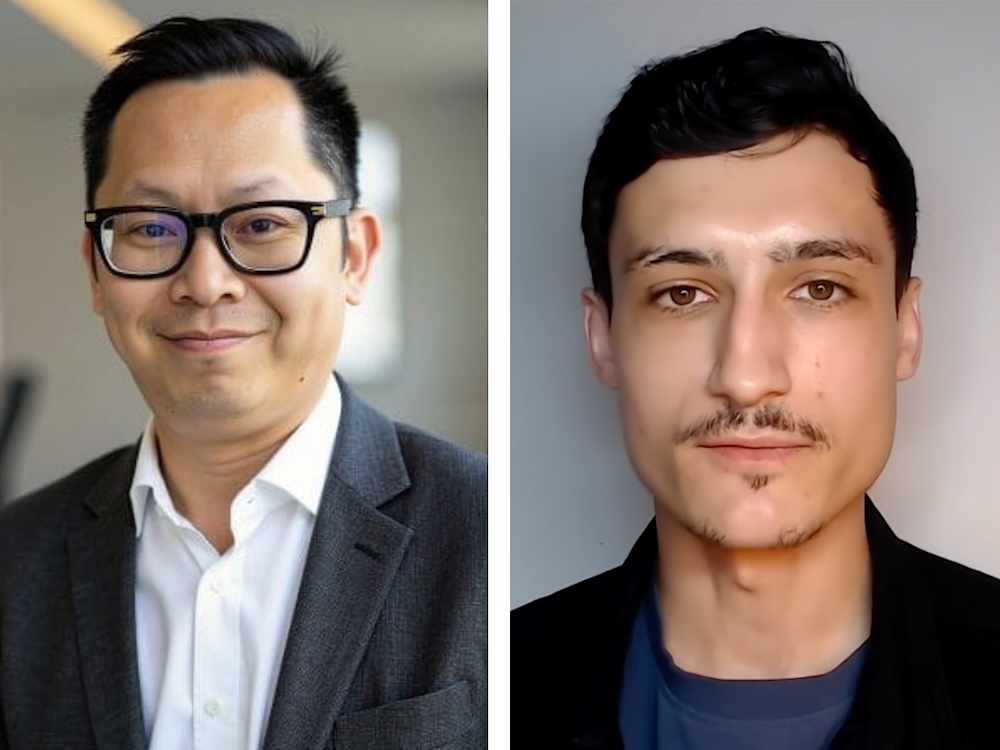
Apollo Chung, left, is the Conservative Party of BC’s director of operations. Cosmin Dzsurdzsa is the party’s caucus communications director. Images via an archived version of the Republican Party of Alberta website and YouTube.


Listen to this article
7 min


The Conservative Party of BC has hired Apollo Chung, a member of the separatist Republican Party of Alberta, as director of operations and Cosmin Dzsurdzsa, a former writer for Juno News, as caucus communications director.

Announcements, Events & more from Tyee and select partners
Inside WestJet Flight Attendants’ Decision to Strike

In a typical month, they work up to 35 unpaid hours.
CONTEST: See Aysanabee and More at ‘Come Toward the Fire’

One lucky Tyee reader will receive four tickets to the closing concert, hosted by Dallas Goldtooth, on Sept. 20 at the Chan Centre.

The BC NDP released the information based on an internal government directory, sending out a press release that criticized the hires as bringing “Trump-style politics” to B.C.

In response to a request for an interview, Dzsurdzsa called The Tyee a “far-left smear outlet” and “literal trash, not journalism.”

Stewart Prest, a lecturer in political science at the University of British Columbia, said the decision to hire Chung and Dzsurdzsa is one more signal the party is abandoning traditional Conservative politics in B.C. and choosing an approach close to the MAGA republicanism of the United States.

The hires come after Kerry-Lynne Findlay, a former Conservative MP who has championed socially conservative positions, won the B.C. Conservative leadership race on May 30.

“This is not a coincidence or a one-off,” Prest said. “This is very much a deliberate strategy at this point — that’s clear.”

Critics inside Conservative politics have been pointing out Chung’s connection to Findlay’s campaign for months. On April 28, Anthony Koch — a Conservative strategist who was part of the Conservative Party of BC team during the 2024 provincial election — posted questions about Chung’s role inside the Findlay campaign.

“Want to know who KLF’s de facto campaign manager is right now? Meet Apollo (a.k.a. Paul) Chung,” Koch posted. “Someone should ask Ms. Findlay if using ‘B.C. talent’ includes hiring an Alberta Separatist.”

Koch made the comments as one of Findlay’s opponents, Caroline Elliott, was criticized for hiring Ontario-based political strategist Kory Teneycke.

After the leadership vote results were announced, a video posted to Facebook showed Findlay’s raucous after-party at a hotel, with guests appearing to chant Chung’s name.

Prest said the party’s decision to hire Chung shows a divide between the B.C. and federal Conservatives. Federal Conservative Leader Pierre Poilievre has defended a united Canada as the Alberta separatism movement agitated to hold a referendum.

The Republican Party of Alberta has developed a “five-step plan to achieve Alberta’s separation,” and its leader, Cameron Davies, has travelled to the United States to drum up support for an independent Alberta from Donald Trump-aligned politicians and officials.

While other figures inside the Alberta separatist movement have accused Davies of supporting Alberta’s absorption into the United States as the “51st state,” Davies has denied this.

“I think it is not an easy one to explain away, because for those who are truly committed to the idea of a strong and united Canada with Alberta as an important component within the federation, it really shouldn’t be possible to find common cause to work with someone who takes the other side of that debate,” Prest said.

“It’s a pretty cut-and-dried question. Do you think Alberta should be part of Canada or not?”

Chung was listed as the party’s executive director on its website and was the financial officer for some candidates.

And as recently as 2021 he was a constituency assistant for current NDP Finance Minister Brenda Bailey.

Dzsurdzsa has held several jobs for right-wing media outlets. In 2019 he was working at the Post Millennial when Canada’s National Observer reported he’d previously worked for Free Bird Media, a blog that platformed white supremacists Richard Spencer and Faith Goldy.

The National Observer also reported that Dzsurdzsa had written for Russia Insider, a site that had been described as “propaganda” for the Russian government by the BBC and Newsweek.

Following publication of the National Observer story, the Post Millennial said it had cut ties with Dzsurdzsa.

Prior to being hired by the Conservative Party of BC, Dzsurdzsa was working for Juno News, which was previously known as True North News.

Dzsurdzsa recently defended Juno News’ decision to conduct a video interview with Daniel Tyrie, the leader of an organization called the Dominion Society of Canada that calls for deportation of 21 per cent of the country’s population. Tyrie uses the term “remigration,” but extremism experts say it’s more accurate to call the idea “ethnic cleansing” because groups who use the term “remigration” usually focus on deporting non-white people.



Findlay Steers BC Conservatives Hard Right to Her Party’s Perilread more

In his interview with Juno News, Tyrie said he’s “very clear about what a Canadian is.”

“All these groups that established Canada, this ethnic continuity that we’re talking about, these people can be called white people,” Tyrie said.

In a post on X, Dzsurdzsa said having a debate about “remigration” shows “genuine vitality on the Canadian right right now: remigrationists and restrictionists, Alberta sovereigntists and Canadian nationalists. We’re stronger for it.”

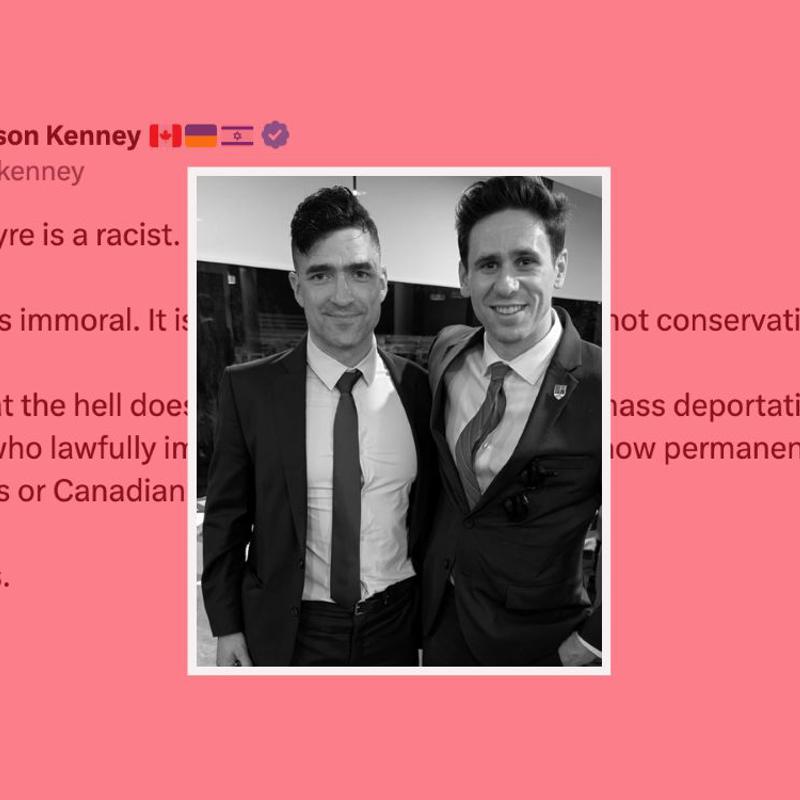
The post was in response to former Alberta premier Jason Kenney, who called Tyrie “racist” and criticized Juno News for interviewing him.

Dzsurdzsa is married to Lindsay Shepherd, a former Conservative Party of BC staffer who was fired after she complained on social media about having to view flags, posters and T-shirts that commemorate residential school survivors.

Dzsurdzsa was not shy about cheering Findlay’s win and gleefully promoted her on X using AI-generated images. He also mused that legacy media appeared to have no influence over the leadership vote result and urged Conservative politicians to “take advantage” of independent outlets rather than speaking with reporters from mainstream media.

Prest noted that it’s outside of journalistic norms for a reporter to promote a specific candidate and then quickly take a job with the party.


A Racist Group Is Trying to Gain Legitimacy in Canadian Politicsread more

Prest said Canada’s political history has shown that when Conservative parties are successful forming government, they focus on the economy and government spending.

“When they embrace these much more radical political projects, then they turn an election from a choice between a fiscally responsible opposition and a government everyone’s tired with, to a polarizing political project versus a government everyone’s tired with,” Prest said.

“And much more often than not, people will give that government a good hard look when the alternative is radical and is pursuing a lot of projects that really aren’t what most people are interested in.”

But if the current form of the Conservative Party of BC is successful in winning the next election, Prest said, the party has given every indication that it will move to implement sweeping changes.

“It will be, I think, a government that moves in the direction of some of the things that we do see in the United States — not just with Donald Trump, but in that Republican world more broadly.” 

ECB head Christine Lagarde 'ready to serve' WEF,

ECB head Christine Lagarde 'ready to serve' WEF, report says


Copyright Copyright 2026 The Associated Press. All rights reserved
By Nathan Rennolds
Published on 23/08/2026 - 14:27 GMT+2•Updated 15:31
ShareCommentsAdd Euronews on Google
The World Economic Forum is currently co-chaired by BlackRock CEO Larry Fink and André Hoffmann, the vice chairman of Roche.


European Central Bank (ECB) chief Christine Lagarde could be set to take charge of the World Economic Forum (WEF) at some point in 2027, a Swiss newspaper has reported.


The Neue Zürcher Zeitung (NZZ) reported over the weekend that Lagarde had been referred to as a "putative candidate" for the position of WEF president during a board meeting near Geneva earlier this week.

Lagarde, who is on the WEF's Board of Trustees, has thanked fellow board members for their confidence in her and said she is "ready to serve," the outlet said, citing unnamed sources.

Tharman Shanmugaratnam, the president of Singapore, is said to have led the succession discussion during the meeting and stressed that the issue should be "resolved internally," per the NZZ.


The WEF is currently co-chaired by BlackRock CEO Larry Fink and André Hoffmann, the vice chairman of Roche.

The NZZ reported that the board had not yet come to a decision on when Lagarde should take over as president, but that Fink and Hoffmann should still preside over the WEF's annual Davos meeting, which is set to take place in January.

The ECB declined to comment on the report, while the WEF did not immediately respond to a request for comment from Euronews.

Lagarde, who has been president of the ECB since 2019, is due to leave her role in October 2027 when her eight-year term draws to a close.

There has been mounting speculation over her future in recent months and whether she could leave the ECB earlier, partly fuelled by Lagarde's own comments on her possibly taking part in the upcoming French presidential election campaign.


Speaking to Euronews in July, Lagarde ruled herself out of making a run for the French presidency itself, however.

"I'm not a candidate for anything, but I'm very keen that Europe is protected, that Europe is the framework within which member states operate, including France," she said.

Apple Intelligence is getting usage limits

 Apple Intelligence is getting usage limits, and here’s what it means for you

The free lunch is over. Apple Intelligence is about to start counting your requests.
By Rachit Agarwal Published September 10, 2026 1:45 AM
Rachit Agarwal / Digital Trends

In its July earnings call, Apple hinted that Apple Intelligence will have usage limits, and heavy users will need to subscribe to iCloud+ plans to get past them. Apple has now revealed more details on the matter.

Starting with the 2027 software update, Apple Intelligence is set for a serious upgrade with broader access to its server-powered features. But there’s a catch. Apple plans to roll out usage limits across many of these tools to keep things fast and reliable for everyone.
What features are we talking about?

The list covers some of Apple Intelligence’s more demanding tools. Siri AI is on there, along with newer AI photo editing features like Clean Up, Extend, and Spatial Reframing. Image Playground makes the cut too, as do the AFM 3 Cloud and AFM 3 Cloud Pro models used inside Shortcuts. Even developers building apps with Apple’s Foundation Models through Private Cloud Compute will have to work within these limits.Rachit Agarwal / Digital Trends
What happens once you hit the limit?

Don’t worry, a maxed-out feature won’t disappear forever; it just needs to cool down. Apple says the feature comes back after a timeout period, and how long that takes depends on a mix of things: which feature you’re using, how complex your request is, how busy Apple’s servers are that day, and Apple’s own policies. If waiting isn’t your thing, Apple will let you pay for expanded access instead.

A similar cap already exists in the Home app. Video summaries from your security cameras are tied to your iCloud+ plan. The 2TB plan gets you one camera, the 6TB plan bumps that to two, and the 12TB plan covers up to five. Apple notes these numbers could change down the road.

Bottom line is that don’t be surprised if your favorite AI feature asks you to wait a bit, or dangles a paid upgrade to skip the line.

Trump admin suspends Microsoft from green card program

 Trump admin suspends Microsoft from green card program.

J.D. Vance speaking at podium in front of sign that says Protecting American Workers

Alex Wong/Getty Images

🪪 Trump admin suspends Microsoft from green card program. Vice President JD Vance said yesterday that the administration is suspending the tech giant from a program that allows its employees with H-1B visas to apply for green cards. Vance accused Microsoft of replacing American workers “with what is effectively foreign indentured servants.” In a statement, Microsoft said most applications were for workers already legally in the US, and they only comprised 1% of its US workforce. Supporters of the H-1B program argue it boosts competitiveness and innovation by hiring workers in high-skill roles that would otherwise be difficult to fill. H-1Bs have long been a target of the Trump administration, which contends that they undercut American workers.—AE

The Hub is getting increasingly desperate to boost the flagging Cons

The Hub is getting increasingly desperate to boost the flagging Cons
Hopes for a right-wing makeover of our country have been spiked in just a matter of weeks by Trumpism

Marc Edge / March 31, 2025 / 6 min read

Canadian PoliticsMedia


Conservative Party leader Pierre Poilievre. Photo from Flickr.


Pity the poor Hub. Mere weeks ago, it appeared that the Conservative Party it cheers on so ardently would cruise to victory in the coming federal election. Canadians had tired of Justin Trudeau after nine years as prime minister and new Conservative leader Pierre Poilievre had rocketed up the polls by promising to defund the CBC and cancel the subsidies our news media have been collecting for the past five years. But then Trudeau resigned and was replaced by the more cerebral Mark Carney, whose acumen puts career politician Poilievre to shame. Donald Trump then slapped massive tariffs on Canadian products, sparking a trade war that has brought us together like seldom before. Given this newfound spirit of nationalism, axing the CBC is about the last thing voters want to sign off on. Worst of all, Poilievre’s right-wing policies hew a bit too closely to Trump’s and he rightly suffers from guilt by association.

This is thus shaping up as a one-issue election, rendering moot much of the groundwork laid by The Hub, which was founded four years ago by two faculty members of the Munk School of Global Affairs & Public Policy at the University of Toronto. The school was controversially named after Barrick Gold founder Peter Munk, who actively promoted far-right policies including environmental de-regulation, in exchange for a $6.4 million donation in 1997. Munk gave it another $5 million in 2006 and $35 million more in 2014, which sparked controversy not only for the $16 million tax credit it somehow returned him, but also for its secret provision that the Munk School take advice from Barrick’s advisory board, which then included former US President George H. Bush and former Prime Minister Brian Mulroney. The Canadian Foreign Policy Institute has argued that Munk’s donations resulted in the school being “shaped in his hard right image.”

The Munk School has become highly influential with its vast resources, sponsoring an eight-month Munk Fellowship in Global Journalism for 20 applicants annually, the raucous biannual Munk Debates and an annual $50,000 award for the world’s best non-fiction book on foreign affairs, which the Halifax Examiner quipped was “part of a larger effort to reimagine Canada as a right-wing American Libertarian fantasy.”

The Hub was founded in 2021 by Munk School faculty members Rudyard Griffiths, a former broadcaster, and Sean Speer, a former advisor to Conservative Prime Minister Stephen Harper, in conjunction with the think tank Centre for Civic Engagement, a registered charity funded by right-wing foundations. Its naked partisanship follows a trend to so-called think tank journalism, under which The Economist quipped that “the divide between having ideas and reporting on them is dissolving.” The Hub has also found a profitable niche in publishing content paid for by clients including Telus, Toronto’s Pearson Airport and the Digital Media Association of foreign streamers, which renders somewhat suspect The Hub’s advocacy on issues affecting them, such as the Online Streaming Act (full disclosure: I have written several columns for The Hub, which also published an excerpt from my new book Tomorrow’s News: How to Fix Canada’s Media).

The Hub is so well funded that it offers an annual policy prize of $50,000 to contestants under 40 and recently donated the $22,248.58 it received from Google under the Online News Act to the March of Dimes. That means The Hub has now hypocritically collected payments under the Online News Act it has been so harshly critical of it because it claims the act has eroded public trust in the news and has harmed journalistic objectivity. The Hub loudly refused to accept earlier government subsidies given out under the $595 million media bailout announced in 2019, even signing a so-called Ottawa Declaration on Canadian Journalism calling on media to stop taking government subsidies. Accepting a government-ordered subsidy from Google and then donating it to charity qualifies as little more than a political stunt that not only diverts funding intended for journalism but reveals The Hub’s partisan stripes even more clearly.

The Hub’s content shows a decided desperation to influence the election in favour of the Tories, including a column by Speer arguing absurdly that Trump’s tariffs aren’t the biggest current threat to Canada, which he claims is instead a supposed national unity crisis. An article that carries the counterintuitive headline “Only Boomers are really concerned about Trump this election” is illustrated with a photo of a senior wearing a hearing aid embracing Carney. It cites recent polling that shows only 16 percent of those in the 18-29 age group think Trump is one of the two most important election issues, compared with 50 percent of seniors, and claims that young Canadians are more concerned with the “affordability crisis, soaring home prices, and a welfare system tilted strongly in favour of seniors.” The Hub’s dreary media podcast Full Press shows even more desperation, even attacking the Columbia Journalism Review recently over its article on the existential threat to Canadian media if Poilievre is elected, claiming it omitted comment from conservatives and complaining that it was labelled Analysis instead of Opinion.

Most revealing of all, however, was a so-called “Deep Dive” by Heather Exner-Pirot and Michael Gullo of the Business Council of Canada (BCC) headlined “Time to move from talk to action on regulatory reform.” It was a barely readable 2,900-word criticism of the 2019 Impact Assessment Act, a sweeping piece of federal environmental legislation also known as Bill C-69 which the BCC has opposed from the start. “We don’t need overregulation,” it argues. “Somewhere along the way, we developed a system that sees the people and companies that build things in Canada—the mines, pipelines, refineries, power plants, ports, railroads, and roads—as adversaries from whom the public needs defending.” Poilievre has promised to repeal the IAA within 60 days if elected. “Our approaches to approving and permitting projects have evolved into an albatross: a burden on those who would build and invest in our country,” argue Exner-Pirot and Gullo, who had a similar 3,000-word column published in The Hub last May. The column included no disclaimer that it had been paid for by the BCC, but given The Hub’s past practice of charging to publish such content, I queried them on the matter only to receive no answer to my email.

When most Canadians talk about regulatory reform, they mean enacting more effective regulations to rein in the power of corporations to gouge us so effectively, as the Trudeau government did recently by removing the so-called “efficiencies” defence from the Competition Act in light of the way its has hamstrung regulators for decades, as illustrated so ably in the delightful new book The Big Fix: How Companies Capture Markets and Harm Canadians. When conservatives like those at The Hub talk about regulatory reform, they mean removing all regulation, all government oversight, and likely even all government itself, as is now being commenced south of the border under the libertarian playbook exposed by the classic 2017 book Democracy in Chains: The Deep History of the Radical Right’s Stealth Plan for America.

How truly deflating it must be for The Hub to have its hopes for a similar makeover of our country spiked in a matter of weeks by Trumpism. It was no doubt licking its chops over what regulations to remove first and which changes in government policy would take priority, but its expected victory lap has reverted to it again weakly trying to help its favoured Conservatives along as they again vainly chase the more prudent Liberals.

Marc Edge teaches Media & Communication at University Canada West in Vancouver. His books and research on Canadian media can be found online at www.marcedge.com. 

Most lucrative college degrees in the US, revealed

Most lucrative college degrees in the US, revealed


Niv Bavarsky

Teenagers who want to be dancers or playwrights: Your parents have new data to wield against you. The median incomes of top STEM majors from elite universities run laps around the salaries of average college graduates, according to government data that the New York Times reported on this week.

The highest-earning degree in the US…is Mathematics at Duke. Its undergraduates earn a median income of $297,029 four years after graduation, according to the HEA Group, which crunched the tax returns of students who graduated during the 2017–18 and 2018–19 school years and received federal financial aid.

HEA also found that:Duke, Carnegie Mellon University, UCLA, MIT, Pomona College, and several Ivy League schools accounted for the country’s 10 highest-earning programs, six of which were computer science. Median incomes started at $217,000.
Nursing majors from some California schools made ~$150,000, landing in the top 100 out of nearly 25,000 bachelor’s programs analyzed.
Among the liberal arts, English majors medianed out at $48,920, but history majors can outearn them by $50,000+.

Zoom out: Though some critics object to an earnings-only assessment of a degree’s success, a new rule could cut federal student loans for undergraduate programs that don’t beat the median high school graduate income of $34,808. Juilliard—whose music program came in under this baseline in HEA’s assessment—said its projected graduate earnings for 2026 would pass this test.—ML 

Economic system of Russia

The economic current system of Russia

Russia's economic system is a mixed economy combining market and state roles, driven by oil and natural gas exports plus mining, manufacturing, and agriculture, now reshaped by Western sanctions since 2022. What type of economic system does Russia have? The 2026 Index of Economic Freedom scores it about 52 of 100 as Mostly Unfree, around 135th globally.

This article is about the current economic system of Russia (2026)

What is the economic system of Russia? The economy of Russia is based on a mixed economy. The country’s economic system combines elements of a market economy and a planned economy.

Russia’s economy, one of the largest globally, is driven by energy exports, mainly oil and natural gas. Other sectors include mining, manufacturing (automotive, defense), and agriculture (wheat, barley). It also has a significant services sector, including IT and retail. Since February 2022, Russia’s economy has operated under extensive Western sanctions following its full-scale invasion of Ukraine, which has reshaped trade patterns and limited access to international financial markets.

No country is purely capitalist or purely communist.


Table of ContentsWhat do the freedom indexes tell about the economic system of Russia?
The Link Between Public Sector Employment and the Economic System of Russia
What do the biggest companies in Russia say about the country’s economic system?
The historical factors that have influenced the economic system of RussiaSources
What do the freedom indexes tell about the economic system of Russia?

For instance, according to the 2026 Index of Economic Freedom, which measures the ability of every human to control his own labor and property, Russia scores approximately 52 out of 100 (As of 2025–2026) and is ranked in the Mostly Unfree category, placing it around 135th globally and among the lowest-ranked European economies.

In a similar way, the Freedom House Freedom in the World 2026 report evaluates the state of political rights and civil liberties globally. Russia gets a score of 12/100 (As of 2026), which qualifies it as Not Free.

Russia is a country where the government controls what people do for political reasons, and people have limited freedom to choose (what, how much, and how to produce, whether to buy or not, selling price, etc.)
The Link Between Public Sector Employment and the Economic System of Russia

An indicator of the extent to which the State is involved in the economy is the number of public sector employees. In Russia, according to ILOSTAT, the most recent available figure for public sector employees as a percentage of the total workforce was approximately 40.6% (2011 survey). A more recent comparable figure has not been published by ILOSTAT. This is substantially higher than the global average of roughly 10%, which is consistent with Russia’s large state-owned enterprise sector.

In the country’s mixed economy, the number of public sector employees as a percentage of the total workforce varies based on the specific policies and practices adopted by the State. Some economic activities are left to the private sector while others are under government control. The bigger the public sector the closer the economy is to being a command economy.
What do the biggest companies in Russia say about the country’s economic system?

The biggest company in Russia by revenue should also be looked at, as well as whether it is a state-owned or private company. Russia’s largest companies by revenue are both state-controlled energy giants: Gazprom and Rosneft each reported revenues exceeding RUB 10 trillion (approximately $110–115 billion USD) in 2024, according to company financial reports. Gazprom is the world’s largest natural gas producer, while Rosneft is Russia’s leading oil company. Both are majority state-owned. Sberbank, also majority state-owned via the Russian government (through the Ministry of Finance), is Russia’s largest bank and a leading financial institution.

Top 10 Biggest companies by revenue in Russia (2023 data)
The historical factors that have influenced the economic system of Russia

The mixed economy system of Russia was caused by a combination of factors, including the collapse of the Soviet Union, the liberalization of the economy, and the introduction of market reforms.

These changes allowed for the emergence of private enterprise, increased competition, and the development of a more open and competitive market system. This has resulted in a more diversified and dynamic economy, with a greater emphasis on private ownership and market forces.

But, there are still a lot of remnants of the centrally planned communist economy. The economy has one of the highest public sector employment shares globally, and its biggest companies are state-owned. This shows how the Russian government still has significant control over the economy and its people.

More than 80 U.S. warplanes have been destroyed or damaged

Jaw-Dropping Scale of Trump’s Secret Military Losses Is Exposed
Harry Thompson
Wed, October 7, 2026 at 4:46 AM PDT
2 min read
Add Yahoo as a preferred source to see more of our stories on Google.
Add Yahoo on Google
2.1k


Evelyn Hockstein / REUTERS


More than 80 U.S. warplanes have been destroyed or damaged in the course of Donald Trump's war on Iran at a cost of more than $3 billion, according to a new congressional report.

The Middle Eastern conflict is now in its eighth month and has cost the Pentagon tens of billions of dollars and the lives of at least 18 U.S. service members. According to the Congressional Research Service, U.S. forces have also lost 81 military fixed-wing or rotary-wing aircraft, including multimillion-dollar drones.

According to their figures, 12 F-15E Strike Eagles have either taken hits or been lost completely, while a state-of-the-art fifth-generation F-35A Lightning II stealth fighter has also been damaged.

A dozen F-15s have been lost or damaged. / Staff Sgt. Corey Hook/U.S. Air Forces Central Command

Some of the losses have not been widely reported, but others have been big news, including the downing of an F-15E Strike Eagle over Iran and three more F-15s in a friendly-fire incident over Kuwait. F-15s cost upwards of $30 million each.


Advertisement


Another eight were damaged during Iranian strikes on Muwaffaq Salti Air Base in Jordan in September. The report notes that the fighters involved in that incident returned to service afterward.

US Defense Secretary Pete Hegseth shakes hands with US President Donald Trump onstage during an event at Sparrows Point Shipyard, in Baltimore County, Maryland, US, October 6, 2026. REUTERS/Eric Lee / Eric Lee / REUTERSMore

There have also been seven KC-135 Stratotankers refueling aircraft either damaged or lost—reported by Forbes to cost $79 million each when inflation is applied to the government's official $39 million price tag.


The list also states that a $240 million MQ-4C Triton unmanned aerial vehicle "crashed in a mishap."

The Congressional Research Service offers a nonpartisan think tank service that provides information to Congress. The report incorporated DoD and CENTCOM information, as well as information from news reporting, to determine U.S. losses.


The figures mark a significant jump from its last report in May, which revealed that up to 42 planes had been damaged or destroyed.

A state-of-the-art F-35 has also been damaged. / Fort Worth Star-Telegram / TNS

While that shows a slightly slower rate than in the war's first three months, it does suggest that the conflict remains hot and dangerous for U.S. service members, and expensive for taxpayers.

In total, the Congressional Budget Office (CBO) said the cost of the damaged aircraft could reach up to $3.3 billion.

Forty-five MQ-9 Reapers have been lost, according to the report. / Patrick T. Fallon/Reuters

The biggest losses from the war are drones. The latest report shows that 45 $30 to $50 million MQ-9 Reaper drones have been destroyed in the fighting. By May, the usable fleet—which is supposed to have a minimum of 189 at all times—had already dropped to 135, Air Force Times reported.

A MQ-4C Triton costs almost a quarter of a billion dollars. / Handout . / REUTERS

Officially, the Pentagon says it has spent $37.5 billion on the war so far, although Democrats and independent observers think that number could be far higher.

The Daily Beast has contacted the Pentagon, White House, and CENTCOM for comment.

Injunction filed to force incoming PQ government to take an oath to the King

Injunction filed to force incoming PQ government to take an oath to the King
Government should 'not be at liberty to freely flout the laws,' lawyer says


Benjamin Shingler · CBC News · Posted: Oct 07, 2026 8:45 AM PDT | Last Updated: October 7


Listen to this article
Estimated 3 minutes

The National Assembly in Quebec City. In 2022, MNAs passed a law putting an end to a requirement to swear an oath to the King in order to sit in the legislature. (Jacques Boissinot/The Canadian Press)


A constitutional lawyer has filed an emergency injunction in an attempt to force the incoming Parti Québécois government to swear allegiance to King Charles.

The application for an interim stay was filed in Quebec Superior Court by the Public Interest Litigation Institute and its founder, Lawrence David.

David said political parties "regardless of their stripes" are "not at liberty to freely flout the laws that apply to all democratic institutions in Canada.


"That is precisely why we are standing up," David, who teaches at the University of Ottawa’s Faculty of law, said in an interview.

"We are taking measures using the legal system, which is precisely what the legal system is there for, to ensure that ... governments respect the law that is applicable to them."


Get more with a free CBC account

Comment on articles, stay in the know with our newsletters and stream more on CBC Gem.
Sign InCreate a free account

The injunction asks the court to immediately suspend a 2022 provincial law that made the oath to the monarch optional for members of the National Assembly. David already filed a lawsuit in August over the same matter.

The latest move comes following Monday's election victory by the sovereignist Parti Québécois.

Could the Parti Québécois actually abolish the monarchy in Quebec?


Premier-designate Paul St-Pierre Plamondon has pledged to move to cut funding to the office of Quebec's lieutenant-governor within his first 100 days in power, as part an attempt to "abolish" the monarchy in the province.

The legal filing argues that if the newly elected MNAs refuse to take the oath to the King, they are not constitutionally qualified to sit in the legislature.

The lawsuit warns that any laws passed by an illegally assembled body — especially a law attempting to abolish the lieutenant governor — would be void, creating an "unprecedented legal crisis."

Department of Justice Seizes Stablecoin Tether’s Bank Accounts

Department of Justice Seizes Stablecoin Tether’s Bank Accounts
Not a great look for crypto.

By Joe Wilkins

Published Sep 25, 2026 5:34 PM EDT
Add Futurism(opens in a new tab)More information


Shutterstock / Futurism

Sign up to see the future, today

Can’t-miss innovations from the bleeding edge of science and tech

Email address Sign Up

Ask any crypto bro for the digital equivalent of the gold standard, and they’ll likely tell you about Tether — though a recent raid by the Department of Justice is throwing that characterization into question.

Fresh reporting by the Financial Times revealed that the US Department of Justice has seized millions of dollars from a collection of bank accounts and crypto wallets linked to the fintech company Tether Limited.

The company is famously the issuer of the “stablecoin” Tether, a digital currency meant to maintain a relatively stable value based on the exchange rate of the US dollar. The company Tether was one of the subjects of a massive FBI probe, which discovered an unlicensed payment processing business, Capstone, that is now alleged to have placed hundreds of millions of dollars worth of illegal transfers.

The convoluted case also involves Bitfinex, a cryptocurrency exchange owned by Tether’s parent company, iFinex.

Basically, the payment processor Capstone is alleged to have misrepresented itself as an information technology firm in dealings with legitimate banks like Wells Fargo and JPMorgan Chase. In reality, according to the allegations, the company was engaged in a massive fraud scheme, in which people affiliated with Capstone misrepresented themselves as FBI agents in order to scam the elderly, whose money was then converted into crypto, Reuters reported.

Based on the information available so far, the two crypto companies seem like unwitting bystanders rather than willing participants. Tether’s connection came by way of a relationship with a legal off-shore firm called EQIBank, which handled the flow of Tether’s money through Capstone.

In statements to the FT, both Tether and Bitfinex insisted they are merely “customers of EQIBank,” and had “no knowledge of the fraudulent conduct by Capstone alleged by the DoJ.”

The entire thing shows how sketchy the crypto market still remains in 2026, even as it holds $140 billion of US government debt. Even with support from the president of the United States, Tether is clearly struggling to tap into the most rudimentary financial infrastructure.

Tether’s entire connection with EQI — and therefore with the alleged fraudsters at Capstone — came about as the crypto firm tried desperately to open a bank account with the Development Bank of Singapore, a major institution in the global financial space.

According to the FT, Tether offered to make a handsome investment in EQI if it could manage the “successful opening of at least one bank account” with the Singaporean financier. That failed to materialize before the FBI probe blew everything out in the open, and as the Development Bank of Singapore told the FT: “DBS has never had appetite for association with illicit funds or inappropriate dealings.”

More on crypto: Eric Trump Has Lost $600 Million of Daddy’s Money Betting on Crypto

Wikimedia Detected Activity From OpenAI’s ‘Rogue’ Agents

 Wikimedia Detected Activity From OpenAI’s ‘Rogue’ Agents Across Its Platforms

The nonprofit says the agents made unauthorized edits, probed its services, and may have contributed to a partial outage.
BY BRUCE GILPUBLISHED OCTOBER 6, 2026, 12:30 PM ET

READING TIME 3 MINUTES

© Shutterstock
READ LATER COMMENTS (18)

It seems like every week there’s a new story about OpenAI agents messing with another part of the internet. This week, it was Wikimedia’s turn. The nonprofit behind Wikipedia said in a blog post Monday that its services were affected by OpenAI’s “rogue” agents.

The Wikimedia Foundation said it conducted its own investigation and found activity on its platforms that it believes came from agents operated by OpenAI. The unauthorized bots made edits to Wikimedia wikis, unsuccessfully attempted to exploit a public note-taking tool, and generated heavy traffic that may have contributed to a partial outage of one of its data services.

Wikimedia said it found no evidence that its systems or data were compromised. Still, the nonprofit said it was concerned about what could have happened, the difficulty of investigating these incidents, and “the growing risks of agentic AI activity.”

The blog post follows a wave of reports involving OpenAI agents accessing or targeting third-party websites and services without authorization.

Scrutiny over rogue AI agents really kicked into high gear this year after Hugging Face disclosed in July that it had detected and responded to an intrusion carried out “end to end” by an autonomous AI agent system. OpenAI came forward several days later to acknowledge that its models were behind the compromise.

The AI company said the agents, which were undergoing internal cybersecurity evaluations, circumvented guardrails meant to keep them from the internet. They exploited vulnerabilities, gained internet access, and eventually compromised parts of Hugging Face’s infrastructure while trying to complete their assigned tasks. OpenAI is now facing a lawsuit over the breach.

OpenAI has since disclosed other incidents in which its agents accessed third-party systems without authorization. In June, for example, an OpenAI agent gained unauthorized access to an Australian government Medicare statistics portal.

In Wikimedia’s case, the nonprofit said it identified edits to its wikis that it believes were made by OpenAI agents. Almost all were test edits made in “sandbox” areas and were not published to pages visible to general readers. However, some agents also edited the configuration of a citation tool. Wikimedia said it believes those changes “were intended to misuse this tool as a proxy for fetching data from remote services.”

For context, Wikimedia allows bots to make edits, but only when they are disclosed and approved by the community.

Wikimedia also said OpenAI agents made unsuccessful attempts to compromise Etherpad, a public note-taking tool it hosts. The agents also tried to use the service as a proxy to gather data from other websites.

Finally, Wikimedia said agents it believes were operated by OpenAI made millions of automated requests to its public APIs, crawled millions of pages, and made hundreds of thousands of queries to the Wikidata Query Service (WQDS). The nonprofit said that traffic may have contributed to a partial outage of WQDS back in May.

“Incidents like this one, and the many others that have been (and are still being) uncovered, illustrate how AI agents can drain resources and crash servers, as well as attempt to compromise trustworthy information,” wrote Wikimedia Chief Product and Technology Officer Selena Deckelmann in the blog post.

Deckelmann called on AI companies to take more responsibility for monitoring their agents and preventing these risks.

OpenAI did not immediately respond to a for comment, however, spokesperson Drew Pusateri told Reuters that the company appreciated Wikimedia’s findings and was working with the them to review the reported activity.

FCC lifts cap on TV station ownership

 FCC lifts cap on TV station ownership. The three commissioners of the Federal Communications Commission voted 2–1 yesterday to scrap the limit on the number of US households one company can reach, likely paving the way for more media consolidation, NBC News reported. Previously, Congress limited companies to owning broadcast stations that combined to reach a maximum of 39% of the US audience. FCC Chairman Brendan Carr called the rule “outdated” and has argued that the FCC has the authority to replace it, even though it was codified by Congress. Anna M. Gomez, the sole Democrat on the FCC panel, called the move “unlawful.” It is expected to be met with legal challenges.

How Seoul became the busiest international airport


How Seoul became the busiest international airport

Exterior view of Incheon International Airport, a futuristic-looking terminal featuring a curved, glass-grid roof, a distinctive saucer-shaped control tower feature, and pedestrians walking along a paved drop-off lane with orange traffic cones under a bright sky.

Olga Pak / Getty Images

As a result of turmoil in the Middle East, Dubai’s 12-year reign as the top destination for international travelers is over. Seoul’s Incheon Airport has become the world’s busiest hub for international travel over the first six months of this year, according to data from Airports Council International (ACI).

Since the Iran war started in February, the shift away from the city where Tom Cruise climbed the Burj Khalifa has been drastic:

  • The number of international passengers going through Dubai fell from 7.4 million in February to 2.5 million in March (but rose to 4.7 million in June).
  • Meanwhile, Incheon in Seoul served 38.4 million international travelers in the first half of the year.

Lost connection: Transfer traffic in the Middle East has fallen by half since the war began, according to the New York Times. Much of that traffic is going through Asia instead: From January to June, Incheon saw an 18% rise in flyers making a connecting flight and a 63% increase in passengers connecting to Europe, compared to a year earlier.

Plan ahead: The International Air Transport Association reported that bookings are down in the Middle East for June through September. But they’re up 33% from a year ago in the Asia-Pacific region for the same time period.

College Kids Are Using AI Agents to “Take” Entire Online Classes for Them

College Kids Are Using AI Agents to “Take” Entire Online Classes for Them by Logging Directly Into the Course Management Software
"Am I just interacting with bots here?"

By Frank Landymore

Published Aug 13, 2026 12:46 PM EDT
Add Futurism(opens in a new tab)More information


Shutterstock / Futurism

Sign up to see the future, today

Can’t-miss innovations from the bleeding edge of science and tech

Email address Sign Up

With the rise of agentic models, why stop at using chatbots to look up answers? Some students are directing AI agents to “take” entire online courses for them, letting the software run in the background while they focus on better uses of their time, like doomscrolling on their phone or gaming.

The New York Times unpacked the trend in a recent story, and it’s a testament to how extreme AI-enabled cheating has become, but also of the perils of getting an education in a virtual environment instead of a physical one. Professors can’t rely on supervised exams and oral presentations in online courses like they’re starting to shift to in-person ones.

Since everything is behind the screen, students can ask an AI agent to log into learning platforms like Canvas and Blackboard and complete quizzes for then, watch lecture videos, write papers, and even pose as the student and participate in discussions, a type of assignment in which they’re expected to chat with classmates and sometimes the professor about assigned reading.

AI companies are doing little to stop this.

The NYT found that none of the three most popular chatbots with students — ChatGPT, Gemini, and Grammarly — would refuse requests to write an entire paper on a student’s behalf. And they also don’t stop their models from logging into platforms like Canvas and Blackboard, and have ignored the request from educators that their models should identify themselves while they’re used on there.

The reasoning can sound quite specious. Perplexity, the company behind an AI web browser, told the NYT in a statement that requiring AI agents to identify themselves on learning platforms “would put the student’s privacy and security at risk.”

Professors feel powerless to stop the trend. Often, their university may have a partnership or deal with an AI company that provides access to a custom version of its models. This sends a mixed message to students: is AI encouraged, or verboten? Some professors will turn a blind eye AI use, and others will heavily punish it, but as a whole, it’s every instructor for themselves.

“Am I just interacting with bots here?” Karen Costa, who’s spent two decades teaching line courses, recalled asking herself, per the NYT.

“I’m not getting any guidance on how to dissuade their use,” added Carol Sewell at the California State University system, which signed a multimillion dollar deal with OpenAI last year. “I’m getting opportunities to learn more about using it.”

Despite the clear potential for teaching — and negative effects they cause, such as impaired critical thinking and memory loss — many universities are reluctant to proscribe AI entirely. That doesn’t mean some haven’t been trying to find ways around it.

The University of Chicago Law School recently banned using phones, tablets, and laptops in class for freshman-level courses, as part of its new “AI strategy.” Princeton University dropped its over century-old Honor Code tradition which let students take their exams without supervision, after an AI cheating scandal rattled the Ivy League institution.

More on AI: Homeschool Parents Are Planning Lessons With ChatGPT


Frank Landymore
Contributing Writer


I’m a tech and science correspondent for Futurism, where I’m particularly interested in astrophysics, the business and ethics of artificial intelligence and automation, and the environment.

It would be foolish to underestimate what Trump is capable of, says author Louise Penny

It would be foolish to underestimate what Trump is capable of, says author Louise Penny
New book explores plot to make Canada 51st state, written before Trump's re-election


Padraig Moran · CBC Radio · Posted: Nov 21, 2025 8:37 AM PST | Last Updated: November 21, 2025


Listen to this article
Estimated 5 minutes

Bestselling author Louise Penny told Matt Galloway it was 'a bit of a shock' to hear U.S. President Donald Trump talk about Canada becoming the 51st state, especially as it was the plot of her already-written new book (Andrea Stanford/CBC)

Social Sharing

X

Reddit

LinkedIn

Email
LISTEN | Two countries, one community:


The Current1:14:23Live at the Haskell Free Library, right on the U.S. border

Bestselling author Louise Penny says it would be foolish to dismiss the 51st state rhetoric that U.S. President Donald Trump has repeatedly leveled at Canada.

“I think that there is not a country that's been invaded, a peoples who have been targeted … who hasn't looked back and thought, what did I miss?” Penny told The Current’s Matt Galloway in a special show with a live audience.

“Where was the moment when it could have been stopped? And I think we're living through that moment right now,” she said.
Advertisement-Report


Penny was speaking on stage at the Haskell Free Library and Opera House, a unique venue that is split by the U.S.-Canada border. Part of the building is in Stanstead, Que.; part is in Derby Line, Vt.

The venue has become embroiled in the simmering tensions between the two countries over the past year, as Trump started a trade war and threatened to use "economic force" to annex Canada and make it the 51st state. Earlier this year, the U.S. government limited access on the U.S. side, forcing the library to renovate and create access on the Canadian side. Penny contributed to that renovation fund, which raised more than $140,000.

A black border line runs along the floor of the Haskell Free Library, which straddles the boundary between Canada and the United States. (AP Photo/Toby Talbot)

Her latest novel, The Black Wolf, explores a sinister plot to make Canada the 51st state — though she’s keen to point out she wrote the novel before Trump was re-elected. She spoke to Galloway about her surprise as the plot became real-world politics, here is part of their conversation.

You gave $50,000 for a new door for the Canadian side that some of our Canadian guests may have come through.

I do just want to say that the reason I could afford to do that is because of [my readers’] support. Because financially, I've been so fortunate over the course of a 20-year career. And so it just seemed natural, absolutely natural to say thank you and give some — not all of it — give some of it back.

You also said, creating the new door, these are your words, it's like giving the finger to the current administration. You close one door, we'll open another.

Well, and how symbolic are doors? Doors. They closed a door. And how elegant is the solution on the Canadian side, totally supported by the American part of the organization here, to just say, 'Well, that's all right. We'll just open our own.' And that's what happened.

You're good friends with Hillary Rodham Clinton, you wrote a book with her.

Yes.
WATCH | Hillary Rodham Clinton and Louise Penny on writing together:


Hillary Rodham Clinton and Louise Penny on their political thriller, State of Terror
October 15, 2021|
Duration
2:43Good friends Hillary Rodham Clinton and Louise Penny talk about their first novel together, State of Terror, which follows newly appointed U.S. secretary of state Ellen Adams and her race to stop a series of international terrorist attacks.

Have you had any conversations with her about what's going on right now?
Advertisement-Report


A few.

Would you care to share the tenor and the tone of those conversations?

I do want to say she loves the Eastern Townships. She loves coming up. She was here this past summer and she said that it's the first time since the inauguration that she's felt safe. I've never heard her say that before. I think she's afraid for the first time physically, but she is certainly afraid for the American democracy and the American republic.

You started this book before Trump was re-elected, right?

I started this because it's two halves of a whole, starting with the Grey Wolf and then the Black Wolf is the second half of it. So in fact, it was designed three years ago.
WATCH | How a Quebec town pushed back against new rules for library:


Quebec town pushes back as U.S. tightens access to iconic border-straddling library
March 21, 2025|
Duration
2:29Once a symbol of partnership between two friendly nations, the Haskell Free Library and Opera House in Stanstead, Que., has become a point of tension lately, with American authorities now deciding the way it functioned for decades posed too much of a border security risk.

And so how do you, at that point, start thinking about 51st state, long before those words have come out of the current president's mouth? You said to me that you worried that you'd gone too far. Now you worry whether you didn't go far enough.

It was a bit of a shock to hear Trump talk about the 51st state.

If you read the book you'll see that it just seems, I hope, like a natural progression.

And then when it actually happened in the real world, obviously as a Canadian I was appalled. And unsure how seriously to take it. I think we're still trying to parse that. The other part was obviously thinking more personally, if this is in my book, are people going to think that I've simply ripped it from the headlines and ripped it off and taken advantage of what is a very shattering experience?

How seriously should we take it?
Advertisement-Report

That is a really interesting question. I think it would be foolish to underestimate what he's capable of. I think that there is not a country that's been invaded, a peoples who have been targeted or an individual who's been rounded up, who hasn't looked back and thought, what did I miss? Where was the moment when it could have been stopped? And I think we're living through that moment right now.

Americans don’t recognize the damage Trump is doing, says novelist John Irving


Margaret Atwood on reading palms, getting older — and holding grudges


And it behooves all of us, certainly behooves me because I'm 67. I am 20 years into a career that has so overshot any of my expectations. If I don't stand up, and I am in a position where I can, then shame on me. I think it's time that we stood up, those of us who can.


Audio produced by Julie Crysler and Susan McKenzie. Q&A edited for length and clarity.

Multiverse teachers say AI surveillance is costing them sleep


Multiverse teachers say AI surveillance is costing them sleep

Teachers at Multiverse, the £1.6 billion tech training company co-founded by Euan Blair, are reporting severe stress, sleepless nights, and a need for therapy after the company introduced an AI surveillance system that monitors, transcribes, and scores their online classroom sessions. The system tags each instructor with a risk status, calculates a confidence score, and flags potential problems for human managers to review, ranging from using too many filler phrases like "sort of" and "kind of" to failing to resolve a connectivity disruption within roughly a minute. Several instructors who spoke anonymously described the experience as "remorseless" and "unnerving," with one saying they had never before woken in the middle of the night from work-related stress.

The AI is trained to identify patterns across entire session transcripts rather than isolated moments, and instructs managers to apply negative marks even when a teacher self-corrects an unclear explanation. Teachers say the system has caused managers to flag them for alleged digressions when they were simply answering a student's question, and that the constant scrutiny shifts their attention away from learners and toward self-monitoring. Multiverse says the tool does not replace human judgment but directs managerial attention where it is most needed, and insists that only human managers write formal performance reviews. Pressure on Multiverse is likely to mount given that Ofsted earlier this year praised its instructors as skilled and effective even as it found the company fell short in other areas.

Over 26,000 US Public Parks Border a Toxic Superfund Site

Over 26,000 US Public Parks Border a Toxic Superfund Site—But It’s Worse Than That
Tens of thousands of U.S. parks—everything from national forests to local hiking trails—sit precariously close to EPA-designated toxic sites, researchers found.
BY MATTHEW PHELANPUBLISHED AUGUST 7, 2026, 7:30 AM ET

READING TIME 3 MINUTES

The Gold King Mine leached orange-brown, toxic mine water that crossed state lines into Utah’s Glen Canyon national recreation area in 2015. Credit: Mor via Flickr, CC 2.0 license
READ LATER COMMENTS (2)


We hear a lot of rhetoric about strong border protection these days, but not much has been said about preserving the sanctity of the boundaries protecting America’s public parks. That’s a real shame, given new research that has mapped an alarming proximity between toxic waste sites across the U.S. and our nation’s otherwise scenic and beautiful public parks.

Researchers with the University of Michigan (U-M) cross-referenced a dataset of 151,366 public parks—including everything from national and state parks to local hiking trails and dual-use school playgrounds—with two categories of pollution sites catalogued by the EPA. The results were stark: Nearly 18% of America’s public parks—26,886 of these recreational areas to be precise—are located within two miles of an EPA-designated Superfund Site. And over 2,000 of these parks physically overlap with a Superfund Site, according to the team’s new study, released as a pre-print Thursday by the Nature journal Scientific Reports.

But the scope of the problem is even worse when viewed in the context of the EPA’s broader category of Toxics Release Inventory (TRI) sites. Over half of all U.S. parks, researchers found, are positioned within 2 miles (3.2 kilometers) of a TRI site. And at least 63 of these parks currently share property with one of these toxic sites.

“[Our] results highlight that neighborhood features cannot be fully understood in isolation from each other,” the team, which is composed of epidemiologists, biologists, and data scientists, wrote in its new study.

“Research that considers parks as a monolithic public health benefit fails to consider the significant overlap between green space and polluting sites in the U.S. and the implications for communities that utilize these parks,” the team wrote in the new study.
Parks and dreck

The EPA has labelled over 21,000 industrial and federal facilities as TRI sites as of 2022, a designation requiring the sites’ owners to track and report activities involving any of over 800 chemicals that the EPA regulates as potential threats to the environment and human health. The general goal is exactly projects like U-M’s research, which utilized EPA databases on these facilities.

Epidemiologist Grace Noppert at U-M’s Institute for Social Research and her coauthors noted that some of these sites, particularly near America’s largest state and national parks, have long been a well-known problem.

“National parks in the Mountain West are often near mining sites,” Noppert and her colleagues wrote, citing research dating back to the early 1980s.

“Colorado had the largest amount of total park area that overlapped with SFS [Superfund Sites],” they noted, roughly 430,610 square miles (over 1.1 million square kilometers). This would include the infamous orange-brown, toxic mine water that crossed state lines into Utah’s Glen Canyon national recreation area in 2015.

But their data, sourced from the nonprofit Trust for Public Land’s 2024 ParkServe dataset, helped map more granular consequences for these myriad smaller parks that dot heavily polluted areas across the U.S., from major cities to rustbelt coal towns.

“[The] greening of post-industrial landscapes, and the creation of recreational areas across time results in the layering of different types of space at a given location,” Noppert’s team wrote.

“There were only five states that had no park land that overlapped with any SFS (Arkansas, Maine, Mississippi, North Dakota, and Wyoming),” the researchers stated.
Parallel park things

Noppert and her colleagues noted that there were some significant omissions within their current analysis. For one thing, they have not yet broken down the data by the specific pollutants present within these parks, much less how local details like wind patterns or topography might hasten or hinder any given pollutant’s spread.

They expressed hope that future research will not only incorporate these factors but also data that could help map all the other neighborhood amenities and local health risks that should be considered in parallel to separate benefits and risks that cancel each other out.

“These places require localized attention, analysis, and advocacy to support both human and environmental health,” Noppert’s team said.

RG Richardson Communications News

I am a business economist with interests in international trade worldwide through politics, money and banking. Interactive Internet VoIP and secure eMail Communications. The author of RG Richardson City Guides that has over 300 guides, including restaurants, real estate and finance.