RG Richardson Business & Economics

RG Richardson Business & Economics
Interactive financial ebooks

America posts a job market slowdown

 America posts a surprise job market slowdown


Illustration: Morning Brew Inc., Joe Raedle/Getty Images

Relatively few Americans had to come up with a fun fact to share with their new coworkers last month. The US added an underwhelming 29,000 jobs in September, the government said yesterday—below the 84,000 that economists surveyed by Dow Jones expected.

Government data released yesterday shows that last month:Even healthcare, typically the all-star job-creating industry, disappointed, gaining just 17,000 workers, compared with the 33,000 jobs it added in an average month over the past year.
Construction and manufacturing added a modest 11,000 and 9,000 jobs, respectively.
AI-exposed industries like business services and the information sector shed jobs.

The summer’s strong job creation may have been a mirage: Government statisticians revised down July and August jobs numbers by a combined 60,000.
The job market is still chugging along

Though the unemployment rate notched up from 4.1% to 4.2% last month, that’s still low by historical standards. That uptick is largely due to the labor pool growing (the unemployment gauge only includes people working or looking for a job). Economists say fewer new jobs have been needed lately to keep employment stable since the labor pool is stagnating amid President Trump’s immigration crackdown and baby boomers retiring.

But…pay isn’t keeping up with inflation. Yearly wage growth slowed to 3% last month, the lowest rate since the pandemic.
What does this tell the Fed?

It might strengthen the case not to hike rates. Wall Street is betting the anemic hiring numbers will compel Warsh and co. to prioritize employment stability over inflation this month.

The trading odds of another rate hike in October dropped to 20% yesterday, from 24% the day before, per FedWatch. Last month, the Fed hiked interest rates for the first time in three years, citing the need to fight inflation amid a strong labor market.

Looking ahead…this is the last monthly jobs report before the midterm elections in November, in which economic woes are expected to be a major issue.
Starbucks to close 250 stores this week

Brooke DiPalma · Senior Reporter
Fri, September 25, 2026 at 2:29 AM PDT 2 min read

Starbucks (SBUX) plans to close more unprofitable locations as its turnaround under CEO Brian Niccol continues.

In a letter posted to Starbucks' blog and sent to employees on Thursday, COO Mike Grams shared plans to close 250 stores in the US and Canada this week, reducing its store count by roughly 1%.


"We have carefully reviewed our North America coffeehouse portfolio and identified locations where we do not believe we can consistently deliver the experience we want for customers and partners or where we don't see a path to acceptable financial performance," Grams wrote to staff.

Almost exactly a year ago, the company made the same move to reduce its locations by 1%. Starbucks had 18,371 locations in North America last quarter, compared to 18,734 stores a year ago.
Starbucks in Punta Norte, Mexico City. (Courtesy: Starbucks)

While Starbucks closes some stores, it's remodeling others. On Wednesday, the company announced plans to accelerate coffeehouse redesigns that bring back chairs and a cozier vibe to cafés. Starbucks said it will complete at least 1,500 "uplifts" by the end of fiscal year 2026 and ramp up further in fiscal 2027.

The company also said it plans to open a technology hub in India next year.

The news followed a strong third quarter, indicating that Niccol's turnaround plan was making progress.

Starbucks posted same-store sales growth of 7.9%, more than the 5.7% growth Wall Street expected, according to Bloomberg data, and above the 6.2% jump seen in Q2. Last year, the company saw a 2% decline in overall same-store sales growth in the third quarter.

William Blair analyst Sharon Zackfia said the store closures could be "modestly beneficial" to same-store sales growth and maintained her Outperform rating on the shares.

Starbucks stock is up 10% over the past year, underperforming the S&P 500's (^GSPC) 15% gain.

BC Is Quietly Planning to Split Forest Lands

BC Is Quietly Planning to Split Forest Lands into Three Use Zones
The policy shift, revealed in a government email obtained by The Tyee, takes First Nations by surprise.

Ben Parfitt Today The Tyee

Ben Parfitt is a reporter at The Tyee covering forestry and related issues.Our journalism is supported by readers like you. Click here to support The Tyee.
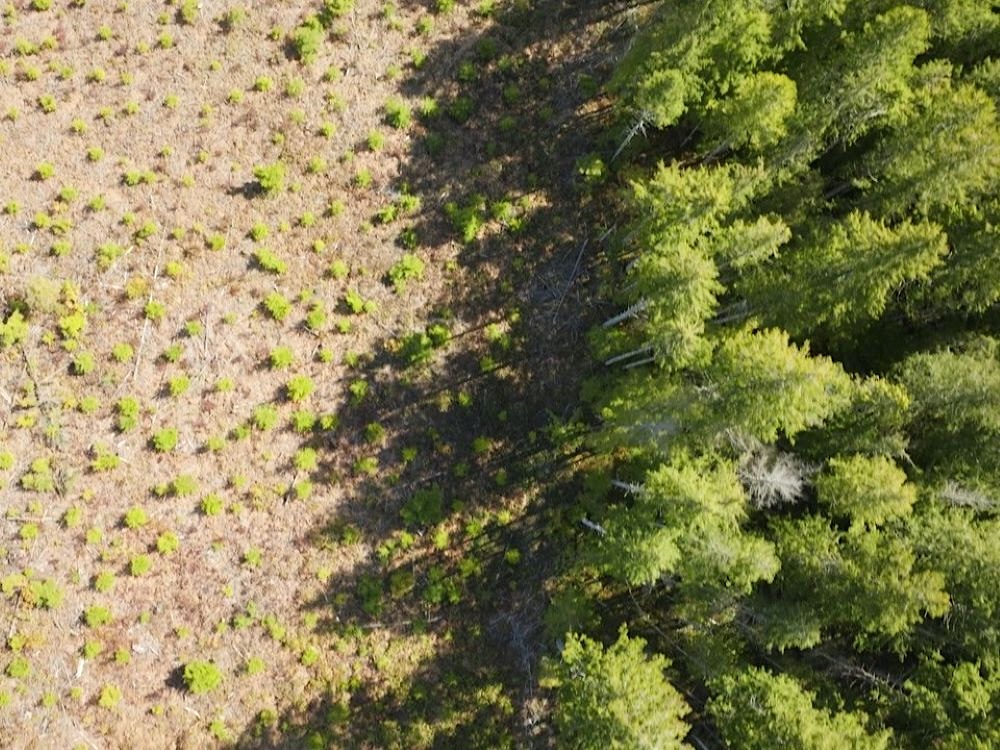

Details are lacking on which BC forests will be zoned for ‘commercial forestry, multiple-use’ or ‘conservation and protection.’ Photo via Olam Films.


Listen to this article
14 min


British Columbia’s government is contemplating carving the province into three zones to “provide greater clarity” to the timber industry, and discussions have so far left out First Nations.

Announcements, Events & more from Tyee and select partners
What’s Up Docs?

Female filmmakers find big ideas in even the smallest subjects in documentaries at VIFF Centre this month.

The zoning plan is outlined in an email sent in early July to public servants in the Ministry of Forests and the Ministry of Water, Land and Resource Stewardship, a copy of which was provided to The Tyee by a source who requested anonymity.

“The concept will consider three zones: commercial forestry, multiple-use and conservation and protection,” the leaked email reads, adding the zones will “provide greater clarity to achieve both investment stability and community economic benefits, and biodiversity and ecosystem stewardship goals for the land base.”

The email provides no detail on how much forest might ultimately be placed in each of the zones, leaving open questions about just what impact the proposed plan would have on everything from at-risk species to rural and First Nations communities, and a logging industry that has been on a sharp downward spiral for years.

It also makes no mention of whether any parties with a stake in a reshuffled forestry deck received advance notice of the government’s plans. In response to questions, the Ministry of Forests said only that consultations “will begin shortly.”

The Tyee is supported by readers like you Join us and grow independent media in Canada


The Tyee has learned that the email circulated widely to staff in both ministries and was sent by three senior political appointees — Makenzie Leine and Ian Meier, deputy and associate deputy ministers of the Ministry of Forests, and Lori Halls, deputy minister of the Ministry of Water, Land and Resource Stewardship.

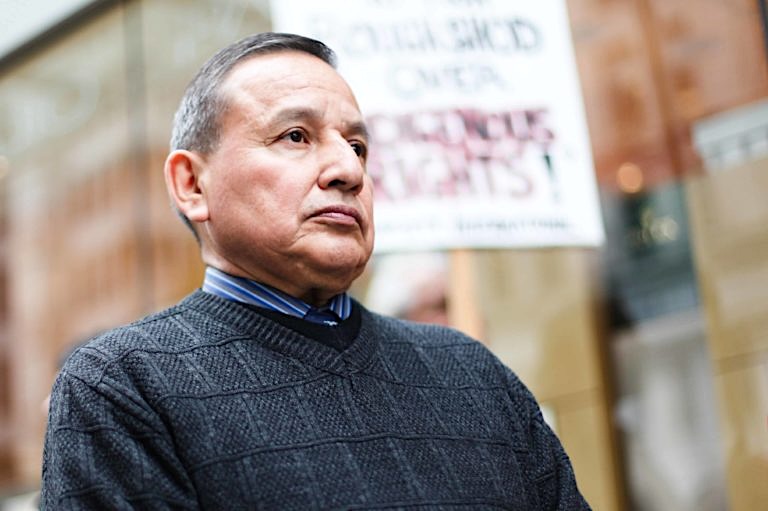
Its contents drew a sharp rebuke from Grand Chief Stewart Phillip of the Union of BC Indian Chiefs, who told The Tyee that the organization’s 140-plus First Nations members received no notice of the government’s intentions.

“I find it highly offensive that the provincial government would consider such a momentous shift... without even giving the First Nations, the title holders in this province, a heads-up to say we’re well into the planning of this,” Phillip told The Tyee.

“It’s a complete breach of DRIPA [the Declaration on the Rights of Indigenous Peoples Act] and the responsibilities that B.C. has under DRIPA to closely consult with First Nations.”

The Council of Forest Industries meanwhile welcomed the initiative, linking it to a Ministry of Forests objective to increase logging rates in the province’s forests to 45 million cubic metres per year — a target Premier David Eby set out in his mandate letter to Minister of Forests Ravi Parmar.

“We support the government’s commitment to achieving a minimum annual harvest of 45 million cubic metres and are prepared to work with government, First Nations and other partners and stakeholders to explore practical policy approaches that help deliver that target,” Michael Armstrong, the Council of Forest Industries’ senior vice-president and chief forester, told The Tyee.

Aim is ‘greater clarity,’ says ministry

The Tyee reached out to both ministries for comment, hearing back only from the Ministry of Forests.

“B.C.’s forest sector is under significant pressure,” the ministry said in a prepared response to questions, noting those challenges include “volatile markets, low pulp prices, increasing transportation costs, limited fibre supply due to challenges including the end of the beetle kill and wildfires, climate-driven wildfires, and punishing duties and tariffs imposed by the United States.”

The ministry added that a zoning effort would result in more stability for an embattled industry.

“By providing greater clarity on where forestry activities will occur and where conservation will occur, we can support jobs, communities, and sustainable forest management, and also enhance biodiversity and ecosystem health outcomes,” the ministry said.

Zoning approach was floated before

The idea of zoning B.C.’s lands is not new. The Tyee has previously reported that calls to delineate areas of the province where logging and resource developments would be allowed, and areas where they would not, go back decades. But successive governments didn’t act — until now.

Almost 30 years ago, Clark Binkley, a former dean at the University of British Columbia’s faculty of forestry, was a notable zoning proponent.

As environmental groups battled organized labour and the forest industry over proposed protected areas during the so-called “war in the woods” in the 1990s, Binkley argued that there was ample opportunity to vastly expand parkland while also increasing timber production.

Binkley’s proposed solution was effectively a two-zone system where logging companies were permitted to intensively manage a portion of B.C.’s lands to grow trees and there was a corresponding increase in the number of protected forests.

“Such a policy could lead to substantially higher, sustainable timber harvests as well as a system of parks that covers more than half the province,” Binkley wrote in 1997.Grand Chief Stewart Phillip of the Union of BC Indian Chiefs: ‘There’s a mindset within the provincial NDP government of fast-tracking everything.’ Photo by David P. Ball.

More recently, the provincial government received a report it commissioned from two professional foresters on the future of old-growth forests in B.C. Authored by Al Gorley and Garry Merkel and released in 2020, the report called for a three-zone system for the province.

Gorley and Merkel’s zones included protected forests and ecosystems that would be “largely left alone,” converted forests where logging had continued and would likely continue to occur, and what they called “consistent” forests that would be managed to keep their ecosystems and biological diversity in a healthy state. The Tyee reached out to both Merkel and Gorley to ask their thoughts on the government’s proposed zones but did not hear back.

Test phase to be unveiled in the fall

The zoning email notes that the initiative will be led by two assistant deputy ministers — Jessica Coster from the Ministry of Forests and David Muter from the Ministry of Water, Land and Resource Stewardship.

It goes on to say that the “project team is in the exploration and assessment phase and will bring together teams from both ministries to examine options and identify how the model could be applied in practice to selected candidate areas.”

The email makes no mention of potential candidate sites or regions but says an initial report to the provincial cabinet on how such a zoning system might work could come as early as this fall.

“We will have more to say in the fall about the next steps in this process, specifically around a test phase,” the ministry said in response to The Tyee’s questions, adding:

“The test phase will include continued partnership and engagement with First Nations along with focused engagement with industry, local governments, environmental non-government organizations (ENGOs), and other interested parties, as well as ongoing public updates.”

The ministry went on to say that “engagement” with various parties will begin shortly, and that those parties include industry, First Nations and local governments. It also said it would have more to say publicly on its plans in the next couple of weeks.

Worries about how lines are drawn

Mike Morris, a former provincial cabinet minister and thrice-elected MLA for Prince George-Mackenzie, expressed alarm at the initiative’s timing, which he noted comes on the heels of decades of heightened and unsustainable logging that has caused wildlife populations to tumble.

He went on to say that, to be credible, any rezoning effort must consider watershed boundaries or valleys, given the demonstrated damage that has been done as a result of extensive clearcut logging and road-building in many watersheds.

“There’s 30 years of science that says that clearcutting causes increased frequency, magnitude and duration of floods and droughts, which leads to increased wildfires and landslides and all that other kind of stuff,” Morris saic. “If they don’t have science at the forefront [of this zoning effort], they will fail miserably.”BC Minister of Forests Ravi Parmar. Consultations on the forest lands zoning plan will ‘begin shortly,’ says his ministry. Photo via BC government Flickr.

Peachland resident Taryn Skalbania agrees with Morris, saying that any new zoning exercise must recognize the importance of watersheds. She is the founder of the Peachland Watershed Protection Alliance, an organization that came into being after landslides in the heavily logged local watershed so contaminated the community’s drinking water with sediment that local residents were forced to boil their water for months on end.

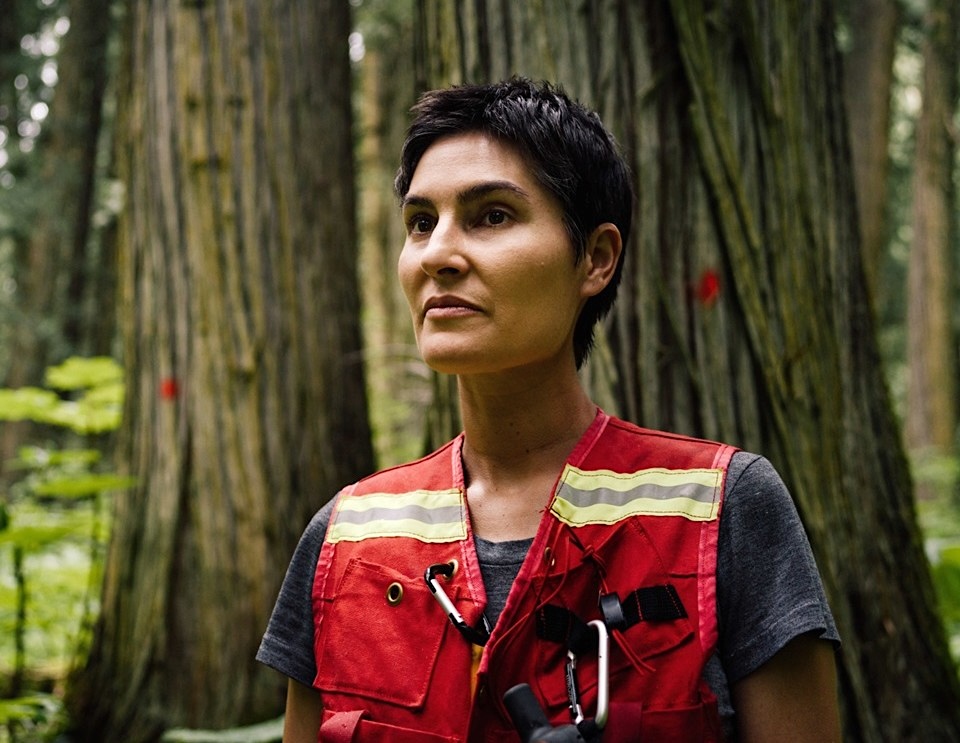
Skalbania said that in the past year she and other Okanagan residents have met directly or been on conference calls with 11 MLAs in the Okanagan, Kootenay and central Interior regions as well as with Ravi Parmar and Randene Neill, minister of water, land and resource stewardship.

In every meeting, Skalbania said, the MLAs and cabinet ministers were told that more must be done to safeguard watersheds and that areas of unlogged forests in watersheds, in particular, should be considered as priorities for protection.

Skalbania said she favours a rezoned land base in the province that begins with conserving remaining unlogged natural forests and protecting community watersheds. She also advocates for a second “restoration zone” where lands damaged by previous industrial activities are treated with an eye to bringing back wildlife, stabilizing soils and safeguarding water supplies. And she favours a third zone where logging is permitted, but only on a portion of the land where logging has already taken place.
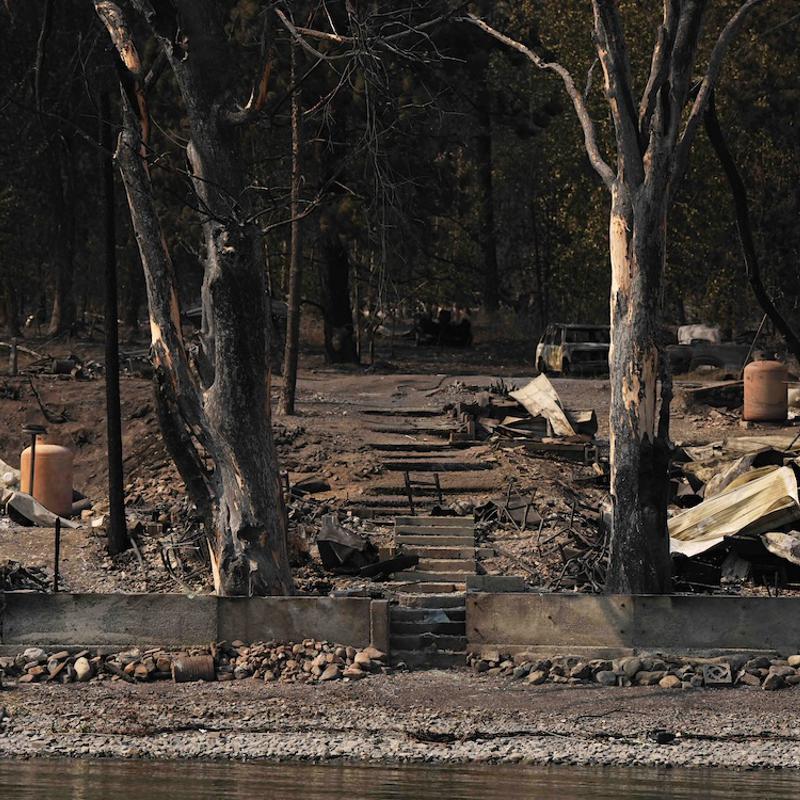


As Forests Burn Again, BC Is Changing Tactics ‘On the Fly’read more

Old-growth forests should be absolute “no-go zones,” Skalbania said, adding that restored lands should be off limits as well. “We’re not restoring them just to cut them down again, but restoring them on the landscape to provide shade, water storage and biodiversity,” she said.

‘We’re in a biodiversity crisis,’ says conservationist

Anthony Britneff, who worked in several senior positions for the provincial Ministry of Forests over four decades, told The Tyee that it is hard to envision a rezoning exercise led by his former employer that places any restrictions on where logging companies may go.

Hitting the logging target of 45 million cubic metres would, he predicted, see all unlogged valley bottoms outside of existing parks placed into the proposed commercial forestry zone.

Lands designated multiple-use would almost certainly remain open to logging as well, Britneff predicted, noting that multiple-use has been a cornerstone of provincial forest policy for decades.

Finally, he said it is not out of the question that lands zoned for conservation and protection might be subject to periodic logging as well on the grounds that it would prevent wildfires or insects from allegedly damaging or destroying such forests.

Britneff warned that the cumulative effect of all that would likely be the logging of all remnant old-growth forests, leading to “the complete ruination of the province’s rivers and biodiversity.” Any rezoning of provincial lands, Britneff added, should occur only after a “public inquiry and widespread consultation.”Michelle Connolly of Conservation North: ‘The only way’ zoning forests can ‘avert calamity’ is by protecting ‘all primary forest.’ Photo supplied.

In response to questions, the ministry said that its proposed commercial forestry zone would “provide the greatest certainty for forestry operations.”
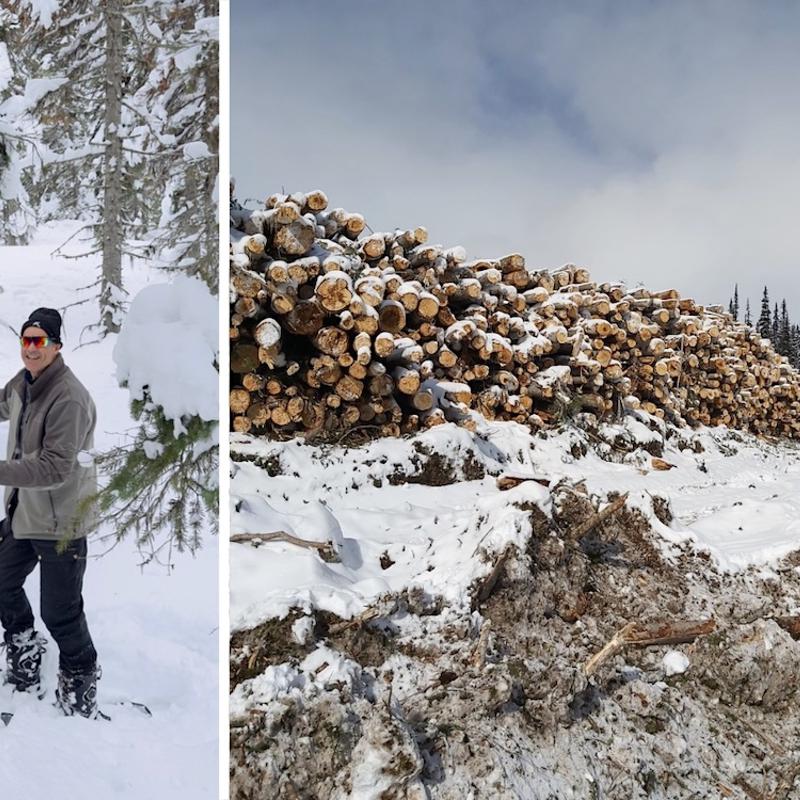


Logging Companies Are Pushing into High-Elevation Forestsread more

It added that logging and other industrial activities would also be permitted in the second proposed multiple-use zone, although in that zone more of a priority would be placed on “biodiversity, restoration, and ecosystem health.”

In the third proposed conservation and protection zone, the ministry said “commercial forestry would not be permitted.” But it did not rule out that such zones might require “active stewardship” to “improve biodiversity, ecosystem health, habitat, and ecological function over time.”

It did not define what such active stewardship might involve.

Michelle Connolly, director of Prince George-based Conservation North, says “the only zonation system that works for biodiversity and ecosystem health” is one that protects so-far unlogged primary or natural forests from chainsaws.

She said her organization rejects any suggestion that some logging may be necessary in such old-growth forests to restore their health and make them more “resilient” in the face of disturbances such as wildfires and insect attacks.

“We’re in a biodiversity crisis and the only way to avert calamity is to build a three-zone system that protects all primary forest (Zone 1), allocates degraded land to restoration in a permanent way (Zone 2), and dedicates some previously logged areas to responsible forestry,” Connolly said in an email.
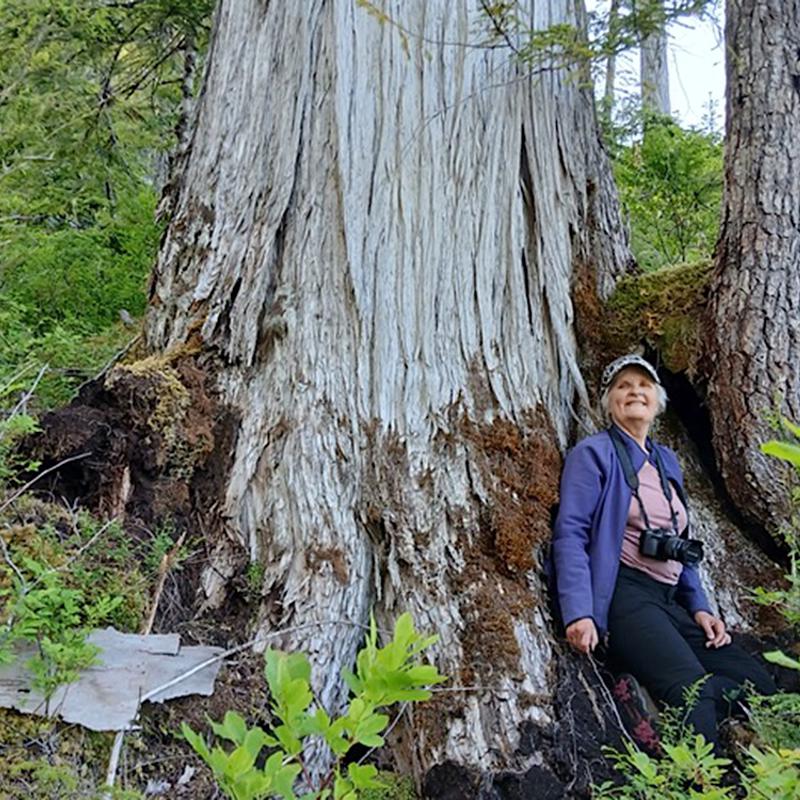


The Forest Quietly Removed from BC’s Old-Growth Deferral Listread more

In addition to the Forests Ministry pushing to find more timber for the logging industry, Chief Phillip noted that the provincial government also recently pushed through passage of bills 14 and 15 — the Renewable Energy Projects (Streamlined Permitting) Act and the Infrastructure Projects Act. Both are intended to expedite major projects in the province, including new pipelines, liquified natural gas plants and mines, Phillip said.

“There’s a mindset within the provincial NDP government of fast-tracking everything,” Phillip said, adding that he worries the zoning exercise could be fast-tracked as well.

Rather than that, Phillip said, the government should approach any rezoning exercise as it did when it pursued creating new parks and land-use plans in the 1990s.

Phillip noted that when land and resource management plans, or LRMPs, were pursued in the 1990s, “there was intensive consultation with ranchers, the timber community, municipalities, regional districts and First Nations.”

“That process was very robust from the outset,” Phillip said.


Read more: Indigenous, Labour + Industry, Environment

U.S. economy pulled back in September, adding a disappointing 29,000 jobs

U.S. economy pulled back in September, adding a disappointing 29,000 jobs


MS NOW · 41 minutes ago
by Charlie Herman · News

After an unexpectedly strong jobs report in August, employers created fewer jobs in September than economists had forecast. The Labor Department said Friday that the economy added 29,000 jobs last month, lower than the 90,000 expected. Revisions to the previous two months found 60,000 fewer jobs than were created than previously reported.

The unemployment rate rose slightly to 4.2% from 4.1%.

“The US labor market delivered more of the same in September,” wrote Cory Stahle, senior economist at Indeed. “Steadiness without a spark.”

The slowdown in hiring last month gives the Federal Reserve room to wait and see how the economy is faring as interest rates rise.

“A report like this may make some committee members hesitant to rasie rates again in October,” said Stahle “The labor market is still aloft, but it’s unclear how long it can keep circling while it waits for inflation to clear the runway.”

Friday’s release is the last jobs report before the midterm elections, as Republicans fight to maintain their majorities in the House and Senate. Voters are citing higher gas and grocery prices driven by President Donald Trump’s tariffs and war with Iran.

Nationwide, the average gallon of gasoline is nearly $4.4 nearly 40% higher compared to a year ago, according to AAA. The pain is exacerbated by wage increases that have not kept up with inflation. Compared to a year ago, average hourly earnings for private sector employees rose by 3%.

For the past several months, unemployment has been consistently low, but that’s because more people are leaving the labor force than finding a job. It’s a subject that has some economists scratching their head asking why? Are more people retiring? Is it a shortage of immigrant workers as many are being denied visas to work in the U.S.? Are people giving up on finding a job and simply leaving the workforce? Is it a statistical issue?

Friday’s jobs numbers come a day after the Commerce Department reported the economy grew 2.2% in the second quarter of this year, more than previously reported, but slower than the 2.5% growth in the first part of the year.

As for who is finding work, many jobs are in lower-paying industries like health care, where 17,000 new jobs were created overall.

The September unemployment numbers support the Federal Reserve’s recent decision to prioritize lowering inflation over stimulating job growth by raising interest rates.

In its statement announcing the rate hike at its last meeting, the central bank wrote, “Economic activity is expanding at a solid pace” and that “job gains have kept pace with the workforce, and the unemployment rate has changed little.”

Friday’s report still clears the way for the Fed to raise rates again. The question is when: at its next meeting, less than a week before the midterm elections, or when the bank holds its last meeting of the year in December?

This is a developing story. Please check back for updates.

The post U.S. economy pulled back in September, adding disappointing 29,000 jobs appeared first on MS NOW.

NASA Telescope Careening Down to Earth After Failed Rescue Mission

NASA Telescope Careening Down to Earth After Failed Rescue Mission
It's not dead quite yet, but its days are counted.

By Victor Tangermann

Published Oct 1, 2026 1:06 PM EDT
Add Futurism(opens in a new tab)More information


NASA


Sign up to see the future, today


Can’t-miss innovations from the bleeding edge of science and tech

Email addressSign Up

It was an extremely ambitious mission with the best of intentions.

With the help of contractor Katalyst Space Technologies, NASA launched a specialized robotic spacecraft in July in a bid to give the agency’s aging Swift observatory a desperately-needed nudge.

But it didn’t take long for the unprecedented rescue attempt to spiral into a crisis — literally. The robot started spinning uncontrollably, causing it to tumble back towards the Earth and burn up in the atmosphere.

And now, Swift — which has been circling our planet for over two decades, providing scientists with invaluable observations of the cosmos — is about to succumb to a similar fate. The space telescope’s orbit is rapidly decaying, which will soon force NASA to wrap up the mission for good.

According to an update from the agency, Swift is currently orbiting the Earth at around 200 miles. By early to mid-October, it could dip below 185 miles, a threshold below which “spacecraft operations become more difficult and science observations will likely cease.”

But that hasn’t stopped scientists from eking out every bit of life out of the observatory. The team at NASA turned back on one of its three scientific instruments, the Burst Alert Telescope, which had to be shut off in April to conserve power while repositioning the spacecraft’s solar panels.

They’ve also allowed the observatory to once again automatically point its telescopes at new gamma ray bursts, the extremely high-energy flashes in the sky it was primarily designed to study.

However, that “return to science has caused Swift to resume its rapid sinking,” NASA notes, which doesn’t bode well for its imminent future.

Reentry through the atmosphere could prove fatal, not just for the aging observatory, but potentially for anything in its path as well. Fortunately, the risks of its remains falling on anyone’s head remain incredibly slim.

“While it’s possible some hardware from the Swift spacecraft may survive re-entry due to its size, the probability of debris causing significant property damage or physical harm to anyone is very small,” space tracking company LeoLabs wrote in a statement to CNN. “More likely, as is the case with most debris that survives re-entry, it will fall into the ocean or on land that’s uninhabited.”

NASA’s daring, but ultimately ill-fated, rescue mission proved too little too late. But contractor Katalyst is optimistic that future spacecraft aren’t necessarily doomed to meet their demise like Swift.

“While we did not accomplish every objective we set out to achieve, in less than a year we went from mission concept to launching and operating the first commercial space robot. This is a foundation we can build on,” Katalyst Space CEO Ghonhee Lee in an official statement.

“The future of space will require spacecraft that can do more once they get there,” he added. “We’re building toward that future.”

More on the telescope: NASA Rescue Mission Spirals Into Crisis


Add Futurism as a preferred source on Google to see more of our reporting.


Victor Tangermann
Senior Editor


I’m a senior editor at Futurism, where I edit and write about NASA and the private space sector, as well as topics ranging from SETI and artificial intelligence to tech and medical policy.

America’s Cup: Revealing ARC Team USA

 America’s Cup: Revealing ARC Team USA

The American Racing Challenger Team USA (USA), a late entry for the 38th America's Cup, took another step toward the 2027 Match. Now referred to as ARC Team USA (thank you for shortening!), a crew list has been revealed.

With five crew needed for the AC75, the founding sailing squad includes a blend of Olympic success, America’s Cup experience, and emerging talent. The initial lineup comprises Lucas Calabrese, Riley Gibbs, Hans Henken, Harry Melges IV, Michael Menninger, and Louisa Nordstrom.

“This group represents exactly what we’re trying to build," noted Ken Read, ARC Team USA CEO. "They bring world-class experience, proven performance at the highest levels of our sport, and the potential to help shape the future of American sailing.

"As we continue to build our challenge, we’re committed to creating opportunities for the next generation of talent and establishing a program that can compete at the highest level for years to come. Each of these sailors has demonstrated not only exceptional ability on the water, but also the versatility, work ethic and mindset required to help build something bigger than a single campaign.” - Full report

LNG Canada to go ahead with Phase 2 expansion project in Kitimat, B.C.

LNG Canada to go ahead with Phase 2 expansion project in Kitimat, B.C.
VANCOUVER — LNG Canada says it will go ahead with the Phase 2 expansion project at its liquefied natural gas export terminal in Kitimat, B.C. The expansion will double LNG Canada's capacity to 28 million tonnes a year.

Wudang, a liquefied natural gas (LNG) tanker, fills up at an LNG Canada facility, in an aerial view, in Kitimat, B.C., on Thursday, November 13, 2025. THE CANADIAN PRESS/Ethan Cairns

Listen to this article
00:02:23


VANCOUVER — LNG Canada says it will go ahead with the Phase 2 expansion project at its liquefied natural gas export terminal in Kitimat, B.C.

The expansion will double LNG Canada's capacity to 28 million tonnes a year.

It is one of the five initial projects that were referred to Ottawa's major projects office last year.

LNG Canada CEO Chris Cooper says the project will create thousands of jobs and further strengthen Canada's role as a trusted energy partner.

"LNG Canada Phase 2 is another nation-building investment that demonstrates Canada can build big things when governments, First Nations partners, local communities, skilled trades, contractors and investors work together with shared purpose," Cooper said in statement.

LNG Canada is a joint venture between Shell and Malaysia’s Petronas, PetroChina, Japan's Mitsubishi Corp. and South Korea's KOGAS.

The company exports natural gas that is piped from northwestern Alberta and northeastern British Columbia to the plant in Kitimat, where it is chilled into a liquid state and then loaded onto specialized tankers bound for Asian markets.

The expansion will build on the footprint and infrastructure of the first phase of the project, which began shipping liquefied natural gas last year.

It will add two additional LNG processing units, known as trains, as well as an additional LNG storage tank, condensate tank, loading berth, and expanded utility and process systems.

LNG Canada also said it is working with Coastal GasLink to expand the capacity of the existing 670-kilometre pipeline, which is operated by TC Energy Corp.

In a separate announcement following the LNG Canada decision, TC Energy said it would nearly double the existing capacity of Coastal GasLink by adding new compressor stations and upgrading facilities along the route from Dawson Creek to the LNG Canada liquefaction facility in Kitimat.

"Phase 2 will strengthen Canada’s role in supplying reliable, affordable and secure energy to global markets while creating long-term value for Indigenous and local communities, customers and shareholders," TC Energy CEO François Poirier said in a statement.

LNG Canada will lead the expansion project construction, while Coastal GasLink will remain the owner, operator and permit holder of the pipeline and associated facilities.

The first phase of LNG Canada has been beset by equipment issues that have resulted in flaring in excess of what's allowed under its permits. Flaring is the controlled burning of natural gas for safety reasons.

The LNG Canada partners have said it's a normal part of project startup, but environmental and community groups have raised concerns about the health and safety impacts.

This report by The Canadian Press was first published Sept. 29, 2026.

Companies in this story: (TSX:TRP)

The Canadian Press

RG Richardson Communications News

I am a business economist with interests in international trade worldwide through politics, money and banking. Interactive Internet VoIP and secure eMail Communications. The author of RG Richardson City Guides that has over 300 guides, including restaurants, real estate and finance.