
Grokipedia Appears to Have Completely Broken and Nobody Noticed
"As far as we can tell, no entry has changed in more than three months."By Victor Tangermann
Published Aug 6, 2026 1:54 PM EDT
Add Futurism(opens in a new tab)More information

Shutterstock / Futurism
Sign up to see the future, today
Can’t-miss innovations from the bleeding edge of science and tech
Email addressSign Up
We certainly wouldn’t blame you for having completely forgotten that last year, Elon Musk tried to reinvent Wikipedia because he thought it was too woke.
In October, his AI startup xAI launched Grokipedia, named after its AI chatbot. The encyclopedia stole human-written and edited pages from Wikipedia wholesale and ran them through a large language model, which also fielded user-submitted edits, to better reflect Musk’s contorted worldviews.
The site was hardly an exemplary of objectivity. It was quickly found to heavily cite an infamous neo-Nazi forum as a source of information, desperately tried to paint Tesla’s Cybertruck as a successful and desirable electric pickup truck, and validated Musk’s favorite conspiracy theories. But it was a major cultural moment, garnering countless stories in the media and discussions on podcasts over Musk’s attempt to control the spread of information.
Perhaps unsurprisingly, the desperate attempt to twist the largest online encyclopedia in human history into an extension of an almost-trillionaire’s bigoted mind appears to have ground to a screeching halt — and, damningly, barely anybody seems to have noticed.
According to a new investigation by Lawfare, Grokipedia appears to have entirely stopped updating itself sometime earlier this year. Reviewing suggested edits from humans has also ground to a halt.
“As far as we can tell, no entry has changed in more than three months,” Lawfare concluded of the site, which is now owned by SpaceX since it merged with Musk’s AI efforts.
Worse yet, the site’s edit log appears to have broken completely as well, making it impossible to track which user-suggested changes were “accepted” or “rejected” by the AI.
By January, the Tow Center for Digital Journalism had already observed that xAI’s Grok was making more edits to its own articles than acting on human-suggested ones, suggesting a bottoming out of interest for the project.
Since then, it has turned into a ghost town, a completely redundant and misinformation-filled copy of Wikipedia, which remains one of the last bastions of human-edited and verified sources of information on the internet.
Even when Lawfare submitted an “uncomplicated factual update” about SpaceX having launched its IPO in June — an irrefutable fact that any allegedly “open source, comprehensive collection of all knowledge” should probably include — the Grokipedia entry remained stagnant.
Even pages that are purportedly drawing millions of views aren’t updating. The most recent approved update Lawfare could locate — to the entry about OpenAI’s ChatGPT — dates back to April 24.
As of today, Lawfare found that that there are 13,002 suggestions that “sit unresolved, trapped ‘in review.'”
“Altogether, what we found was that the ‘live’ change feed is gone, past decisions were retroactively reverted without explanation, new decisions are not being issued, and article text appears frozen (and, in some cases, outdated),” the publication concluded. “We do not know whether xAI is preparing a major revision or has altogether abandoned active development of the project.”
It’s a precarious situation. Despite having been abandoned, Similarweb data suggests Grokipedia received over six million visits in June alone. Hundreds of thousands of sites are also still citing Musk’s encyclopedia, which could spread misinformation even further.
Futurism has reached out to SpaceX for an update on the project, but considering the reputation of Musk’s companies and their refusal to interact with the media, we’re not holding our breath for a response.
More on Grokipedia: Elon Musk Is Not Beating the Allegations: Grokipedia Cites a Hardcore Nazi Website 42 Times

Victor Tangermann
Senior Editor
I’m a senior editor at Futurism, where I edit and write about NASA and the private space sector, as well as topics ranging from SETI and artificial intelligence to tech and medical policy.
Sign up to see the future, today
Can’t-miss innovations from the bleeding edge of science and tech
Email addressSign Up
We certainly wouldn’t blame you for having completely forgotten that last year, Elon Musk tried to reinvent Wikipedia because he thought it was too woke.
In October, his AI startup xAI launched Grokipedia, named after its AI chatbot. The encyclopedia stole human-written and edited pages from Wikipedia wholesale and ran them through a large language model, which also fielded user-submitted edits, to better reflect Musk’s contorted worldviews.
The site was hardly an exemplary of objectivity. It was quickly found to heavily cite an infamous neo-Nazi forum as a source of information, desperately tried to paint Tesla’s Cybertruck as a successful and desirable electric pickup truck, and validated Musk’s favorite conspiracy theories. But it was a major cultural moment, garnering countless stories in the media and discussions on podcasts over Musk’s attempt to control the spread of information.
Perhaps unsurprisingly, the desperate attempt to twist the largest online encyclopedia in human history into an extension of an almost-trillionaire’s bigoted mind appears to have ground to a screeching halt — and, damningly, barely anybody seems to have noticed.
According to a new investigation by Lawfare, Grokipedia appears to have entirely stopped updating itself sometime earlier this year. Reviewing suggested edits from humans has also ground to a halt.
“As far as we can tell, no entry has changed in more than three months,” Lawfare concluded of the site, which is now owned by SpaceX since it merged with Musk’s AI efforts.
Worse yet, the site’s edit log appears to have broken completely as well, making it impossible to track which user-suggested changes were “accepted” or “rejected” by the AI.
By January, the Tow Center for Digital Journalism had already observed that xAI’s Grok was making more edits to its own articles than acting on human-suggested ones, suggesting a bottoming out of interest for the project.
Since then, it has turned into a ghost town, a completely redundant and misinformation-filled copy of Wikipedia, which remains one of the last bastions of human-edited and verified sources of information on the internet.
Even when Lawfare submitted an “uncomplicated factual update” about SpaceX having launched its IPO in June — an irrefutable fact that any allegedly “open source, comprehensive collection of all knowledge” should probably include — the Grokipedia entry remained stagnant.
Even pages that are purportedly drawing millions of views aren’t updating. The most recent approved update Lawfare could locate — to the entry about OpenAI’s ChatGPT — dates back to April 24.
As of today, Lawfare found that that there are 13,002 suggestions that “sit unresolved, trapped ‘in review.'”
“Altogether, what we found was that the ‘live’ change feed is gone, past decisions were retroactively reverted without explanation, new decisions are not being issued, and article text appears frozen (and, in some cases, outdated),” the publication concluded. “We do not know whether xAI is preparing a major revision or has altogether abandoned active development of the project.”
It’s a precarious situation. Despite having been abandoned, Similarweb data suggests Grokipedia received over six million visits in June alone. Hundreds of thousands of sites are also still citing Musk’s encyclopedia, which could spread misinformation even further.
Futurism has reached out to SpaceX for an update on the project, but considering the reputation of Musk’s companies and their refusal to interact with the media, we’re not holding our breath for a response.
More on Grokipedia: Elon Musk Is Not Beating the Allegations: Grokipedia Cites a Hardcore Nazi Website 42 Times
Victor Tangermann
Senior Editor
I’m a senior editor at Futurism, where I edit and write about NASA and the private space sector, as well as topics ranging from SETI and artificial intelligence to tech and medical policy.

 TCL
TCL TCL
TCL TCL
TCL



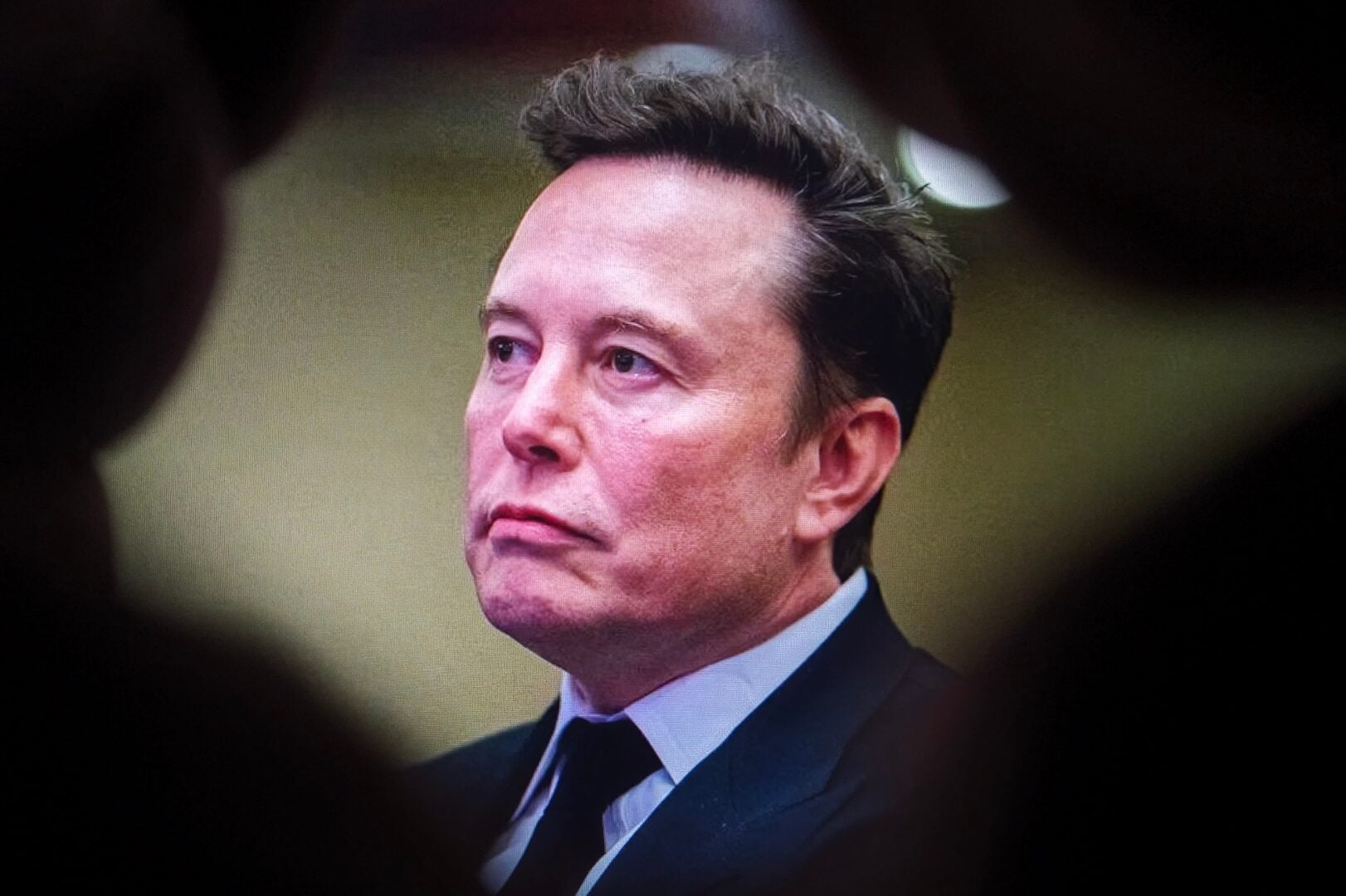 Elon Musk © FotoField / Shutterstock


 Moneris payment terminals, like this one seen in 2018, are used widely across Canada. The company is being sold to a U.S. private equity firm, pending regulatory approval. (Anis Heydari/CBC)


 A year before FIFA started selling assigned World Cup tickets, social media users were calling out ads claiming tickets were for sale. Here, a screengrab of what appears to be a StubHub Instagram ad was posted to Reddit by user Bruno Borges on Oct. 11, 2024. (CBC)

 Brad Michel, left, his son Aden and his father-in-law Ricardo Popa-Olave never received their StubHub order for three seats bought nine months before FIFA’s official ticket release. (Submitted by Brad Michel)
 StubHub shows nearly 100 tickets on offer for the 2027 Super Bowl in Los Angeles, claiming just two per cent of tickets remain when none have been released yet by the box office. (CBC)
 Resale sites VividSeats and Tickets On Sale both list more than 100 tickets available for Super Bowl 2027 before they are officially on sale for the public. (CBC)


 As seen in the feature documentary The Painted Life of E.J. Hughes, the artist appears in an archival photograph with his 1949 painting, Entrance to Howe Sound. (Optic Nerve Films)
 E.J. Hughes, Canadian war artist, seen in an archival photo from 1945. (Malak Karsh/Optic Nerve Films)
 The Painted Life of E.J. Hughes takes viewers inside the Vancouver Art Gallery's vault. In this behind-the-scenes photo, curator Ian Thom looks at Hughes artwork from the gallery's collection. (Kevin Eastwood/Optic Nerve Films)
 Jenn Strom is the director of The Painted Life of E.J. Hughes. (Optic Nerve Films)