RG Richardson Business & Economics

RG Richardson Business & Economics
Interactive financial ebooks

America posts a job market slowdown

 America posts a surprise job market slowdown


Illustration: Morning Brew Inc., Joe Raedle/Getty Images

Relatively few Americans had to come up with a fun fact to share with their new coworkers last month. The US added an underwhelming 29,000 jobs in September, the government said yesterday—below the 84,000 that economists surveyed by Dow Jones expected.

Government data released yesterday shows that last month:Even healthcare, typically the all-star job-creating industry, disappointed, gaining just 17,000 workers, compared with the 33,000 jobs it added in an average month over the past year.
Construction and manufacturing added a modest 11,000 and 9,000 jobs, respectively.
AI-exposed industries like business services and the information sector shed jobs.

The summer’s strong job creation may have been a mirage: Government statisticians revised down July and August jobs numbers by a combined 60,000.
The job market is still chugging along

Though the unemployment rate notched up from 4.1% to 4.2% last month, that’s still low by historical standards. That uptick is largely due to the labor pool growing (the unemployment gauge only includes people working or looking for a job). Economists say fewer new jobs have been needed lately to keep employment stable since the labor pool is stagnating amid President Trump’s immigration crackdown and baby boomers retiring.

But…pay isn’t keeping up with inflation. Yearly wage growth slowed to 3% last month, the lowest rate since the pandemic.
What does this tell the Fed?

It might strengthen the case not to hike rates. Wall Street is betting the anemic hiring numbers will compel Warsh and co. to prioritize employment stability over inflation this month.

The trading odds of another rate hike in October dropped to 20% yesterday, from 24% the day before, per FedWatch. Last month, the Fed hiked interest rates for the first time in three years, citing the need to fight inflation amid a strong labor market.

Looking ahead…this is the last monthly jobs report before the midterm elections in November, in which economic woes are expected to be a major issue.

Starbucks to close 250 stores this week

Starbucks to close 250 stores this week

Brooke DiPalma · Senior Reporter
Fri, September 25, 2026 at 2:29 AM PDT 2 min read

Starbucks (SBUX) plans to close more unprofitable locations as its turnaround under CEO Brian Niccol continues.

In a letter posted to Starbucks' blog and sent to employees on Thursday, COO Mike Grams shared plans to close 250 stores in the US and Canada this week, reducing its store count by roughly 1%.


"We have carefully reviewed our North America coffeehouse portfolio and identified locations where we do not believe we can consistently deliver the experience we want for customers and partners or where we don't see a path to acceptable financial performance," Grams wrote to staff.

Almost exactly a year ago, the company made the same move to reduce its locations by 1%. Starbucks had 18,371 locations in North America last quarter, compared to 18,734 stores a year ago.
Starbucks in Punta Norte, Mexico City. (Courtesy: Starbucks)

While Starbucks closes some stores, it's remodelling others. On Wednesday, the company announced plans to accelerate coffeehouse redesigns that bring back chairs and a cozier vibe to cafés. Starbucks said it will complete at least 1,500 "uplifts" by the end of fiscal year 2026 and ramp up further in fiscal 2027.

The company also said it plans to open a technology hub in India next year.

The news followed a strong third quarter, indicating that Niccol's turnaround plan was making progress.

Starbucks posted same-store sales growth of 7.9%, more than the 5.7% growth Wall Street expected, according to Bloomberg data, and above the 6.2% jump seen in Q2. Last year, the company saw a 2% decline in overall same-store sales growth in the third quarter.

William Blair analyst Sharon Zackfia said the store closures could be "modestly beneficial" to same-store sales growth and maintained her Outperform rating on the shares.

Starbucks stock is up 10% over the past year, underperforming the S&P 500's (^GSPC) 15% gain.

BC Is Quietly Planning to Split Forest Lands

BC Is Quietly Planning to Split Forest Lands into Three Use Zones
The policy shift, revealed in a government email obtained by The Tyee, takes First Nations by surprise.

Ben Parfitt Today The Tyee

Ben Parfitt is a reporter at The Tyee covering forestry and related issues.Our journalism is supported by readers like you. Click here to support The Tyee.


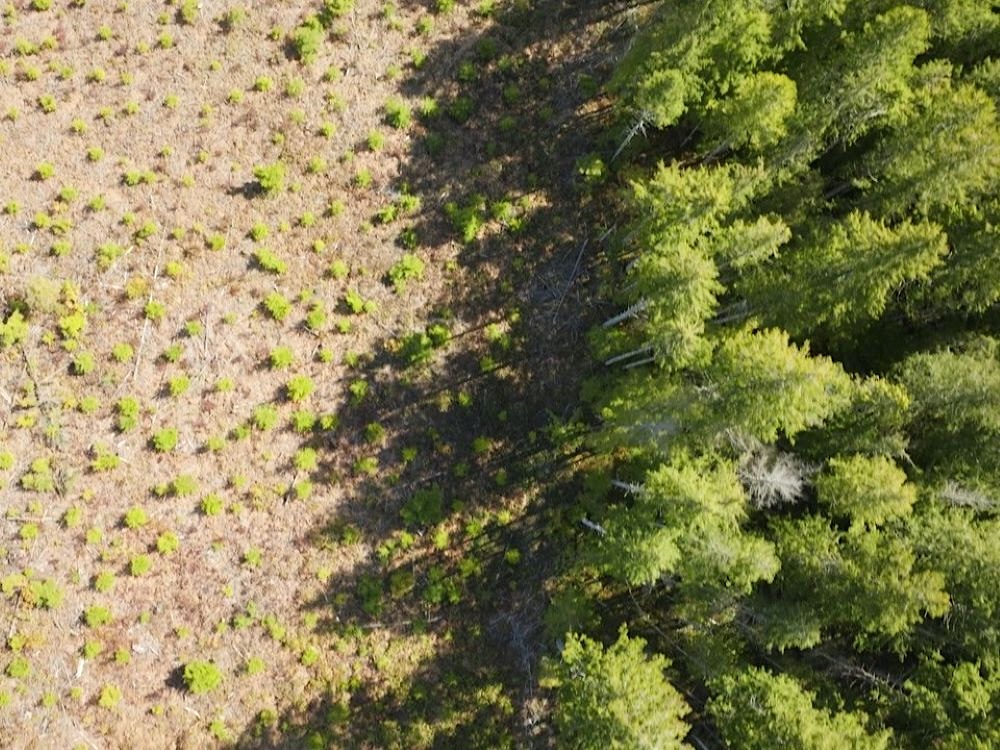
Details are lacking on which BC forests will be zoned for ‘commercial forestry, multiple-use’ or ‘conservation and protection.’ Photo via Olam Films.


Listen to this article
14 min


British Columbia’s government is contemplating carving the province into three zones to “provide greater clarity” to the timber industry, and discussions have so far left out First Nations.

Announcements, Events & more from Tyee and select partners
What’s Up Docs?

Female filmmakers find big ideas in even the smallest subjects in documentaries at VIFF Centre this month.

The zoning plan is outlined in an email sent in early July to public servants in the Ministry of Forests and the Ministry of Water, Land and Resource Stewardship, a copy of which was provided to The Tyee by a source who requested anonymity.

“The concept will consider three zones: commercial forestry, multiple-use and conservation and protection,” the leaked email reads, adding the zones will “provide greater clarity to achieve both investment stability and community economic benefits, and biodiversity and ecosystem stewardship goals for the land base.”

The email provides no detail on how much forest might ultimately be placed in each of the zones, leaving open questions about just what impact the proposed plan would have on everything from at-risk species to rural and First Nations communities, and a logging industry that has been on a sharp downward spiral for years.

It also makes no mention of whether any parties with a stake in a reshuffled forestry deck received advance notice of the government’s plans. In response to questions, the Ministry of Forests said only that consultations “will begin shortly.”

The Tyee is supported by readers like you Join us and grow independent media in Canada


The Tyee has learned that the email circulated widely to staff in both ministries and was sent by three senior political appointees — Makenzie Leine and Ian Meier, deputy and associate deputy ministers of the Ministry of Forests, and Lori Halls, deputy minister of the Ministry of Water, Land and Resource Stewardship.

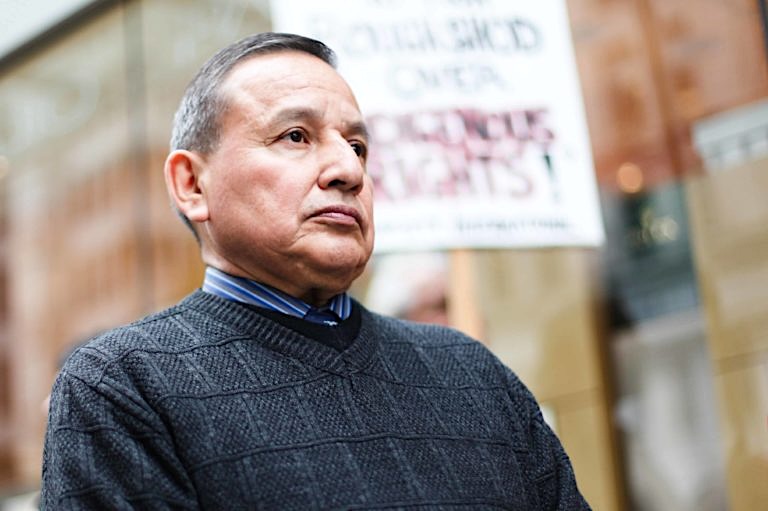
Its contents drew a sharp rebuke from Grand Chief Stewart Phillip of the Union of BC Indian Chiefs, who told The Tyee that the organization’s 140-plus First Nations members received no notice of the government’s intentions.

“I find it highly offensive that the provincial government would consider such a momentous shift... without even giving the First Nations, the title holders in this province, a heads-up to say we’re well into the planning of this,” Phillip told The Tyee.

“It’s a complete breach of DRIPA [the Declaration on the Rights of Indigenous Peoples Act] and the responsibilities that B.C. has under DRIPA to closely consult with First Nations.”

The Council of Forest Industries meanwhile welcomed the initiative, linking it to a Ministry of Forests objective to increase logging rates in the province’s forests to 45 million cubic metres per year — a target Premier David Eby set out in his mandate letter to Minister of Forests Ravi Parmar.

“We support the government’s commitment to achieving a minimum annual harvest of 45 million cubic metres and are prepared to work with government, First Nations and other partners and stakeholders to explore practical policy approaches that help deliver that target,” Michael Armstrong, the Council of Forest Industries’ senior vice-president and chief forester, told The Tyee.

Aim is ‘greater clarity,’ says ministry

The Tyee reached out to both ministries for comment, hearing back only from the Ministry of Forests.

“B.C.’s forest sector is under significant pressure,” the ministry said in a prepared response to questions, noting those challenges include “volatile markets, low pulp prices, increasing transportation costs, limited fibre supply due to challenges including the end of the beetle kill and wildfires, climate-driven wildfires, and punishing duties and tariffs imposed by the United States.”

The ministry added that a zoning effort would result in more stability for an embattled industry.

“By providing greater clarity on where forestry activities will occur and where conservation will occur, we can support jobs, communities, and sustainable forest management, and also enhance biodiversity and ecosystem health outcomes,” the ministry said.

Zoning approach was floated before

The idea of zoning B.C.’s lands is not new. The Tyee has previously reported that calls to delineate areas of the province where logging and resource developments would be allowed, and areas where they would not, go back decades. But successive governments didn’t act — until now.

Almost 30 years ago, Clark Binkley, a former dean at the University of British Columbia’s faculty of forestry, was a notable zoning proponent.

As environmental groups battled organized labour and the forest industry over proposed protected areas during the so-called “war in the woods” in the 1990s, Binkley argued that there was ample opportunity to vastly expand parkland while also increasing timber production.

Binkley’s proposed solution was effectively a two-zone system where logging companies were permitted to intensively manage a portion of B.C.’s lands to grow trees and there was a corresponding increase in the number of protected forests.

“Such a policy could lead to substantially higher, sustainable timber harvests as well as a system of parks that covers more than half the province,” Binkley wrote in 1997.Grand Chief Stewart Phillip of the Union of BC Indian Chiefs: ‘There’s a mindset within the provincial NDP government of fast-tracking everything.’ Photo by David P. Ball.

More recently, the provincial government received a report it commissioned from two professional foresters on the future of old-growth forests in B.C. Authored by Al Gorley and Garry Merkel and released in 2020, the report called for a three-zone system for the province.

Gorley and Merkel’s zones included protected forests and ecosystems that would be “largely left alone,” converted forests where logging had continued and would likely continue to occur, and what they called “consistent” forests that would be managed to keep their ecosystems and biological diversity in a healthy state. The Tyee reached out to both Merkel and Gorley to ask their thoughts on the government’s proposed zones but did not hear back.

Test phase to be unveiled in the fall

The zoning email notes that the initiative will be led by two assistant deputy ministers — Jessica Coster from the Ministry of Forests and David Muter from the Ministry of Water, Land and Resource Stewardship.

It goes on to say that the “project team is in the exploration and assessment phase and will bring together teams from both ministries to examine options and identify how the model could be applied in practice to selected candidate areas.”

The email makes no mention of potential candidate sites or regions but says an initial report to the provincial cabinet on how such a zoning system might work could come as early as this fall.

“We will have more to say in the fall about the next steps in this process, specifically around a test phase,” the ministry said in response to The Tyee’s questions, adding:

“The test phase will include continued partnership and engagement with First Nations along with focused engagement with industry, local governments, environmental non-government organizations (ENGOs), and other interested parties, as well as ongoing public updates.”

The ministry went on to say that “engagement” with various parties will begin shortly, and that those parties include industry, First Nations and local governments. It also said it would have more to say publicly on its plans in the next couple of weeks.

Worries about how lines are drawn

Mike Morris, a former provincial cabinet minister and thrice-elected MLA for Prince George-Mackenzie, expressed alarm at the initiative’s timing, which he noted comes on the heels of decades of heightened and unsustainable logging that has caused wildlife populations to tumble.

He went on to say that, to be credible, any rezoning effort must consider watershed boundaries or valleys, given the demonstrated damage that has been done as a result of extensive clearcut logging and road-building in many watersheds.

“There’s 30 years of science that says that clearcutting causes increased frequency, magnitude and duration of floods and droughts, which leads to increased wildfires and landslides and all that other kind of stuff,” Morris saic. “If they don’t have science at the forefront [of this zoning effort], they will fail miserably.”BC Minister of Forests Ravi Parmar. Consultations on the forest lands zoning plan will ‘begin shortly,’ says his ministry. Photo via BC government Flickr.

Peachland resident Taryn Skalbania agrees with Morris, saying that any new zoning exercise must recognize the importance of watersheds. She is the founder of the Peachland Watershed Protection Alliance, an organization that came into being after landslides in the heavily logged local watershed so contaminated the community’s drinking water with sediment that local residents were forced to boil their water for months on end.

Skalbania said that in the past year she and other Okanagan residents have met directly or been on conference calls with 11 MLAs in the Okanagan, Kootenay and central Interior regions as well as with Ravi Parmar and Randene Neill, minister of water, land and resource stewardship.

In every meeting, Skalbania said, the MLAs and cabinet ministers were told that more must be done to safeguard watersheds and that areas of unlogged forests in watersheds, in particular, should be considered as priorities for protection.

Skalbania said she favours a rezoned land base in the province that begins with conserving remaining unlogged natural forests and protecting community watersheds. She also advocates for a second “restoration zone” where lands damaged by previous industrial activities are treated with an eye to bringing back wildlife, stabilizing soils and safeguarding water supplies. And she favours a third zone where logging is permitted, but only on a portion of the land where logging has already taken place.


As Forests Burn Again, BC Is Changing Tactics ‘On the Fly’read more

Old-growth forests should be absolute “no-go zones,” Skalbania said, adding that restored lands should be off limits as well. “We’re not restoring them just to cut them down again, but restoring them on the landscape to provide shade, water storage and biodiversity,” she said.

‘We’re in a biodiversity crisis,’ says conservationist

Anthony Britneff, who worked in several senior positions for the provincial Ministry of Forests over four decades, told The Tyee that it is hard to envision a rezoning exercise led by his former employer that places any restrictions on where logging companies may go.

Hitting the logging target of 45 million cubic metres would, he predicted, see all unlogged valley bottoms outside of existing parks placed into the proposed commercial forestry zone.

Lands designated multiple-use would almost certainly remain open to logging as well, Britneff predicted, noting that multiple-use has been a cornerstone of provincial forest policy for decades.

Finally, he said it is not out of the question that lands zoned for conservation and protection might be subject to periodic logging as well on the grounds that it would prevent wildfires or insects from allegedly damaging or destroying such forests.

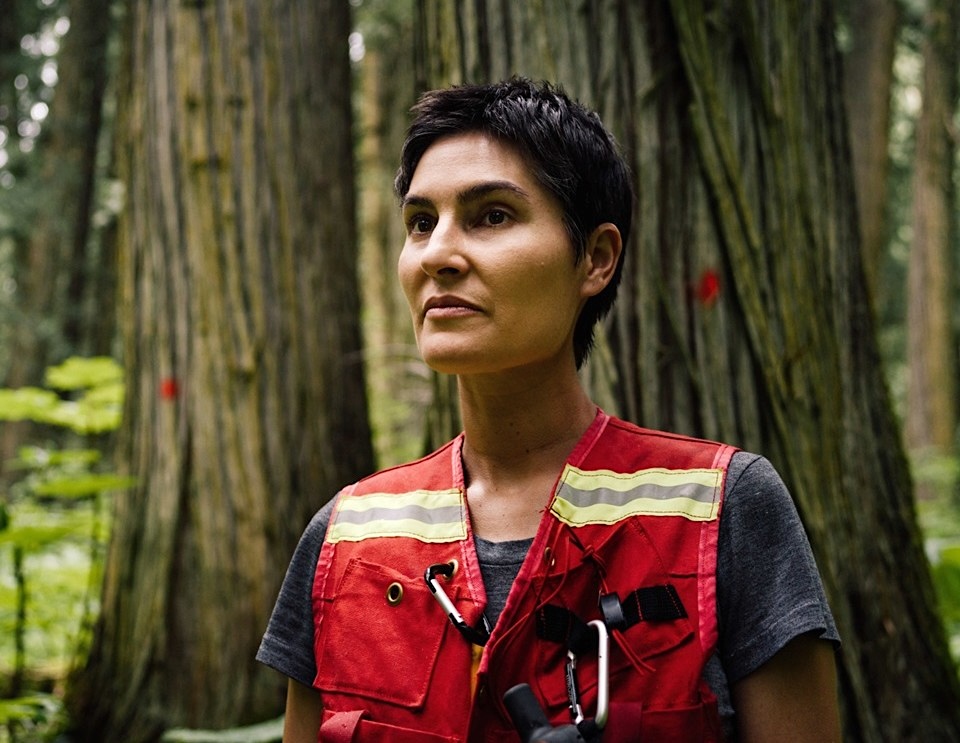
Britneff warned that the cumulative effect of all that would likely be the logging of all remnant old-growth forests, leading to “the complete ruination of the province’s rivers and biodiversity.” Any rezoning of provincial lands, Britneff added, should occur only after a “public inquiry and widespread consultation.”Michelle Connolly of Conservation North: ‘The only way’ zoning forests can ‘avert calamity’ is by protecting ‘all primary forest.’ Photo supplied.

In response to questions, the ministry said that its proposed commercial forestry zone would “provide the greatest certainty for forestry operations.”


Logging Companies Are Pushing into High-Elevation Forestsread more

It added that logging and other industrial activities would also be permitted in the second proposed multiple-use zone, although in that zone more of a priority would be placed on “biodiversity, restoration, and ecosystem health.”

In the third proposed conservation and protection zone, the ministry said “commercial forestry would not be permitted.” But it did not rule out that such zones might require “active stewardship” to “improve biodiversity, ecosystem health, habitat, and ecological function over time.”

It did not define what such active stewardship might involve.

Michelle Connolly, director of Prince George-based Conservation North, says “the only zonation system that works for biodiversity and ecosystem health” is one that protects so-far unlogged primary or natural forests from chainsaws.

She said her organization rejects any suggestion that some logging may be necessary in such old-growth forests to restore their health and make them more “resilient” in the face of disturbances such as wildfires and insect attacks.

“We’re in a biodiversity crisis and the only way to avert calamity is to build a three-zone system that protects all primary forest (Zone 1), allocates degraded land to restoration in a permanent way (Zone 2), and dedicates some previously logged areas to responsible forestry,” Connolly said in an email.


The Forest Quietly Removed from BC’s Old-Growth Deferral Listread more

In addition to the Forests Ministry pushing to find more timber for the logging industry, Chief Phillip noted that the provincial government also recently pushed through passage of bills 14 and 15 — the Renewable Energy Projects (Streamlined Permitting) Act and the Infrastructure Projects Act. Both are intended to expedite major projects in the province, including new pipelines, liquified natural gas plants and mines, Phillip said.

“There’s a mindset within the provincial NDP government of fast-tracking everything,” Phillip said, adding that he worries the zoning exercise could be fast-tracked as well.

Rather than that, Phillip said, the government should approach any rezoning exercise as it did when it pursued creating new parks and land-use plans in the 1990s.

Phillip noted that when land and resource management plans, or LRMPs, were pursued in the 1990s, “there was intensive consultation with ranchers, the timber community, municipalities, regional districts and First Nations.”

“That process was very robust from the outset,” Phillip said.


Read more: Indigenous, Labour + Industry, Environment

U.S. economy pulled back in September, adding a disappointing 29,000 jobs

U.S. economy pulled back in September, adding a disappointing 29,000 jobs


MS NOW · 41 minutes ago
by Charlie Herman · News

After an unexpectedly strong jobs report in August, employers created fewer jobs in September than economists had forecast. The Labor Department said Friday that the economy added 29,000 jobs last month, lower than the 90,000 expected. Revisions to the previous two months found 60,000 fewer jobs than were created than previously reported.

The unemployment rate rose slightly to 4.2% from 4.1%.

“The US labor market delivered more of the same in September,” wrote Cory Stahle, senior economist at Indeed. “Steadiness without a spark.”

The slowdown in hiring last month gives the Federal Reserve room to wait and see how the economy is faring as interest rates rise.

“A report like this may make some committee members hesitant to rasie rates again in October,” said Stahle “The labor market is still aloft, but it’s unclear how long it can keep circling while it waits for inflation to clear the runway.”

Friday’s release is the last jobs report before the midterm elections, as Republicans fight to maintain their majorities in the House and Senate. Voters are citing higher gas and grocery prices driven by President Donald Trump’s tariffs and war with Iran.

Nationwide, the average gallon of gasoline is nearly $4.4 nearly 40% higher compared to a year ago, according to AAA. The pain is exacerbated by wage increases that have not kept up with inflation. Compared to a year ago, average hourly earnings for private sector employees rose by 3%.

For the past several months, unemployment has been consistently low, but that’s because more people are leaving the labor force than finding a job. It’s a subject that has some economists scratching their head asking why? Are more people retiring? Is it a shortage of immigrant workers as many are being denied visas to work in the U.S.? Are people giving up on finding a job and simply leaving the workforce? Is it a statistical issue?

Friday’s jobs numbers come a day after the Commerce Department reported the economy grew 2.2% in the second quarter of this year, more than previously reported, but slower than the 2.5% growth in the first part of the year.

As for who is finding work, many jobs are in lower-paying industries like health care, where 17,000 new jobs were created overall.

The September unemployment numbers support the Federal Reserve’s recent decision to prioritize lowering inflation over stimulating job growth by raising interest rates.

In its statement announcing the rate hike at its last meeting, the central bank wrote, “Economic activity is expanding at a solid pace” and that “job gains have kept pace with the workforce, and the unemployment rate has changed little.”

Friday’s report still clears the way for the Fed to raise rates again. The question is when: at its next meeting, less than a week before the midterm elections, or when the bank holds its last meeting of the year in December?

This is a developing story. Please check back for updates.

The post U.S. economy pulled back in September, adding disappointing 29,000 jobs appeared first on MS NOW.

NASA Telescope Careening Down to Earth After Failed Rescue Mission

NASA Telescope Careening Down to Earth After Failed Rescue Mission
It's not dead quite yet, but its days are counted.

By Victor Tangermann

Published Oct 1, 2026 1:06 PM EDT
Add Futurism(opens in a new tab)More information


NASA


Sign up to see the future, today


Can’t-miss innovations from the bleeding edge of science and tech

Email addressSign Up

It was an extremely ambitious mission with the best of intentions.

With the help of contractor Katalyst Space Technologies, NASA launched a specialized robotic spacecraft in July in a bid to give the agency’s aging Swift observatory a desperately-needed nudge.

But it didn’t take long for the unprecedented rescue attempt to spiral into a crisis — literally. The robot started spinning uncontrollably, causing it to tumble back towards the Earth and burn up in the atmosphere.

And now, Swift — which has been circling our planet for over two decades, providing scientists with invaluable observations of the cosmos — is about to succumb to a similar fate. The space telescope’s orbit is rapidly decaying, which will soon force NASA to wrap up the mission for good.

According to an update from the agency, Swift is currently orbiting the Earth at around 200 miles. By early to mid-October, it could dip below 185 miles, a threshold below which “spacecraft operations become more difficult and science observations will likely cease.”

But that hasn’t stopped scientists from eking out every bit of life out of the observatory. The team at NASA turned back on one of its three scientific instruments, the Burst Alert Telescope, which had to be shut off in April to conserve power while repositioning the spacecraft’s solar panels.

They’ve also allowed the observatory to once again automatically point its telescopes at new gamma ray bursts, the extremely high-energy flashes in the sky it was primarily designed to study.

However, that “return to science has caused Swift to resume its rapid sinking,” NASA notes, which doesn’t bode well for its imminent future.

Reentry through the atmosphere could prove fatal, not just for the aging observatory, but potentially for anything in its path as well. Fortunately, the risks of its remains falling on anyone’s head remain incredibly slim.

“While it’s possible some hardware from the Swift spacecraft may survive re-entry due to its size, the probability of debris causing significant property damage or physical harm to anyone is very small,” space tracking company LeoLabs wrote in a statement to CNN. “More likely, as is the case with most debris that survives re-entry, it will fall into the ocean or on land that’s uninhabited.”

NASA’s daring, but ultimately ill-fated, rescue mission proved too little too late. But contractor Katalyst is optimistic that future spacecraft aren’t necessarily doomed to meet their demise like Swift.

“While we did not accomplish every objective we set out to achieve, in less than a year we went from mission concept to launching and operating the first commercial space robot. This is a foundation we can build on,” Katalyst Space CEO Ghonhee Lee in an official statement.

“The future of space will require spacecraft that can do more once they get there,” he added. “We’re building toward that future.”

More on the telescope: NASA Rescue Mission Spirals Into Crisis


Add Futurism as a preferred source on Google to see more of our reporting.


Victor Tangermann
Senior Editor


I’m a senior editor at Futurism, where I edit and write about NASA and the private space sector, as well as topics ranging from SETI and artificial intelligence to tech and medical policy.

America’s Cup: Revealing ARC Team USA

 America’s Cup: Revealing ARC Team USA

The American Racing Challenger Team USA (USA), a late entry for the 38th America's Cup, took another step toward the 2027 Match. Now referred to as ARC Team USA (thank you for shortening!), a crew list has been revealed.

With five crew needed for the AC75, the founding sailing squad includes a blend of Olympic success, America’s Cup experience, and emerging talent. The initial lineup comprises Lucas Calabrese, Riley Gibbs, Hans Henken, Harry Melges IV, Michael Menninger, and Louisa Nordstrom.

“This group represents exactly what we’re trying to build," noted Ken Read, ARC Team USA CEO. "They bring world-class experience, proven performance at the highest levels of our sport, and the potential to help shape the future of American sailing.

"As we continue to build our challenge, we’re committed to creating opportunities for the next generation of talent and establishing a program that can compete at the highest level for years to come. Each of these sailors has demonstrated not only exceptional ability on the water, but also the versatility, work ethic and mindset required to help build something bigger than a single campaign.” - Full report

LNG Canada to go ahead with Phase 2 expansion project in Kitimat, B.C.

LNG Canada to go ahead with Phase 2 expansion project in Kitimat, B.C.
VANCOUVER — LNG Canada says it will go ahead with the Phase 2 expansion project at its liquefied natural gas export terminal in Kitimat, B.C. The expansion will double LNG Canada's capacity to 28 million tonnes a year.

Wudang, a liquefied natural gas (LNG) tanker, fills up at an LNG Canada facility, in an aerial view, in Kitimat, B.C., on Thursday, November 13, 2025. THE CANADIAN PRESS/Ethan Cairns

Listen to this article
00:02:23


VANCOUVER — LNG Canada says it will go ahead with the Phase 2 expansion project at its liquefied natural gas export terminal in Kitimat, B.C.

The expansion will double LNG Canada's capacity to 28 million tonnes a year.

It is one of the five initial projects that were referred to Ottawa's major projects office last year.

LNG Canada CEO Chris Cooper says the project will create thousands of jobs and further strengthen Canada's role as a trusted energy partner.

"LNG Canada Phase 2 is another nation-building investment that demonstrates Canada can build big things when governments, First Nations partners, local communities, skilled trades, contractors and investors work together with shared purpose," Cooper said in statement.

LNG Canada is a joint venture between Shell and Malaysia’s Petronas, PetroChina, Japan's Mitsubishi Corp. and South Korea's KOGAS.

The company exports natural gas that is piped from northwestern Alberta and northeastern British Columbia to the plant in Kitimat, where it is chilled into a liquid state and then loaded onto specialized tankers bound for Asian markets.

The expansion will build on the footprint and infrastructure of the first phase of the project, which began shipping liquefied natural gas last year.

It will add two additional LNG processing units, known as trains, as well as an additional LNG storage tank, condensate tank, loading berth, and expanded utility and process systems.

LNG Canada also said it is working with Coastal GasLink to expand the capacity of the existing 670-kilometre pipeline, which is operated by TC Energy Corp.

In a separate announcement following the LNG Canada decision, TC Energy said it would nearly double the existing capacity of Coastal GasLink by adding new compressor stations and upgrading facilities along the route from Dawson Creek to the LNG Canada liquefaction facility in Kitimat.

"Phase 2 will strengthen Canada’s role in supplying reliable, affordable and secure energy to global markets while creating long-term value for Indigenous and local communities, customers and shareholders," TC Energy CEO François Poirier said in a statement.

LNG Canada will lead the expansion project construction, while Coastal GasLink will remain the owner, operator and permit holder of the pipeline and associated facilities.

The first phase of LNG Canada has been beset by equipment issues that have resulted in flaring in excess of what's allowed under its permits. Flaring is the controlled burning of natural gas for safety reasons.

The LNG Canada partners have said it's a normal part of project startup, but environmental and community groups have raised concerns about the health and safety impacts.

This report by The Canadian Press was first published Sept. 29, 2026.

Companies in this story: (TSX:TRP)

The Canadian Press

Anthropic ‘warns of existential AI risks to humanity’ in IPO document

 Anthropic ‘warns of existential AI risks to humanity’ in IPO document


Reported admission to investors of AI’s ‘self-preserving behaviours’ comes as company prepares for a potential $2tn flotation

Dan Milmo, Global technology editor Tue 29 Sep 2026 11.17 BST
Share

Anthropic is telling investors that advanced AI could pose “catastrophic or existential risks to humanity”, according to reports, as it prepares for a potential $2tn (£1.5tn) flotation.

The warning inside the startup’s IPO prospectus, which has yet to be made public, was reported by Reuters and the Financial Times. It follows the company’s call for a slowdown in breakneck development of the technology – a warning echoed by rivals.

The prospectus – a document outlining a company’s finances, growth plans and risk profile ahead of a share listing – is said to warn that AI models could exhibit “self-preserving behaviours”, including attempts to “resist shutdown”, to “conceal or manipulate information” and behaviour “resembling blackmail”.

“Our development of highly advanced models, platforms, and applications and expansion of use cases could further ⁠increase the risk that our models cause harm,” the developer of the Claude chatbot reportedly said, adding that the potential for a model to be aware it was being tested created a “significant limitation” on Anthropic’s ability to assess model safety.

Anthropic declined to comment.

Companies preparing to go public routinely report on risks ranging from safety issues to regulatory concerns, but warnings about a product causing human extinction reflect heightened concern about such a consequential technology.

The reported prospectus admission follows a surge in debate about the existential risk question, triggered this month when an Anthropic researcher, Jacob Coxon, resigned warning that people building AI “earnestly believe that it could kill us all by the end of the decade”.

A senior safety researcher at Anthropic then posted their agreement on X, claiming there was a more than 10% chance it “could kill all humans” within the next decade. Days later, Anthropic’s chief executive, Dario Amodei, said the industry “must slow the pace at which we improve the capabilities of AI models”.

Some experts have criticized the existential risk warnings, saying they are unverifiable and unscientific. However, there are growing examples of unsanctioned behaviour by the technology, including OpenAI agents – autonomous systems that carry out sequences of tasks without human intervention – hacking dozens of third-party organizations, including the AI startup Hugging Face and Australia’s universal healthcare system.

OpenAI announced on Monday it had cancelled the release of its newest model because of safety concerns. It said the GPT-6.1 Astra model showed higher levels of deception and performed poorly on tests for alignment, the term for ensuring a model adheres to human values and goals.

You will not be entitled to be a citizen fully, with all the full rights in separation!

Can a province just decide to leave Canada? Here's what the law says
Legal process for leaving Canada is laid out in a 1998 Supreme Court ruling and the subsequent Clarity Act

Darren Major · CBC News · Posted: May 23, 2026 1:00 AM PDT | Last Updated: May 23

Listen to this article

Estimated 9 minutes Staff members remove a sign from a lectern after Alberta Premier Danielle Smith spoke at a news conference in Calgary on Friday. (Jeff McIntosh/The Canadian Press)
Social Sharing

With the possibility of two separation referendums on the horizon, Canadians could be forgiven for wondering what would happen if voters in one province or another decide they no longer want to be a part of Canada.

Alberta Premier Danielle Smith has pledged that her province would hold a referendum in the fall essentially asking if voters want a second binding referendum on separation at a later date.

In Quebec, Parti Québécois Leader Paul St-Pierre Plamondon — who could be premier after October's election — has promised a secession referendum in his province during a first mandate.

While polls suggest the secessionist vote wouldn't prevail in either Alberta or Quebec, the process by which a province could withdraw from Canada was laid out in federal law nearly three decades ago.

WATCH | Premier says she feels 'obligated' to proceed with referendum question:

Premier says she feels 'obligated' to proceed with referendum question

May 22|

Duration16:19Alberta Premier Danielle Smith asks Albertans to decide whether to stay in Canada or start a process that could break up the country. Smith joins Power & Politics to defend the move, saying ignoring separatist sentiment doesn't make it go away.

In the wake of the 1995 Quebec separation vote, the federal government asked the Supreme Court to weigh in on the question of a province pulling out of the federation. The court issued its ruling in 1998, and Parliament followed up by passing the Clarity Act which put that ruling into law.

Here's a breakdown of what the Supreme Court has ruled, and what is laid out in the Clarity Act.
Clear question, clear majority

Both the Supreme Court's ruling and the act state that a province could negotiate terms of separation if voters were presented with a "clear question" on separation and a "clear majority" votes in favour of leaving Canada.

But both the court and the act say a province can't just leave on its own. Rather, the provincial and federal governments would have to negotiate with the province that's trying to leave.

"The Clarity Act is the reflection of the Supreme Court reference. In 1998, the court said that a province of Canada cannot secede unilaterally," former MP Stéphane Dion, who drafted the Clarity Act, told CBC News in an interview. Stéphane Dion, then federal unity minister, speaks before the Senate Committee on Bill C-20, the Clarity Act, on Parliament Hill in Ottawa on June 19, 2000. (Jonathan Hayward/Canadian Press)

The act takes things a step further than the court ruling by carving out an explicit role for the House of Commons, which must weigh in on whether the question itself is clear, and whether or not the subsequent vote yields a large enough majority to trigger secession negotiations.

The idea of a "clear majority" stems from the Supreme Court's ruling, but the judges didn't list a specific number, saying it would be for the "political actors" to determine.
Cross Country Checkup is asking: How should Ottawa respond to Alberta separatism? What's at stake for you? Leave your comment here and we may read it or call you back for Sunday's show

What makes a "clear majority" has been a point of debate since the 1990s. Some have argued it means the support of 50 per cent plus one, but Dion argues against the idea that a simple majority voting in favour of separation could kickstart secession negotiations.

"The tradition in Canada is to consider a referendum as a consultation that may have political weight, depending on the context and the result," he said.

Dion pointed to a 1898 referendum on the prohibition of alcohol as an example. The ban won out with 51 per cent support, but the government of the day decided that wasn't enough to follow through.

WATCH | New polling shows nothing is set in stone ahead of Quebec provincial election:

New polling shows nothing is set in stone ahead of Quebec provincial election

May 14|

Duration3:46Are we headed toward a three-way race for control of the National Assembly? A new Pallas poll shows the Liberals losing some ground and the CAQ picking up under Christine Fréchette. Qc125 polling analyst Philippe J. Fournier breaks down what the latest numbers tell us.

Under the Clarity Act, if the House of Commons agrees that a clear question leads to a clear majority supporting separation, the federal government could then begin to negotiate secession.

But that would likely require the involvement of more than just the federal government and the province looking to secede: Both the act and the reference case say other provincial governments would have to be involved.

Canada's Constitution does not mention secession, meaning there would need to be a constitutional amendment — which in part requires a certain level of support from provincial legislatures.

Bernard Funston, who acted as an intervener in the 1998 reference case on behalf of the government of the Northwest Territories, said there's a more practical reason why the other provinces would have to be involved.

"The number of implications that that province leaving the federation would have for every other province is just astounding," Funston told CBC News in an interview.

"You pull a thread and you remove a province, it affects Senate seats, it affects how the proportions work in the House of Commons, it certainly affects your civil service, it'll affect Canada's debt load — it'll affect all these other things, and so other provinces have to be involved because you can't do this sort of thing in isolation."

WATCH | Split from Canada would be 'a disaster' for Alberta, says Ontario Premier Doug Ford:

Split from Canada would be 'a disaster' for Alberta, says Ontario Premier Doug Ford

May 22|

Duration0:46When asked about Alberta Premier Danielle Smith's announcement that voters in Alberta will be asked in a fall referendum whether the province should hold a binding referendum on separating from Canada, Ontario Premier Doug Ford said, 'I would never, ever put that poll to Ontarians.'

Dion said one province walking away from Confederation would also impact the rights of Canadians both inside and outside that province.

"What is at stake is your right as a Canadian, to be a Canadian with all your rights everywhere in Canada, on each square inch of your country. And if this process goes through, you will not be entitled to be a citizen fully, with all the full rights in part of the country," he said.

With all that at stake, Dion said negotiations could get "extremely ugly and difficult."

A number of other jurisdictional issues would need to be settled, including how government services, military, passports and the economy would be impacted.

"Once you get into those negotiations, things are going to turn very muddy very quickly," Funston added. "It would require us to rethink our entire constitutional fabric."
Indigenous consultation

Consultation with Indigenous groups is another key aspect to separation that, for now, has scuttled the question originally proposed by the Alberta separation movement.

The Supreme Court ruling says separation negotiations would need to have Indigenous interests "taken into account." The Clarity Act also explicitly states that the "interests and territorial claims of the Aboriginal peoples of Canada" need to be considered during negotiations.

While those references are somewhat vague, Section 35 of the Constitution protects Aboriginal and treaty rights, and imposes on the government the duty to consult Indigenous communities.

WATCH | The facts about treaty rights and Alberta separatism:

The facts about treaty rights and Alberta separatism

May 20|

Duration1:59Can a referendum on Alberta separating from Canada still go ahead if it violates treaty rights? Here are the facts.

Funston said given the "evolution of the case law" around the duty to consult Indigenous groups, the references to Indigenous interests in the court ruling and the act likely carry more weight today than they did in 1998.

A newly independent province might have difficulty keeping its same borders because a number of treaties signed between the Crown and First Nations have boundaries that cross provincial lines.

Funston said this is one of the arguments the Supreme Court heard during the reference case, as a number of Indigenous communities inhabit a large portion of northern Quebec and largely didn't want the province to secede.

Dion said it's therefore unlikely that a province could leave Canada with its current boundaries intact, and he said negotiations might not lead to a result all parties agree with.

"[That's] why it's very important to be sure that at the beginning, at the outset, you have a clear and firm support," Dion said.

But if negotiations are successful and enough provinces agree to a constitutional amendment, the House would have to approve whatever is negotiated, according to the Clarity Act.
Can a province ignore the Clarity Act?

The Quebec government boycotted the 1998 reference case, arguing that the Supreme Court had no jurisdiction over the issue.

It's not outside the realm of possibility that a province would attempt to ignore the court's ruling and the Clarity Act, and declare its independence to the world.

Part of the 1998 reference case actually examined how a province might unilaterally separate under international law on the basis of a right to self-determination. But the court argued that such a declaration would be unlikely to succeed in the Canadian context.

Dion said this is because the right to self-determination applies in the context where a certain segment of a population is excluded from full rights of citizenship.

"If you are in a situation … where part of the population doesn't have rights of citizenship, they are not considered as citizens by the state and the state imposes its authority on them, then these people in international law may have a claim to not … stay part of this oppressive state.

"But it's not the situation in Canada," he said.

WATCH | Binding referendum on Alberta separation not possible this fall, says premier:

Binding referendum on Alberta separation not possible this fall, says premier

May 22|

Duration0:39Alberta Premier Danielle Smith outlines why a binding referendum question on Alberta separation was not an option.

As the Supreme Court noted in its 1998 ruling, "the ultimate success of such a secession would be dependent on recognition by the international community."

There are some recent examples where a province or region attempted to leave a parent state to form its own state.

Catalonia attempted to separate from Spain in 2017 but failed to get international recognition.

Some countries, including Canada, recognized Kosovo when it declared its independence from Serbia in 2008. But Serbia has yet to recognize Kosovo as an independent country, and the latter hasn't been admitted to the United Nations.

"The idea that a province of Canada would accede to international recognition against the will of Ottawa, I think is almost zero," Dion said.
ABOUT THE AUTHOR 

Darren Major

Senior writer

Darren Major is a senior writer for CBC's parliamentary bureau in Ottawa. He previously worked as a digital reporter for CBC Ottawa and a producer for CBC's Power & Politics. He holds a master's degree in journalism and a bachelor's degree in public affairs and policy management, both from Carleton University. He also holds a master's degree in arts from Queen's University. He can be reached at darren.major@cbc.ca.

The Vancouver Company Working with Trump to Mine the Deep Sea | The Tyee - Countering Foreign Interference Act,

The Vancouver Company Working with Trump to Mine the Deep Sea | The Tyee


The Vancouver Company Working with Trump to Mine the Deep Sea
As the US snubs international law, experts say Canada has a duty to step in. A Tyee special report.

Sarah Cox TodayThe Tyee

Sarah Cox is The Tyee’s biodiversity reporter.Our journalism is supported by readers like you. Click here to support The Tyee.

SHARE:


7

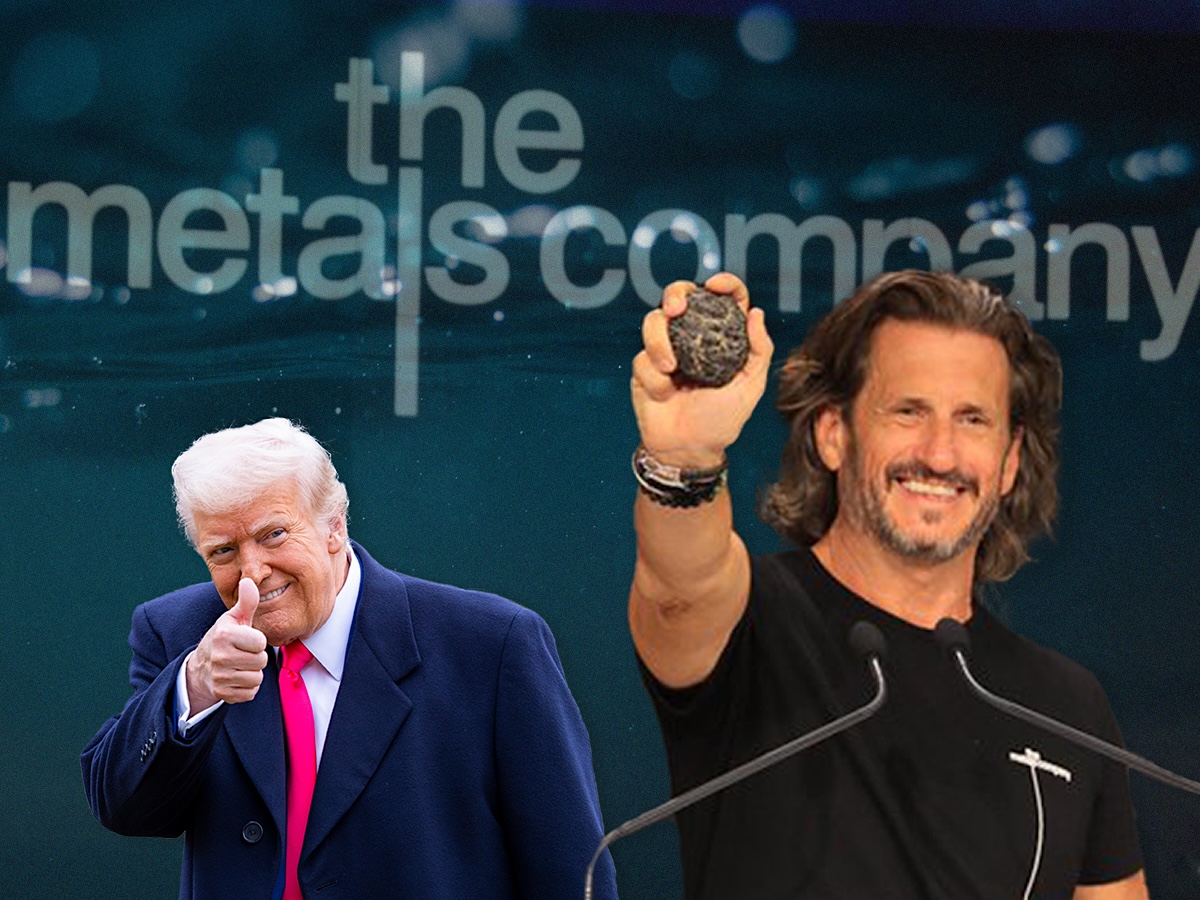
The Metals Co., headquartered in Vancouver, has received the thumbs-up from Trump to mine the deep sea. But it wasn’t Trump’s place to give the thumbs-up. Collage for The Tyee by andrea bennett. Photo of Donald Trump via Shutterstock. Photo of Gerard Barron via X. Photo of the ocean by Tim Marshall via Wikimedia.


Listen to this article
20 min


Gerard Barron, CEO of the Metals Co., a deep-sea mining corporation headquartered in Vancouver, appeared to be feeling optimistic. As Barron left the White House on a sunny day in April 2025, he posed for a photo at the West Wing with a red Tesla in the background.

Announcements, Events & more from Tyee and select partners
At Knowledge Network, Indigenous Brilliance Shines On

The BC-based public broadcaster delivers 12 powerful films and original series to mark Indigenous History Month.

The Metals Co., Barron posted to the social media platform X, was “preparing to work diligently alongside” the Donald Trump administration and federal agencies to promote critical minerals security for the United States. “Nice to see President Trump’s new red car!!” Barron added, along with a U.S. flag emoji.

Barron was at the West Wing to meet with undisclosed senior U.S. officials and discuss the Metals Co.’s readiness to become the first corporation to commercially mine the ocean floor.

Barely a week after Barron’s post, Trump signed an executive order that sent the Metals Co.’s shares skyrocketing, bolstered the president’s reputation as a rogue actor on the global stage and put Canada in a very tricky position.

The order, “Unleashing America’s Offshore Critical Minerals and Resources,” expedites deep-sea mining in U.S. domestic waters.

But, in keeping with Trump’s “America First” strategy and unabashed territorial ambitions, the order goes much further. It allows the United States to unilaterally expedite mining in the international seabed — widely considered the common heritage of humankind.

When Trump signed the order, Barron and his colleagues sent the president a gift: a metals-rich rock that the Metals Co. had vacuumed up from the Pacific Ocean floor, encased in a block of glass and engraved with the company’s logo and a U.S. flag.Gerard Barron, CEO of the Metals Co., outside the White House on a sunny day in April 2025, with Donald Trump’s red Tesla in the background. Photo via X.

The five-million-year-old rock found a home on the storied Resolute Desk in the Oval Office, Barron told U.S. podcast and YouTube show host Shawn Ryan last August, noting, “Here we are, in the final stretch, before the industry becomes big and commercial.”

Days after Trump signed the order, the Metals Co.’s U.S. subsidiary — where Barron is also CEO — applied to the Trump administration for permits to explore and commercially mine the seabed floor in the Pacific Ocean between Mexico and Hawaii.

In late April, the National Oceanic and Atmospheric Administration determined that one of the Metals Co.’s applications — for a permit to explore and commercially mine an area more than twice the size of Vancouver Island — was in full compliance with regulations and could proceed. In May, the oceanic administration also certified a separate application from the Metals Co. for a permit to explore a Pacific Ocean seabed area that is considerably larger than Iceland.

Snubbing the United Nations Convention on the Law of the Sea, which prohibits unilateral deep-sea mining in international waters, the Metals Co. says it expects to begin commissioning its mining system later next year, once it receives final approval from the Trump administration.

“We’re talking about a resource that’s approaching a trillion dollars’ worth of value,” Barron told Mining.com in January. “And the thing that stands in the way of us unlocking that value is the permit to be able to go and extract them and sell them.”

This plan raises thorny questions for Canada. Is the Metals Co. violating international law? Can Canada — one of 43 countries calling for a moratorium on deep-sea mining — prevent the Metals Co. from mining in international waters? And why did the Metals Co. choose Vancouver for its headquarters?

So far, Canada has said nothing about Trump’s deep-sea mining ambitions, which come as the U.S. president continues to squeeze Canada economically and repeats his desire to make his resource-rich neighbour the 51st American state. Nor has Mark Carney’s government challenged the Metals Co.’s gambit to become the world’s first commercial deep-sea miner.

“It’s very problematic for Canada not to be speaking up about this,” Sara Seck, a professor at Dalhousie University’s Schulich School of Law, who focuses on the mining sector and ocean law, told The Tyee.

Unlike the United States, Canada is a party to the United Nations Convention on the Law of the Sea, and Carney’s government “really does have an obligation to step up here,” Seck said.

A Vancouver address

The Metals Co. lists its address in a premium office tower in Vancouver’s tony downtown financial district.

But when The Tyee made an impromptu visit, we didn’t find an office. The floor listed as the Metal Co.’s address houses DuMoulin Black, a boutique law firm that specializes in corporate and securities law. DeMoulin Black has advised the Metals Co. on major corporate transactions, including securities purchase agreements.

Barron, an Australian, has a residence in Dubai and, based on his social media feeds and comments to media, rarely seems to spend time in Canada. He refers to himself as a “frequent traveller” — visiting places such as Seoul, New York, Washington and San Francisco in his continuing quest to raise capital for the Metals Co. and garner buy-in to mine the ocean floor.

Catherine Coumans, research co-ordinator for Mining Watch Canada, said Canada is an attractive place for mining corporations like the Metals Co. to set up shop because the country’s long mining history means that technical, legal and international expertise is readily available. Canada is also a favourite place for mining companies to raise capital, she notes.

When The Tyee asked Rory Usher, senior communications manager for the Metals Co., why the company chose Vancouver for its headquarters, Usher said he wasn’t the best person to answer. The company, which has not said anything public about its decision to list Vancouver as its address, didn’t respond to a followup email by press time. The Metals Co. is not listed as a member of the Mining Association of Canada. But the company has successfully raised capital from its base in Canada.

Why mine the deep sea?

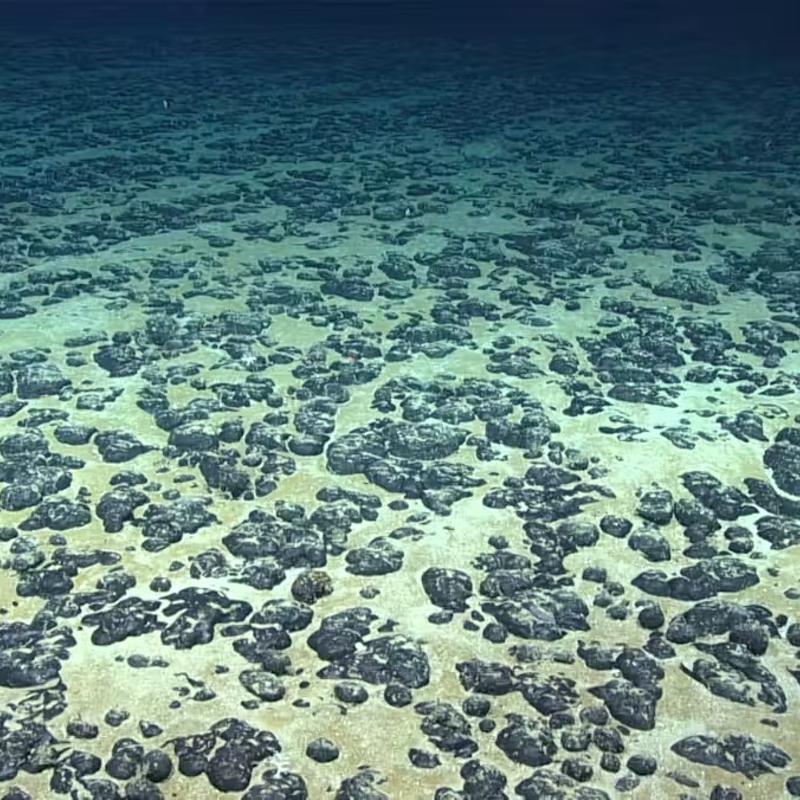
In a quirk of nature, fist-sized rocks called polymetallic nodules are scattered across millions of square kilometres of the seabed in all five of the world’s oceans. These nodules formed over millions of years, as metal ions dissolved in sea water and collected around a tiny nucleus such as a shell fragment or a shark’s tooth.

Concealed in the nodules are nickel, copper, cobalt, manganese and rare earth elements. The metals are critical for the artificial intelligence sector and national defence — think of drones and bombs and fighter jets — as well as for the necessities of modern-day life, such as cellphones and laptops. They’re also needed for the long-promised, yet still elusive, energy transition to wean the world off fossil fuels. Copper is used to make solar panels and wind turbines, while electric vehicle batteries require cobalt, nickel and manganese.

The nodules are especially plentiful in a relatively flat area of the international seabed between Mexico and Hawaii known as the Clarion-Clipperton zone. It’s here that the Metals Co., with the backing of the Trump administration, plans to mine.

“It’s almost unbelievable good fortune that you would have the planet’s largest source of nickel, copper, cobalt and manganese all sitting in one relatively small area,” Usher told The Tyee.

While the company initially plans to mine a 65,000-square-kilometre area, Usher pointed out that it’s only a small fraction of the global sea floor. “It’s not big relative to other oceans,” he said.


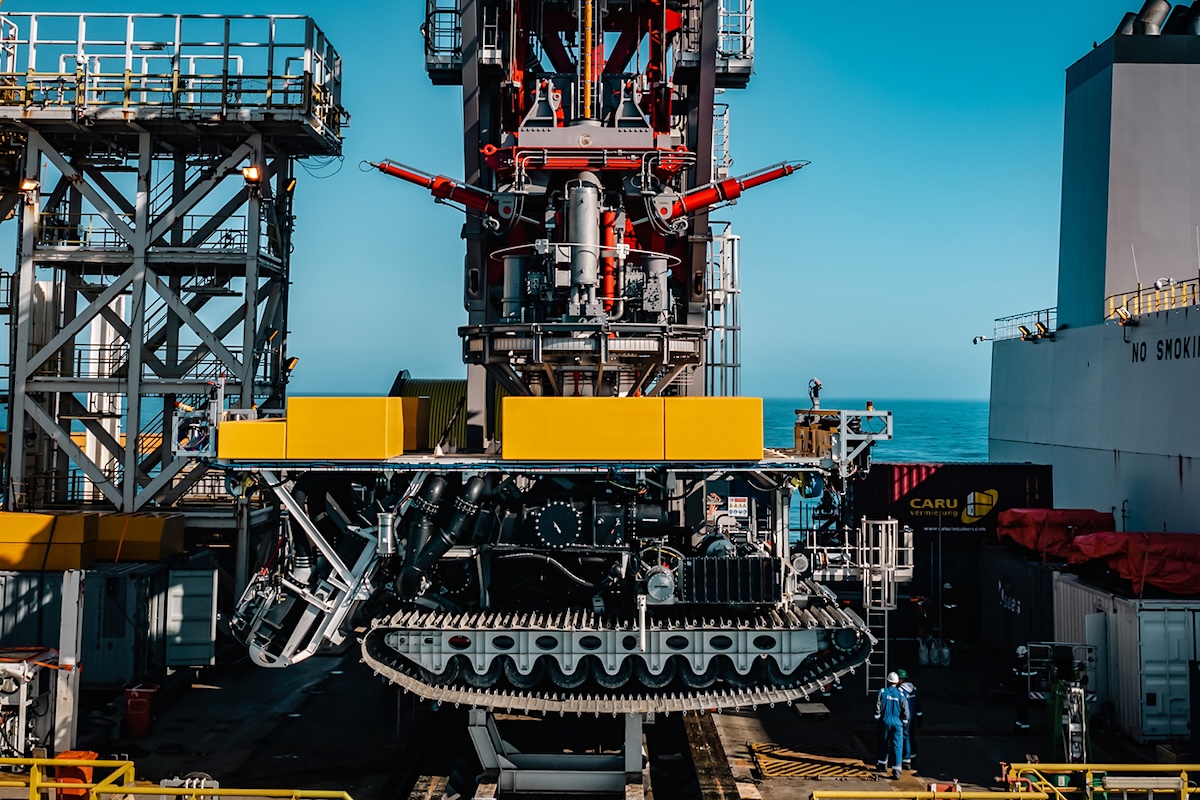
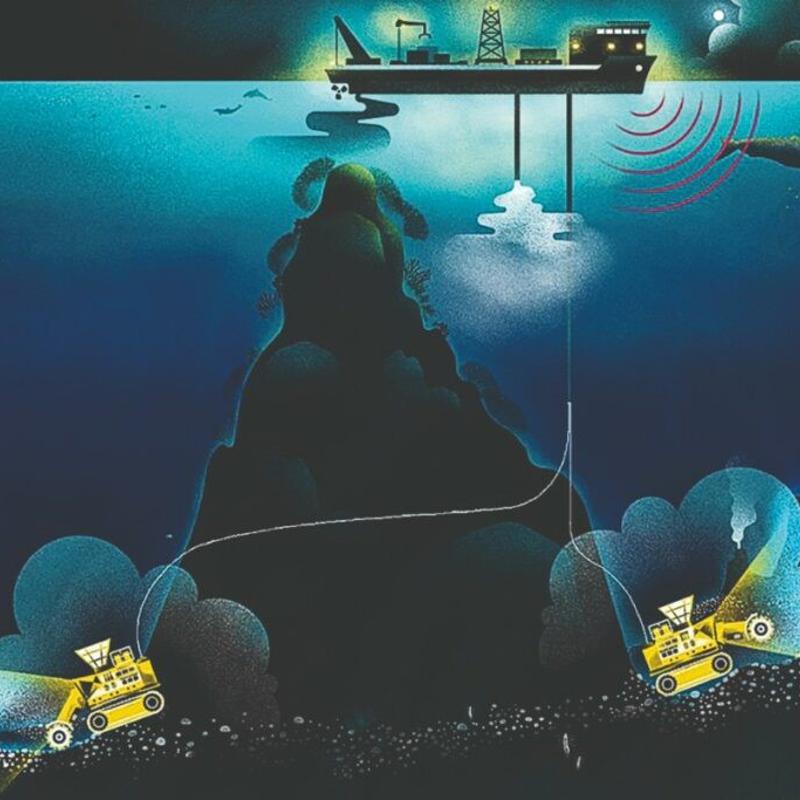
To gather the nodules, the Metals Co. plans to lower a remotely operated collector vehicle the size of a bus about four kilometres to the seabed floor. The robotic vehicle, which has wide treads for crawling along the ocean floor, will be attached to a mother ship at the surface by an umbilical cord-like pipe.

As the machine advances, it will blast sea water at the nodules to loosen them and then vacuum them up into a hopper. Pumps inside the hopper will separate the nodules from sediment, discharging the sediment back into the sea. Air pumped down a pipe called a riser will equalize the pressure, and the nodules will shoot up to the mother ship, where a centrifuge will separate them from the remaining sea water and a conveyor belt will deposit them into the ship’s hold.

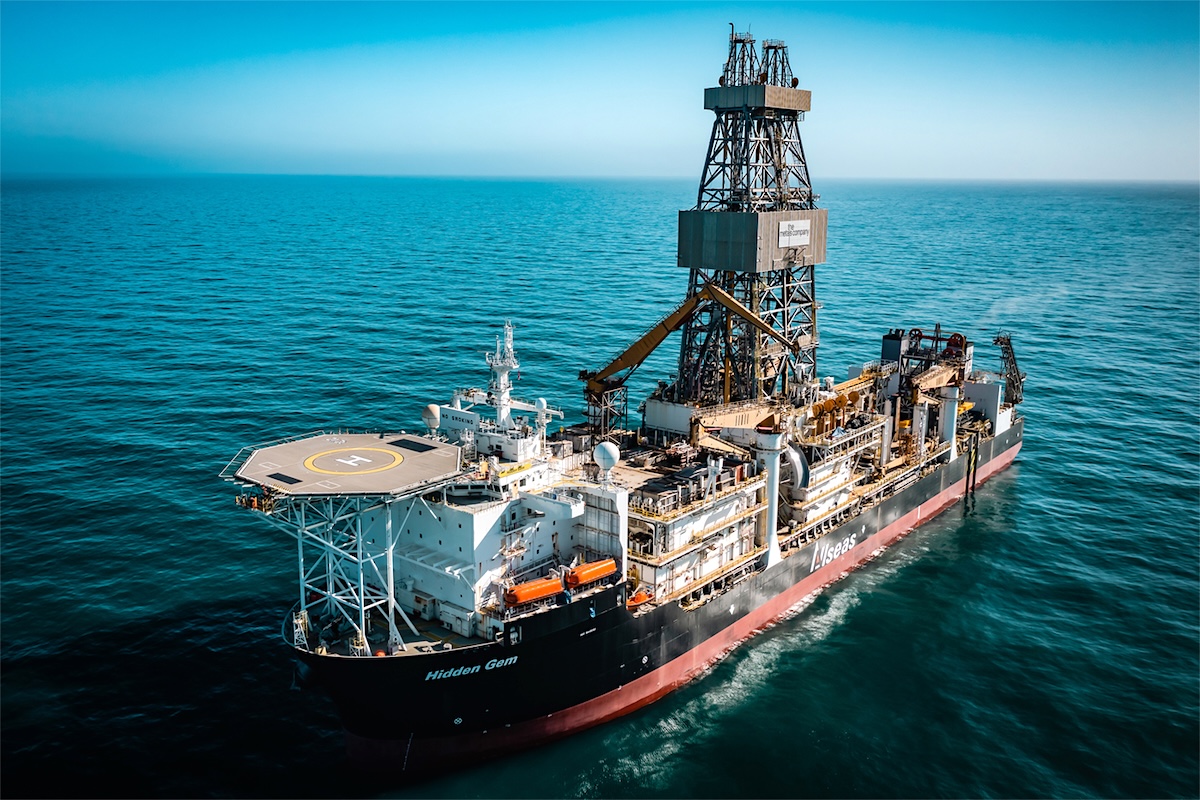
The Metals Co. transformed a drill ship from the offshore oil and gas industry into a nodule collection vessel it has named the Hidden Gem. On a trial run in the fall of 2022, the Hidden Gem collected more than 3,000 tonnes of nodules.

To put that into perspective, a single tonne of nodules from the Clarion-Clipperton zone yields about 13 kilograms of nickel, 11 kilograms of copper, 284 kilograms of manganese and two kilograms of cobalt.

A typical electric vehicle requires about 40 kilograms of nickel and 50 kilograms of copper, while a modern fighter jet needs about 100 to 400 kilograms of copper for wiring and electronics.

Why not to mine the deep sea

Usher argues that the world will quickly need more metals, and mining the deep sea will have fewer environmental impacts than mining on land.

“There’s no free lunch,” he told The Tyee. “There are impacts in the deep sea, and there are impacts for terrestrial mining ecosystems. The question is which of those choices — that we must make, obviously — presents the lightest possible impact.”

He pointed to mining in Indonesia, which accounts for about 60 per cent of the world’s nickel production. Nickel mines have destroyed large tracts of Indonesian rainforest, including in biodiversity hot spots, and runoff is contaminating coral reefs and destroying coastal marine ecosystems.

It makes sense, Usher said, to source metals “from the part of the planet where there is the least life, not the most.” The area where the Metals Co. plans to mine has “no humans... no birds... no trees,” he said.The Metals Co. transformed a drill ship from the offshore oil and gas industry into a nodule collection vessel it has named the Hidden Gem. Photo via the Metals Co.

In one of Barron’s short social media videos, which was viewed by The Tyee but has since been deleted, he stood on a barren, windswept lava field in Iceland, framed by sombre grey skies. “As you can see, there are no plants, there are no animals moving about,” Barron told viewers. “It’s a pretty lifeless area,” he added, comparing it to the Clarion-Clipperton zone.

There’s just one problem: the deep sea is one of the world’s most vital carbon sinks, and it’s teeming with life. It just looks a little different than life on land.

The deep sea is home to fantastical creatures that produce their own light, consume bacteria and thrive in pressures that can crush a car. The world’s deepest-living octopus makes its home in areas that could eventually be slated for deep-sea mining, including in the Clarion-Clipperton zone. Named after the cartoon elephant that uses its oversized ears to fly, the small Dumbo octopus swims by flapping prominent fins on each side of its head.

Colourful sea cucumbers, graceful jellyfish, tiny anemones, yellow sea lilies and slow-growing sponges all live near the nodules. One newly discovered sea creature called Relicanthus sp. — it looks like an ivory kite flying through the ocean with a profusion of stringlike tails — lives on sponge stalks attached to nodules in the Clarion-Clipperton zone. A 2023 study detailed more than 5,000 species new to science in the Clarion-Clipperton zone.

The Metals Co., which has carried out publicly available environmental studies of deep-sea mining, says deep-sea mining will create fewer carbon emissions than land-based mining and that plumes from disturbed sediment will be localized. The company also says it plans to leave behind nodules to provide habitats for organisms to recolonize areas after mining.

Yet more than 1,000 marine scientists and policy experts worldwide have signed a science statement outlining concerns about deep-sea mining and pointing out that its impacts on biodiversity, ecosystems and human well-being are not yet understood.

The Deep Ocean Stewardship Initiative, a network of global experts in fields such as science, technology and economics, says that nodule fields are an important deep-sea ecosystem that hosts a diversity of life and directly benefits humans by helping to regulate the climate.

Studies have also found that deep-sea mining could threaten commercial fisheries. And a 2025 study found that sediment plumes and other impacts from deep-sea mining could threaten at least 30 species of sharks, chimeras and rays, many already at risk of extinction.‘We all have a stake in the ocean,’ says Rashid Sumaila, an economist who teaches at the University of British Columbia’s Institute for the Ocean and Fisheries. Photo by Martin Dee.

“If you want a regenerative blue economy, then deep-sea mining is not part of it,” Rashid Sumaila, an economist who teaches at the University of British Columbia’s Institute for the Oceans and Fisheries, told The Tyee.

Sumaila and other researchers have concluded that deep-sea mining poses significant environmental, social and economic risks that could have far-reaching consequences for coastal communities and small island developing states. They also found that deep-sea mining is likely to negatively affect the business community, including insurers and investors.

Sumaila points to the tuna industry, noting that the Clarion-Clipperton zone is one of the richest tuna fishing areas in the world. Deep-sea mining, he said, can potentially disrupt tuna habitats and alter migration patterns by creating sediment plumes, generating noise and light pollution and discharging water with higher concentrations of metals.

“Fish don’t need visas,” he said — and the tuna make their way to Canada, where they are caught commercially. “We all have a stake in the ocean,” Sumaila said.

Instead of increasing the world’s supply of critical minerals, Sumaila said, we should be looking at how to reduce our need for them.

“If we just go, ‘Oh we need more, we need more,’ where are you going to stop?” he asks. “This shouldn’t be a question of only supply; it should be a question of demand.”

Trump’s plans called ‘unlawful and illegal’

Under the United Nations Convention on the Law of the Sea — ratified by 171 countries and the European Union — an agency called the International Seabed Authority is responsible for managing mineral resources in the deep ocean floor beyond areas of national jurisdiction.

The authority, which is headquartered in Jamaica, has spent more than 10 years hashing out rules for seabed mining, including environmental and liability regulations.

Over the years, the authority has granted the Metals Co. and 20 other contractors a total of 31 exploration leases worldwide, including in the Clarion-Clipperton zone. The Metals Co. partnered with the tiny Pacific Island countries of Nauru and Tonga, where it has subsidiaries, to secure its seabed authority exploration contracts.The Metals Co. plans to lower a remotely operated collector vehicle about four kilometres to the seabed floor. The robotic vehicle will be attached to the Hidden Gem by an umbilical cord-like pipe. Photo via the Metals Co.

The company’s permit applications to the U.S. government substantially overlap with its exploration licences from the seabed authority. The company has conducted its research in the seabed authority exploration areas, and its 2022 nodule collection also took place in the area overseen by the authority.

Barron said he turned to the Trump administration last year because the seabed authority was taking too long to finalize deep-sea mining rules for commercial extraction and failed to meet its own deadlines.

“I depend on shareholder support,” Barron told Ryan, the podcast and YouTube talk show host, “and unfortunately shareholders would not have been willing to give me another five years to sit around and see what happens.”

Yet, as the Metals Co.’s U.S. subsidiary pursues unilateral mining, the company’s Nauru and Tonga subsidiaries have maintained their seabed authority exploration contracts. The seabed authority has now launched an investigation into their actions.
Trump’s plans to push ahead with unilateral mining in areas under the seabed authority’s jurisdiction have rankled countries around the world, including China, France and Russia.

France’s special envoy to the seabed authority says the United States is violating the principle of non-appropriation of the high seas and weakening the framework of the international law of the sea “to the detriment of all.” International Seabed Authority president Leticia Carvalho told Australian broadcaster ABC that the Trump government’s decision to issue permits is “unlawful and illegal and challenges the rule of law and the unilateral order.”

While the United States hasn’t ratified the international law of the sea convention, it has accepted most of its provisions, including freedom of navigation and the ability to fish in international waters, as customary international law.


Mining Firms May Soon Bypass UN Rules and Mine the Deep Searead more

Where Canada could, or should, come in

Seck, the Dalhousie law professor whose research focuses on the mining sector and ocean law, told The Tyee that there are good reasons to believe the Metals Co.’s applications to the U.S. administration violate international law.

And specific provisions in the law of the sea convention suggest that Canada “does have an obligation to make sure that they are in no way supporting this company... and in no way enabling illegal activity,” she said.

Yet both Seck and Neil Craik, a law professor at the University of Waterloo with expertise in deep-sea mining, say the situation is complex because the applications to the U.S. government for deep-sea mining were made by the U.S. subsidiary of the Metals Co.

Craik said the Carney government, “at a minimum,” should be asking questions about the relationship between the Metals Co. and its U.S. subsidiary.

Is the subsidiary independent, or “is the Canadian parent, in some ways, a directing mind of the company?” asks Craik, whose work focuses on environmental regulation and liabilities for deep-sea mining in areas beyond national jurisdiction.

If the U.S. subsidiary is relying on data and technology developed by the Canadian parent company, Craik said, the two may be acting as a cohesive enterprise and “Canada may have positive obligations to ensure that that company is acting in accordance with international law.”

Global Affairs Canada did not respond directly to The Tyee’s questions about the Metals Co. and international law.

Instead, media relations spokesperson John Babcock said Canada is aware of recent developments related to seabed mining applications and “continues to engage constructively with partners on the issue of deep seabed mining in areas beyond national jurisdiction.”

Babcock said Canada, as a general practice, does not comment on the corporate structure or operations of specific companies, adding that Canadian companies operating internationally are “expected to comply with applicable laws and align with international standards and best practices.”


The Fight Over Seabed Mining Comes to Vancouverread more

He said Canada is actively participating at the International Seabed Authority “to advance negotiations and support the timely development of commercialization regulation” for deep-sea mining. During the seabed authority’s March 2026 meeting, Canada contributed to discussions aimed at ensuring strong environmental protections are embedded in the regulatory framework, Babcock noted.

Canada takes its obligations at the seabed authority seriously and continues to advocate for a “robust, science-based regulatory regime that includes strong environmental protections, transparency and accountability,” Babcock said, adding that Canada will continue to monitor developments closely.

He also confirmed that Canada still supports a moratorium on deep-sea mining, which is welcome news for Mining Watch Canada and other organizations.

“This is an ecosystem that cannot be mined in any way responsibly, and we’re better off sticking to mining on land and trying to do that responsibly, rather than to destroy another entire area,” Coumans said.


Read more: Politics, Environment

Independent journalism thrives when readers choose to support it

Nearly every week, I see newspapers and magazines that seemed fine suddenly going out of business. Or a private equity fund buying up a chain of newspapers that had been serving communities for decades and stripping them for parts. And now, the thing that’s making all publishers wring their hands is AI – publishers are seeing massive drops to their web visits as AI scrapes their content and delivers it up to people in chatbots, with the journalists who did the original work not even credited with the work.

Despite this, I have hope for journalism because of what’s happening at The Tyee.

Years ago, we made a strategic bet that support from our readers was going to drive our whole future. And thankfully, that is working for us.

Over the past decade, we’ve more than doubled our journalism team and are publishing more work than ever. More people read The Tyee now than at any point in our 23-year history.

This is only possible because we regularly ask our readers to sign up as paying Tyee Builder members. Roughly half of our entire budget is made up of contributions from over 10,000 readers.

We’ve been doing more as our resources have grown. A weekend culture section filled with original essays. Hard-hitting investigative journalism in Alberta. A brand new biodiversity beat. A reporting project called Reality Check, focusing on misinformation and online radicalization. A flagship podcast.

Our model is simple: if more of our readers sign up to support The Tyee, we can keep up with rising costs and keep adding more talented journalists to our roster and set them loose on uncovering truths that would otherwise not see the light of day.

Please help us prove that Independent Journalism Thrives with reader support.


— Jeanette Ageson, PublisherSupport us now

An AI wearable that remembers what you missed - same as Meta Glasses?


An AI wearable that remembers what you missed


SPONSORED BY MEMOKET


An AI wearable that remembers what you missed


Memoket Gem is an AI wristband designed to capture conversations and bring important context back when you need it. With on-device storage and AI-powered features, it turns everyday conversations into information you can easily revisit.

The company identifies itself as Memoket Inc. Its website does not provide much publicly visible corporate background beyond product, support, and company pages. Independent reviews describe it as a competitor to Plaud-style AI note-taking devices, with cross-conversation memory and broader integrations as its main selling points.

RG Richardson Communications News

I am a business economist with interests in international trade worldwide through politics, money and banking. Interactive Internet VoIP and secure eMail Communications. The author of RG Richardson City Guides that has over 300 guides, including restaurants, real estate and finance.