RG Richardson Business & Economics

RG Richardson Business & Economics
Interactive financial ebooks

Meanwhile, Trump Steaks are back!

US and Canada fail to reach a deal to stave off 50% tariffs. As of last night, the Trump administration is imposing a 50% import tax on $20 billion worth of Canadian goods, after talks to reach a trade deal before the 12:01am deadline for the tariffs to kick in collapsed at the last minute. 

Meanwhile, Trump Steaks are back! Trump to allow tariff-free beef imports to bring prices down. President Trump wants the burgers at your Labour Day cookout to be cheaper: He said on Truth Social that the US will “allow up to 300,000 metric tons of product for ground beef to be imported with no out-of-quota tariff” over the next three months. He said the beef would be sold at 25% below current market prices.

A phone you can repair is finally landing in the US stores

 A phone you can repair is finally landing in the US stores.

The phone you can actually repair yourself is finally coming to the US. The Dutch company, known across Europe for building devices you can crack open and fix yourself, just launched the Fairphone 6+ stateside, and it arrives with credentials no major brand can match. iFixit handed it a perfect 10/10 repairability score. The warranty runs five years. Software support stretches to 2033. Compare that to what happens when you break a screen on an Apple, Samsung, or Google phone, where a single repair can cost $300 or more.

Twelve modular components sit inside the 6+, and every one of them is designed to be swapped at home. No technician, no appointment, no sealed enclosure. Ordering a replacement screen? That's $90. A fresh battery is $40. The USB-C port, which tends to be the first thing to fail on any phone, costs $20 to replace. The hardware itself is capable rather than flashy: a Snapdragon 7s Gen 4 chip paired with 12GB of RAM. Fairphone lists it at $650 on Fairphone.com, and it works on both T-Mobile and AT&T.

Indian students cool on 'American Dream' as EU opens its doors

Exclusive news, data and analytics for financial market professionals


World
Business
Markets
Sustainability
Legal
Commentary
Technology
Investigations
More
My News

Indian students cool on 'American Dream' as EU opens its doors
By Praveen Paramasivam, Sai Ishwarbharath B and Charlotte Van CampenhoutJuly 19, 20267:40 PM PDTUpdated 8 hours ago

Item 1 of 5 A student reads a brochure next to a study abroad sign at the office of KC Overseas Education, an education consultancy, in Bengaluru, India, February 18, 2026. REUTERS/Priyanshu Singh
[1/5]A student reads a brochure next to a study abroad sign at the office of KC Overseas Education, an education consultancy, in Bengaluru, India, February 18, 2026. REUTERS/Priyanshu Singh Purchase Licensing Rights, opens new tab

Summary
Trade pact sets clearer post-study pathways for Indian students
EU tuition fees are about 50% to 80% less than the U.S.
EU gains appeal as U.S., Canada, UK tighten visa rules
CHENNAI/BENGALURU/AMSTERDAM, July 20 (Reuters) - A. Shrinikheathan is breaking from his family's tradition of studying in the United States, opting instead for a master's degree in Germany.
The 22-year-old Chennai engineering graduate is learning German and taking a language proficiency test as ​he applies for courses, drawn by the low cost of studying in Germany and its traditionally strong industry links.

Get the latest news from India and how it matters to the world with the Reuters India File newsletter. Sign up here.
His decision reflects young Indians' growing interest in European universities as the India-EU trade ‌deal's mobility provisions and tighter U.S. immigration rules prompt many to rethink the American Dream, a dozen students and education consultants said.
Advertisement · Scroll to continue


"The world is becoming more multi-polar. Earlier, the U.S. was all that everyone was talking about," Shrinikheathan said, adding he was happy to have study choices beyond the "wildly more expensive" United States and Canada.
If sustained, the shift could reshape global student flows, with Europe emerging as a viable alternative to North America for Indian students as the EU seeks young talent to offset labour shortages from an ageing population.
European tuition fees ​are typically 50% to 80% less than the U.S., according to education consultant KC Overseas, with lower living costs also reducing the bill.
Advertisement · Scroll to continue


"The European Union has become a leading destination for Indian students," an EU ​official said in a statement to Reuters. "Indian students bring entrepreneurial spirit, cultural richness, and research excellence."
He added: "(Indian students enrich) European campuses while deepening EU-India ties in innovation, ⁠trade, and diplomacy ... this trend will continue to grow, benefiting Europe's talent pool and India's globally competitive workforce."
India's overseas student outflow fell to about 626,000 in 2025 from more than 908,000 in 2023, government data showed, with students ​wary of tougher visa rules and rising costs in the U.S. and other popular study destinations such as Australia and the UK. Last week, Washington moved to tighten the duration of visas for foreign students as part of a wide-ranging immigration ​crackdown that began after Donald Trump took office in January 2025.

00:01South Korean student says stocks 'only salvation' after $200k loss


The video player is currently playing an ad.
WANTED: INDIAN TALENT AT SCALE
Indians' interest in Europe has risen since the January trade deal, which aims to make it easier for students and skilled workers to move to Europe through easier visa pathways, clearer post-study work routes and improved recognition of Indian qualifications.
"The EU-India mobility framework is part of a broader set of initiatives aiming to make the EU a global magnet for attracting and retaining talent, including for Indian students and talent," the EU official said.
"For ​the first time, a major economic bloc is saying, 'We want Indian talent at scale'," said Arnav Kumar, co-founder of study-abroad platform Leap.
India and the EU will work over five years on social security pacts with member states, initially setting up ​a tech-focused office to guide Indian students and professionals.
"Indian students have been growing in Europe without any overarching framework. Now, we have structured pathways from education to employment," Kumar said, forecasting a 60% to 70% jump in student and worker flows over ‌three to ⁠five years.
Advertisement · Scroll to continue


Consultants say students are increasingly matching destinations to career goals and lifestyle, choosing Germany for engineering, the Netherlands for work-life balance, Portugal for affordable postgraduate research and France for management.
The prospect of greater mobility across the EU and a growing number of English-language postgraduate programmes are also attracting Indian students and professionals to Europe.

Education consultancy Europe Study Centre has seen enquiries jump 25% to 30% since the trade deal, with director Sivaraman Pandian calling Europe the "red-hot destination" for families put off by rising costs and tougher visa rules elsewhere.
More than 121,000 Indians study in the EU, about half the U.S. total, but the bloc has steadily grown in popularity, emerging as a leading destination alongside the U.S., ​Canada and Australia, government data showed.
CHALLENGES APLENTY TOO
Challenges remain, ​however.
"If somebody says you will get a job in ⁠this country, don't blindly believe it. Just because you studied in that country, it does not entitle you to get a job," said Pandian.
"You study, and you develop a skill-set; your doors are open."
Several students pointed to language barriers, housing shortages in major cities such as Amsterdam, intense competition for jobs, and the need for specialised skills.
Some ​others also acknowledged concerns about the rise in far-right political parties and hardening attitudes towards foreigners in parts of Europe, according to Reuters interviews and social media posts.
EARLY ​DATA SIGNALS EUROPE SHIFT
Still, Indian enrolment ⁠in the Netherlands climbed to about 3,700 in 2025/26 from 2,630 in 2018/19, making Indians the third-largest non-EU student group, Statistics Netherlands said.
Eindhoven University of Technology reported about 2,140 pre-enrolments from India for the coming academic year, up from roughly 1,390 a year earlier.
Leiden University's Indian intake in regular master's programmes, which are less demanding than its master's by research courses, jumped to 120 this year from 70 in 2021.
Italy's Padua University said partner agencies in India were reporting rising interest in ⁠Europe, including from ​regions that traditionally sent students to the United States.
However, whether the surge in interest translates into sustained enrolments will depend on how smoothly ​the agreement is implemented.
Chennai-based engineer T Suthir, who is exploring colleges in the Czech Republic and Italy, said perceptions were already shifting.
"Earlier, before the deal was finalised, my family was saying Europe is not good," he said. "Now, they are saying it's good."


Reporting by Praveen Paramasivam in Chennai, ​Sai Ishwarbharath B in Bengaluru and Charlotte Van Campenhout in Amsterdam; Additional reporting by Abhirami G in Bengaluru, Giselda Vagnoni in Rome, Bhanvi Satija in London and Saurabh Sharma in New Delhi; Editing by Dhanya Skariachan and Kate Mayberry

European stocks are finally hot again

 European stocks are finally hot again

a row of EU flags

Xinhua News Agency/Getty Images

On Wednesdays, the Brew’s Sam Klebanov highlights a fascinating stock, commodity, or other asset that’s worth your attention.

Europe’s stock market is waking from its long slumber. For the first time since the Iran war began in February, investors bought European stock index ETFs more than they sold them last month, per Bloomberg data.

Despite fears of rising energy prices undermining the continent’s economy, Europe Inc. is blowing it out of the water:

  • European companies are on track to report one of the strongest quarterly profit growth in years for Q2.
  • It’s even outperforming the US in some parts of the market. EURO STOXX Bank index gained 20% this year, beating the 12% rise in its S&P 500 banking counterpart.

It’s also a hot hedge against the AI trade. BlackRock said $4.4 billion flowed into its European ETFs in July as cash was taken out of volatile chip stocks. And BNP Paribas said that while European companies might not be leading in developing AI, they could get a boost from using it.

But overall Europe still trails the US: Stoxx 600 is up 9% this year, slightly behind the 12% gain in the S&P 500

Lake Mead expected to drop nearly 33 feet by June 2028

Lake Mead expected to drop nearly 33 feet by June 2028, and that’s not even the worst-case scenario by Greg Haas - 07/18/26 10:47 AM ET

LAS VEGAS (KLAS) – A critical year is ahead for the nation’s two largest reservoirs, with no relief after a record-low snowpack and a continuing drought.

A comment posted on the Colorado River Basin’s Facebook page Wednesday morning might have said it best: “Not enough water in the Monsoons to help. There’s only 2 things that can save Mead and Powell right now: 150 percent Colorado Rockies snow pack for 5 consecutive years, or God himself.”

Projections released earlier this week show Lake Mead dropping to the lowest levels seen since Hoover Dam was built in the 1930s, falling to 1,035.86 feet in November. That’s about 6.5 feet lower than Lake Mead’s level Friday at noon — 1,042.52 feet. Lake Mead is the nation’s largest reservoir, but it’s currently at 27 percent capacity.
The latest projections

The U.S. Bureau of Reclamation’s 24-month study, which is updated monthly, published “most probable” lake levels through June 2028, when Lake Mead is expected to be at 1,009.69 feet. That represents a drop of nearly 33 feet over the next two years. When the lake is at “full pool,” the lake’s surface is at 1,229 feet.

Lake Powell, the second largest reservoir, is currently at 24 percent capacity. The federal government has consistently prioritized keeping Powell at levels that protect Glen Canyon Dam’s ability to produce hydroelectricity. To do so, the reservoir’s target level has been established as 3,525 feet. But Lake Powell is currently at 3,524.03 feet right now.

To keep Powell at its current level, the federal government has increased releases from Flaming Gorge Reservoir on the Utah-Wyoming border, bolstering flow in the Green River, the Colorado River’s largest tributary.

The government has also reduced releases from Lake Powell. Lower releases will have an impact on Lake Mead.

Water shortage levels that determine Colorado River allocations are based on Lake Mead’s level. And even under the most optimistic forecasts, that will mean less water for Arizona and Nevada in 2027. Those decisions are based on projections that come out in August, looking ahead at the lake’s projected level at the end of the year.
Water for the Las Vegas valley

Officials from the Southern Nevada Water Authority aren’t worried about the water supply to Las Vegas. Despite continuing growth in the valley, SNWA says Nevada is using far less than its allocation. That’s the result of water recycling and reduced use of water outdoors. SNWA receives credits for water that is recycled and returned to Lake Mead.

About 90 percent of the Las Vegas valley’s water comes from Lake Mead, with the remaining 10% from wells.

Total consumptive use of Colorado River water in Nevada is estimated to be 198,001 acre-feet in 2026 out of its 287,000-acre-foot allocation under current water shortage conditions. (An acre-foot is equal to 325,851 gallons — literally, the amount of water it takes to cover an acre in water a foot deep.)

The federal government is expected to establish new rules that will take effect in 2027 regarding river water allocations. Those rules might be released around the same time that Reclamation releases its next 24-month study in the middle of August. Current rules expire at the end of the year.
Worst-case scenario

Reclamation also released projections that show the best- and worst-case scenarios, shown in the graphic below. The red dashed line shows that under “Probable Minimum” projections, Lake Mead would drop below 1,000 feet by June 2028.

Some scientists say the “Probable Minimum” has been a more accurate reflection of actual reality during the drought that began in 2000.
Lake Powell’s place in the projections

Continued efforts to maintain Lake Powell’s elevation at 3,525 feet are not reflected in the projections released on Wednesday. Reclamation shows Lake Powell going far below that immediately in its projections with 10 consecutive months of declines that would put Powell at 3,491.75 feet.

If the federal government continues to prioritize Lake Powell, that’s water that won’t be sent downstream to Lake Mead, possibly amplifying the effects on Lake Mead.

The graphs in the slideshow below show levels at Lake Mead (the first slide) and Lake Powell compared to levels over the past five years.

The Colorado River supplies water to 40 million people, but scientists have said that climate change has reduced the amount of water in the basin by about 20%.

The result: More water is promised to users than the amount that actually exists.

The federal government — the Interior Department and the Bureau of Reclamation — are now shaping future agreements on how to manage the Colorado River after the seven states in the river basin failed to come to a consensus.

The water cooler is not for flirting anymore

 The water cooler is not for flirting anymore

Cupid's bow, arrow and wings in a dustbin next to a photocopy machine

Niv Bavarsky

On Tuesdays, the Brew’s Matty Merritt brings you the news you need to make life a little easier during your 9-5, 5-9, or OOO.

Looks like y’all are actually clocking in and locking in. People aren’t dating their coworkers like they used to:

  • Just 16% of survey respondents said they went on a date with a coworker last year, according to the Society for Human Resource Management (SHRM).
  • Back in 2008, 40% of those surveyed by The Harris Poll said they went out with a coworker.

Even cubicle yearning is down: Last year, 22% of people reported having an office crush compared to 49% in 2024, according to SHRM.

What changed? More sexual harassment trainings, blanket bans on intra-office romance, and the boom of (and burnout from) online dating all seem to have played a role.

Record-breaking investment in renewables could cement Canada as new clean energy superpower

Record-breaking investment in renewables could cement Canada as new clean energy superpower


Copyright Jacques Boissinot/The Canadian Press via AP, File
By Angela Symons with AFP
Published on 18/08/2026 - 16:02 GMT+2
ShareCommentsAdd Euronews on Google


Listen to this article now...
Record-breaking investment in renewables could cement Canada as new clean energy superpower

The slated green energy plans could light, heat and cool all the homes in Toronto, Montreal and Vancouver combined.


Canadian officials have announced plans for "the largest clean energy investment in North American history."

A total of CAN$70 billion (€43.6 billion) is earmarked to massively enhance wind and hydropower generation in the eastern part of the country.

While plans remain tentative, they mark a major effort to increase electricity production in the country. The agreement was made between Prime Minister Mark Carney's government and the provinces of Quebec and Newfoundland and Labrador

If the project moves forward, Carney says the 14,000 megawatts of power generated would be "enough to light, heat [and] cool the homes in Toronto, Montreal and Vancouver combined", as well as supporting 23,000 jobs and contributing $31 billion (€19.3b) to Canada’s GDP through the early 2040s.

Related‘Excellent profit’: Meet the Bavarian hop farmer securing his harvest and income with solar 'hats'
Rhine drought, heatwaves and deaths: Is it time for Germany to enshrine climate protection in law?

It could also put a major dent in the country's planet-heating carbon emissions by reducing reliance on burning fossil fuels for energy.

Already, around 80 per cent of electricity generated in Canada comes from non-emitting sources – primarily hydro, alongside nuclear, wind and solar – contributing to the country having the lowest residential electricity costs in the G7.


Through a combination of clean economy tax credits, efficient project approvals, cooperation agreements with provinces and territories, and attractive financing, "We are making Canada the best place in the world to build and invest in clean energy," says Carney.
A boost for hydroelectric power in North America

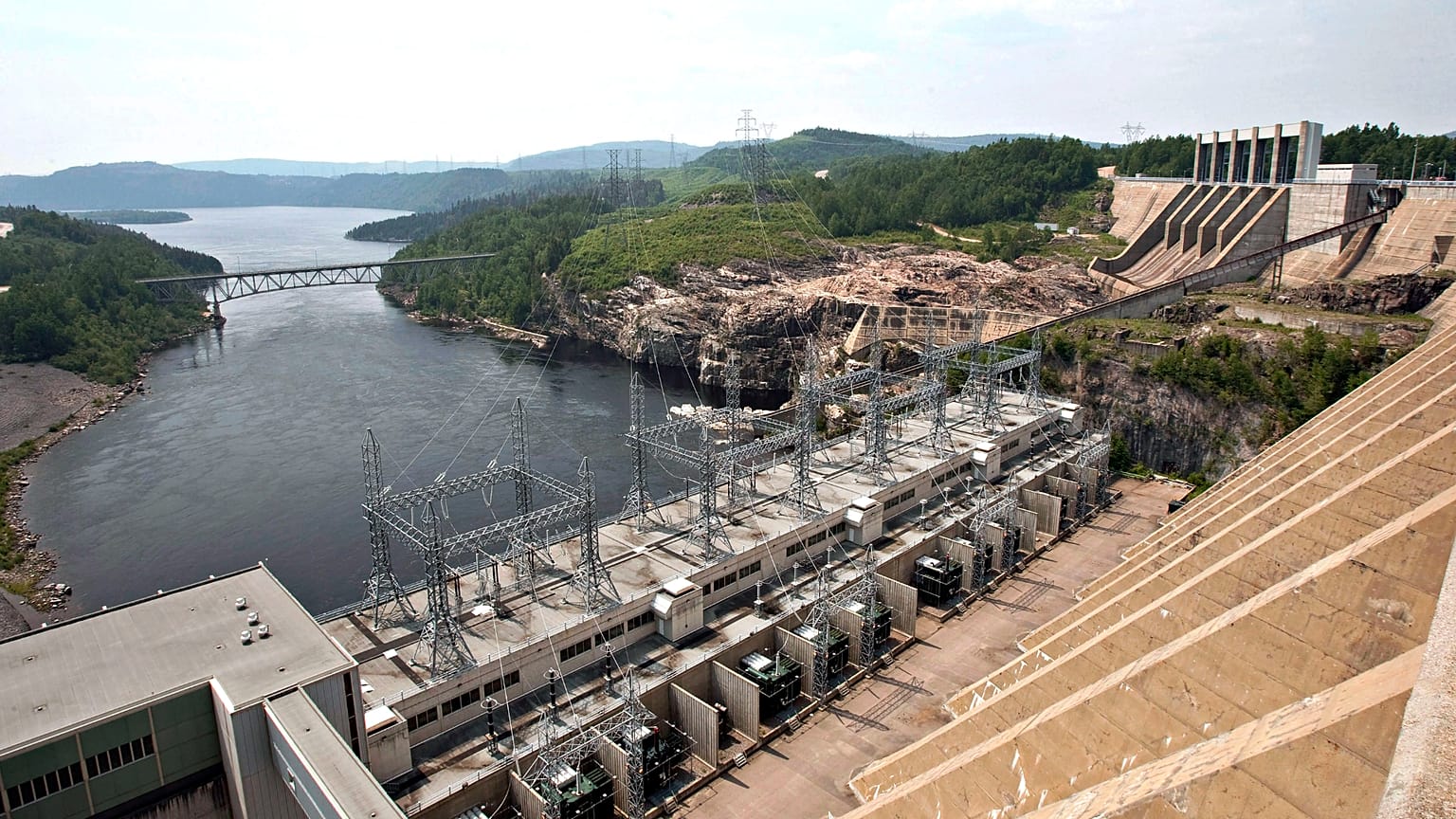
The agreement includes plans to upgrade the Churchill Falls generating station while developing a new hydro project on Gull Island. Both sites are in Labrador, on Canada's Atlantic coast.

Some of the new power generated would also be transmitted to Quebec, with utility Hydro-Quebec selling a significant amount of electricity into the northeastern United States.

Importing more of Canada's hydroelectricity is seen by some as a key component to decarbonising the US electric grid, as well as improving energy reliability and cost for American consumers.

But the initiative could be stalled within months.

At the signing ceremony on Monday 17 August in Newfoundland, Quebec Premier Christine Frechette acknowledged that her political opponents, the separatist Parti Quebecois, could tear up the agreement if they win provincial elections in October, an outcome current polls suggest is likely.
Renewables investment could boost energy security and lower bills

Since taking office last year, Carney has been criticised by environmentally conscious groups who accuse him of betraying climate pledges backed by his predecessor Justin Trudeau.

A member of Carney's cabinet resigned last year over plans to advance a new oil pipeline running from Alberta to the Pacific coast.

Monday's announcement was however welcomed by the Canadian Climate Institute, which said it showed "the level of ambition needed to reach Canada's goal of doubling the electricity grid with clean energy".


The group's president, Rick Smith, said that enhancing domestic clean energy supply will also "improve energy security and affordability in a time of volatile energy price swings".

Democratic socialists are done being on the fringe. But are they Democrats?

Democratic socialists are done being on the fringe. But are they Democrats?

MS NOW · 4 hours ago
by Eugene Daniels · Elections


CHICAGO — In the halls of a Hyatt, serviced by unionized employees of course, hundreds of young, mostly college educated democratic socialists are milling about. It’s a bit too corporate for what is happening in the rooms: conversations on how they can expand, grow and fight back more.

The session names are the tell: “Winning Socialism in the South,” “Legislating as Socialists,” “Power Shift Opportunities.”

What you won’t find are the stars of the movement. No Mamdani. No AOC. No Bernie.

Instead, it’s the door knockers, the city council types, the local stewards who have gotten disillusioned with American politics and have taken their energy elsewhere. And in a lot of cases, that fight is aimed as much at the Democratic Party as at President Donald Trump.

Which raises the question that hung over the entire weekend, which nobody answered the same way twice: Are these people Democrats, or not?

Ask plainly and a half-dozen answers from people wearing the same label will give you the same answer.

“I think if the Democratic Party was actually delivering on the things that they say they care about and what is listed in their platform, I would feel comfortable saying yes to that,” said Hayley Banyai-Becker, a Democratic Socialists of America leader based in Portland, Oregon, who helped plan the summit told MS NOW. “The answer is no.”

Washington state Representative Shaun Scott, sitting next to her and running unopposed, wouldn’t take the yes-or-no. “I think that DSA is at the mainstream of American politics right now,” he said, then flipped it. “If we were to be considered part of the left wing of the Democratic Party, I would wonder what happened to the right or the center of the Democratic Party.”

Robert Levertis Bell, a public school teacher running for the Kentucky state house with Sen. Bernie Sanders’ endorsement, went further.

“I see many elements of the Democratic Party as absolutely being my enemy because I stand with the working class, and if you don’t represent the interests of the working class, if you’re not trying to build political power for the working class, and you actually are trying to build power for the capitalist class, then you are my enemy,” Bell said. “And the capitalist class runs the Democratic Party.”

Enemies or opponents? He split it. “Some of my enemies, some of my opponents, some of my friends.”

National co-chair Ashik Siddique explains the strategy rather than the sentiment. For him, the only way to gain electoral power is through the Democratic door. “All it takes to run in a Democratic primary is to be a registered Democrat, so that’s what we’re doing for the most part.”

Why not run outside it, like the Green Party: “There’s a clear ceiling to that strategy.”

Not exactly on the fringes anymore

The Democratic Socialists of America are in the midst of a year that has fundamentally begun to change their place in the country. The idea of it being a fringe is fading. By now the shock of the movement’s insurgent victories against tenured congressional incumbents in New York and Colorado has worn off and one of their own could soon win a competitive primary for governor in the presidential battleground of Wisconsin.

Asked why now, and they point you to 2016.

“Bernie Sanders’s campaign in 2016 showed how much space there really was in American politics for democratic socialist politics,” Siddique said. “I don’t think I was aware of what socialism really was, other than something in the history books, until he ran for president.”

Membership went from roughly 5,000 before 2015 to more than 120,000. Siddique rejects the lightning-strike version of that.

“Now is the moment where seeds that we started to plant a decade ago or even earlier are now bearing fruit,” he said. “In 2017, the year after Bernie had run for president, so many of us who had been motivated by his campaign just thought, okay, now what? It feels like we’re in the wilderness here with Trump as president, and we don’t know what to do.”

But those seeds can’t grow in bad soil. The conditions matter, and the conditions right now are a Democratic Party with approval ratings in the tank,, a base that keeps telling pollsters it wants someone willing to fight, and a summer of liberal self-loathing that has left an unusual amount of room to the left.

Insurgencies don’t happen when the establishment is delivering. There is no Zohran Mamdani, no Darializa Avila Chevalier, no runaway primary in Wisconsin, if Democratic leadership is fighting the way its own voters want it to.

Others in Chicago were blunter about the vacuum created by Democratic missteps.

“There is so much inconsistency with how the Democrats operate, and for a while I think they’ve been able to get away with ‘we’re not Trump’ but we’re in the second Trump presidency,” said Chanpreet Singh with the Seattle DSA. “…The absence of a positive political vision is going to continue to be a crisis for the Democratic Party, and, I think, an opportunity for us as an organization.”

Even with possibly ripe conditions, what the DSA is now grappling with in public is its own platform — abolish the Senate, abolish police and prisons, get rid of the Defense Department — and no DSA candidate is running on any of it, and everyone in Chicago says so freely. It is also opposition research that writes itself, and Republicans are enjoying it.

But the pamphlet being handed out in the halls of the convention center is missing some of the language that has created the caricature of the DSA and caused them to be pilloried after interviews. It shows they are still very far away from overtaking the Democratic party establishment.

“The language that we have in there is abolishing the police and prison system that protects capital over people,” Siddique said. Told it doesn’t roll off the tongue: “It doesn’t. You know, it’s not a great slogan. I’ll admit that.”

Asked whether murder and sexual assault would still be prosecuted: “To us, those are crimes. We want to limit that. I personally have no problem with having something called a prison be the place where people like that are kept.”

The great 2028 hope

A card circulating in one session urged members to line up behind a 2028 presidential run by a candidate who hasn’t said she’s running. Walking into one meeting, attendees were welcomed with that card featuring the face of New York Rep. Alexandria Ocasio-Cortez of New York, the heir apparent to what Bernie’s been able to build in American politics.

She’s not running for anything other than another term in her current job right now. But a push is afoot to align behind her quickly if she decides to go after the biggest job American politics has to offer.

“The 2028 Presidential Election is an unprecedented opportunity for the Left in the United States,” the card read before urging the DSA rank and file “to seize the moment, unite Labor and the Left, and elect Alexandria Ocasio-Cortez as our Democratic Socialist President.”

The real version is less fun. A bloc of democratic socialists is set to arrive in Congress next year, and a movement built on refusing to compromise is about to be represented by people who will have to.

Siddique says the flexibility was always there. He points to the DSA bloc in the New York state legislature, “very agitational when it mattered” and still willing to work with anyone who’d move a bill. Data centers are his example, an issue where the anger crosses party lines and socialists in office “will work with whoever” to stop them.

Banyai-Becker explained how the organization plans to police its own once they’re sworn in. They “are still accountable to the working class, and we are able to talk to them.”

The test starts on Jan. 3, 2027.

The post Democratic socialists are done being on the fringe. But are they Democrats? appeared first on MS NOW.

Netflix invents cable TV


Report: Netflix invents cable TV

Photo illustration of an old CRT TV with a view of a big Netflix sign on the screen with CRT glitches.

Morning Brew Inc., Photos: Adobe Stock

While some people turn into their parents as they get older, some streaming companies turn into cable television. Netflix is considering adding live channels and bundles to boost sagging engagement, the Wall Street Journal reported.

The report states that Netflix is concerned about a decline in engagement (i.e., how often a viewer stays with a show, movie, or series), which can signal subscription cancellations. Among the solutions being discussed, per the WSJ, is Netflix edging closer to the very thing it disrupted—traditional TV:

  • Executives are reportedly weighing adding live channels that constantly stream shows and movies of a specific genre, because the one thing Netflix subscribers were missing was a random weekday airing of Couples Retreat at 2pm.
  • Also on the table: Bundling with other subscription-based streaming platforms and selling those packages through the main app, similar to what rivals Amazon and Apple already do.

Live TV means more ad sales: Netflix generated ~$1.5 billion in ad revenue last year and projects to double that this year. A new channel showing Golden Girls on a 24/7 loop, for example, would certainly increase that number.

Isn’t Netflix the No. 1 streamer? By subscribers, yes, but shares are down 40% over the past 12 months. Some recent projections have come in below analyst expectations, and its TV viewership in April reached its lowest level since May 2025, according to Nielsen.

Netflix is also reportedly in the running to purchase Letterboxd, the app for people who love movies and miss writing book reports. Sony, Paramount, and Reddit co-founder Alexis Ohanian are also reportedly showing interest in the app, per Puck News.

Letterboxd has more than 30 million global members ready to be targeted with ads by whichever corporation lands the social media site. LionTree, an investment bank handling the sale, is “floating” a $250 million valuation.

Payday coming for Olympic athletes

 Payday coming for Olympic athletes

For the first time in history, every athlete at the Olympic Games will be eligible for a new USD 10,000 “Fit for the Future Olympian Grant”. The International Olympic Committee (IOC) grant has been set up to support the sporting career or the career transition of Olympians.

A fund of USD 140 million per Olympiad has been set aside, with the first athletes to benefit from this initiative to be the Olympians who competed February 6-22 at the Milano Cortina 2026 Olympic Winter Games.

This is one of the first actions taken as part of the “Fit for the Future” strategic framework to find new and complementary ways to provide support to athletes with their long-term sporting endeavors or career transition. With this new fund, the IOC is delivering immediately on its commitment.

The Fit for the Future Olympian Grant complements the existing support programs. About 14,000 Olympians per Olympiad are expected to be eligible for a grant of USD 10,000 for each edition of the Olympic Games in which they compete.

The grant will be delivered through existing National Olympic Committee (NOC) structures. If an Olympian chooses not to apply for this grant, their allocation will remain in the fund to benefit future Olympians.

The grant will not decrease or detract from already existing support provided by the IOC to the NOCs, International Sports Federations, Organizing Committees for the Olympic Games, or Olympic Solidarity. - Read on

Xbox starts major layoffs to save its lagging biz

  Xbox starts major layoffs to save its lagging biz

Moody photograph of an xBox controller, colored in shades of blue.

Morning Brew Inc, Photo: Getty Images

One of the biggest names in gaming could use an infinite money glitch right now. With revenue falling and a string of acquisitions not paying off, Microsoft-owned Xbox will slash about one-fifth of its staff and divest from some development studios, CEO Asha Sharma said yesterday.

Sharma called it “the most significant restructure” in the company’s history. Xbox will…

  • Lay off 1,600 people this week and another 1,250 over the next year.
  • Sell or spin off four to five game studios that it acquired within the past decade, which will cut another 350+ people from Xbox’s staff (games that are already announced won’t be canceled, Sharma said).

“Our business today is not healthy,” Sharma wrote in a memo, acknowledging the company’s measly 3% profit margin. Its quarterly revenue recently declined 5% year-over-year.

The Game Pass gamble

One big reason for Xbox’s slowdown appears to be its struggling subscription service, Game Pass.

TL;DR: To build up an enticing Game Pass library, Xbox bought production giant Activision Blizzard for $69 billion in 2023 and ZeniMax Media, the parent company of Skyrim-maker Bethesda, for $8.1 billion in 2021.

Those splurges didn’t pan out. (Xbox is keeping both companies, but the fifth studio it wants to divest is part of ZeniMax.):

  • Game Pass currently has 30 million subscribers, a far cry from the 77 million that Xbox projected it would reach this year.
  • In a normal year, the company lost 64 cents for every dollar it invested, Sharma wrote.

But now…Sharma, who became CEO in February, said Xbox will return to growth in 2027. Since taking the helm, she has moved to reduce the number of games Microsoft publishes and reprioritize its most popular franchises, like Minecraft, Fallout, and Candy Crush. This streamlining comes as the AI boom sends memory chip prices soaring, pushing Xbox and its competitors to raise console prices.

Zoom out: Xbox’s layoffs are part of 6,400 planned job cuts across Microsoft, whose massive AI spend is spooking investors. It’s the worst-performing megacap tech stock so far this year.

Giant Oil Tanker Runs Aground in Marine Nature Preserve

Giant Oil Tanker Runs Aground in Marine Nature Preserve, Spills Nonstop for Weeks
"A nightmare scenario is there's no adequate response to keep the worst ‌from happening."

By Joe Wilkins

Published Aug 13, 2026 2:53 PM EDT
Add Futurism(opens in a new tab)More information


Shutterstock / Futurism

Sign up to see the future, today

Can’t-miss innovations from the bleeding edge of science and tech

Email address Sign Up

When an oil tanker runs aground in a contested war zone, does it make a sound?

Evidently not — at least not the kind of sound anyone could hear for over six weeks, the amount of time the Caroline Bezengi oil tanker has reportedly been spewing oil into waters off the southeastern coast of Oman.

According to Reuters, the vessel first ran into trouble on June 8, after an unspecified “blast” literally rocked the boat. It then ran aground near the Al Hallaniyat Islands on June 30, an Omani marine nature reserve and proposed United Nations Educational, Scientific and Cultural Organization (UNESCO) natural heritage site.

The Bezengi was reportedly on its way to India with some 800,000 barrels of Russian oil, though the vessel is currently flagged to Cameroon, per VesselFinder.com.

Speaking to Reuters, John Amos, an oil spills specialist and CEO of the environmental nonprofit SkyTruth, says the oil spill now spans over 2,000 square kilometers. The resulting mess has been exacerbated by a lack of clear oversight and emergency response, as it’s unclear who should ultimately bear responsibility.

“A nightmare scenario is there’s no adequate response to keep the worst ‌from happening,” Amos explained. If no country is willing to take action, he says the vessel would “continue to break up under the steady onslaught of wind and waves and… lose the entire cargo,” resulting in “a spill upwards of 40 to 50 million gallons.”

More on toxic leaks: Meta’s AI Data Center Caught Leaking Deadly Bacteria Into Water Town Uses for Irrigation


Joe Wilkins
Correspondent


I’m a tech and labor correspondent for Futurism, where my beat includes the role of emerging technologies in governance, surveillance, and labor.

Alberta County Declares Farm Disaster After Approving $13B Meta Data Centre

Alberta County Declares Farm Disaster After Approving $13B Meta Data Centre
August 11, 2026
Reading time: 8 minutes

Full Story: The Energy Mix
Jody MacPherson


Giacomo Maestri for ECMWF/flickr

The Alberta county council that granted permits for Meta’s new $13-billion, climate-polluting, gas-powered artificial intelligence (AI) data centre has declared an agricultural disaster due to record-setting extreme weather attributed largely to climate change.

The county’s council held a special meeting August 6 to discuss the unfolding farm disaster in the municipality of 20,000 on the northern outskirts of Edmonton. They voted unanimously to send a letter to the provincial and federal governments requesting financial help for agricultural producers.

Councillor Deanna Stang said the reach of the disaster is “bigger than people anticipate.”

“This affects not just the cereal crops,” she said. “Come the fall, trying to get hay is going to be a challenge, and they’re going to have to cull their herd.”

Councillor Richard Boissonneault agreed, adding “we’re going to have some real challenges moving into threshing season here. Those fields are so wet, it’s unbelievable and I feel for all these people.”

In a news release, the county said the excessive moisture, localized flooding, and prolonged wet weather have “substantially affected field access, delayed seeding and harvest activities, hindered crop development, and reduced overall agricultural productivity.”

Sturgeon County Mayor Alanna Hnatiw did not agree to an interview or provide written answers to The Energy Mix’s questions about Meta data centre emissions and the climate change impacts on local farmers.

Sturgeon joined nearby Thorhild, Westlock, Wetaskiwin, and Beaver counties, all of which had already declared agricultural disasters, representing more than 13,600 square kilometres of the province.

Rob Siewert, chair of the Agricultural Service Board’s provincial committee, told CBC News that disaster declarations on their own do not automatically create funding or compensation, “but it does set the stage and gets the federal and provincial governments talking.”

Alberta Agriculture and Irrigation Minister Tara Sawyer did not respond to questions from The Mix about the agricultural disaster or the impacts of emissions from data centres on the province’s farming industry.

According to documents filed [pdf] with the Impact Assessment Agency of Canada (IAAC), Meta’s gas power plant would emit 5,677 tonnes of carbon dioxide (CO2e) per year, equivalent to burning almost 3,000 tonnes of coal.

A recent poll by Leger found that 79% of Canadian respondents are concerned about the environmental impacts of data centres, including their greenhouse gas emissions.

In its own Climate Adaptation Plan written in 2022, Sturgeon County identified lowland flooding due to heavy precipitation as a high risk for the municipality as a result of climate change. Damaging heavy rainfall incidents of more than 10 millimetres in one day were estimated to be twice as likely to occur in the future.

Edmonton recently saw a deluge of more than 30 millimetres in one hour, CBC reported. And it’s not over, with the drenched ground and warmer temperatures expected to continue the pattern over the rest of the summer.

More than 533 millimetres of total rain fell June 1 to July 31, breaking the previous record of 417 mm. set in 1953. Heavy downpours caused flooding, road closures, toppled trees, power outages, and event cancellations. A City of Edmonton official said damage from the storms could cost up to $30 million.

Environment and Climate Change Canada meteorologist Dan Fulton told CBC there are a couple of factors driving the heavy rainfall.

“It’s a combination of climate change, which is the warmer atmosphere, and the jet stream breaking down a little bit and not moving the storms on as much as they normally do—which might be a climate change thing, too, but that varies from year to year,” he said.

Just as the July storms were beginning to hammer the area, residents learned for the first time that Meta, the parent company of Facebook, would locate its first Canadian AI data centre in Sturgeon County. In a timeline provided by the county, residents discovered that Meta’s permit approvals were given without public input. This was possible because the council changed its land use bylaw more than a year ago, adding data centres as a permitted use within designated industrial zones.

According to the county’s website, development permits are often not made public until after they are approved. As long as the planned project matches zoning requirements, the site says officials don’t have to consult with the public, and may be constrained by non-disclosure agreements as well as provincial privacy laws.

Meta’s Sturgeon AI data centre will be located in a designated industrial zone and consume one gigawatt (GW) of electricity, enough to power about a million homes. The company has an agreement for gas-generated power supplied by the yet-to-be-built Greenlight Electricity Centre, a $4.6-billion project funded by Pembina Pipeline Corporation, Morgan Stanley Infrastructure Partners, and Kineticor Asset Management. The power plant was approved [pdf] separately from the data centre by the Alberta Utilities Commission (AUC) in June.

Sturgeon County did not participate in the AUC hearing on Greenlight, according to the AUC decision letter. The AUC does not regulate [pdf] data centres, only the electricity required to run them.

Since Greenlight won’t be up and running until the second half of 2030, Meta has been allocated 970 megawatts (MW) from Alberta’s grid, almost enough to meet its full requirement for compute power. The Alberta Electric System Operator (AESO) is also preparing to open up an additional 1.6 GW of grid electricity to data centres on a temporary basis, raising concerns about price increases for ratepayers.

A second hyperscale AI data centre, the Beacon AI Heartland Data Centre Hub, is also close to being approved for Sturgeon County. It’s currently in the late stages of the AUC hearing process and will draw another 920 MW of electricity, also gas-powered.

The Beacon AI data centre and Greenlight were each exempted from an environmental impact assessment (EIA) by both the federal and provincial governments. According to the province’s website, environmental impact assessments are required “where the complexity and scale of a proposed project, technology, resource allocation, or siting considerations create uncertainty about the exact nature of environmental effects, or result in a potential for significant adverse environmental effects.”

Sabrina Perić, associate professor of anthropology at the University of Calgary and co-director of the Energy Stories Lab, wrote in her Substack newsletter that there is a pattern of “abbreviation of environmental review” in Alberta.

The government claimed on its newly-launched data centre web pages that EIA is reserved for projects involving “genuinely uncertain: new or complex technology, impacts that are hard to predict, or cumulative stress on a region.” But Perić said simply applying a “novelty test” is not what the law says.

“The statute could not be clearer that scale and cumulative burden are central,” she wrote. “The government’s website erased them and substituted a novelty test that appears nowhere in the Act.”

“It’s not just that big projects will face less environmental scrutiny, but that the people who live alongside these projects will have fewer and fewer official ways to object,” Petric added. “A novelty test that exempts almost everything is a novelty test that silences almost everyone.”

Alberta Innovation and Technology Minister Nate Glubish told reporters at the Meta announcement in early July the Meta project is indeed a first. He said Alberta’s data centre concierge team was “in talks with at least 60 different project proponents at this point in time.”

“There are several gigawatt-scale campus proposals that are in various stages of development,” he said. “This (Meta’s data centre) is the first of its kind, the first of this size, the first of this scale, but it won’t be the last.”

Another 39 large-load data centre projects are waiting in the wings with requests for a total of almost 20 GW of grid power, according to the AESO connection dashboard.

Glubish did not respond to The Mix’s questions about the agricultural disaster, recent court decisions about Meta’s child safety failures, or the impact of gas-powered data centre emissions. Meta did not respond to any questions from The Mix. Alberta’s Environment and Protected Areas Minister Grant Hunter did not respond to questions about environmental approvals or the environmental impact assessment of the Meta data centre. The data centre is not listed publicly on the AEPA website as currently undergoing an EIA.

Nathan Ip, Alberta New Democratic Party (NDP) shadow minister for technology and innovation, said in a statement that the NDP “shares Albertans’ concerns about the lack of environmental studies as well as what these data centres will do to our power and natural gas bills.”

Ip said his party caucus is holding a series of meetings “to hear directly from Albertans about where they stand on AI data centres,” and will “take the information gathered during this month’s listening tour to develop our AI data centre plan.”

The NDP did not answer The Mix’s detailed questions about the meetings or the agricultural disaster declaration, agreeing to an interview only after the public meetings were complete.

After the NDP launched its meetings, the provincial government announced its own series of town halls for Albertans “to ask questions and learn more about data centres.” The first takes place Aug. 19 in Ponoka and another will be held Aug. 20 in Sturgeon County, followed by a third Sept. 11 in Grande Prairie. Premier Danielle Smith will also join Glubish for a virtual town hall Aug. 27.
This story is part of The Energy Mix’s partnership with Small Change Fund.

Yanks are first MLB team to partner with Polymarket

 Yanks are first MLB team to partner with Polymarket

Yankees

Caleb Bowlin/Getty Images

On Fridays, the Brew’s Dave Lozo looks at a sports business story that says a lot more than just the final score of a game.

If you’re tired of seeing sports betting ads during games, well, sorry. Yesterday, the New York Yankees became the latest pro sports team—and the first in Major League Baseball—to make Polymarket an official prediction market partner.

The deal: Terms were not disclosed, but the deal runs through the end of the season. There will be ads behind home plate at Yankee Stadium that both in-person fans and TV viewers can see.

It’s a New York thing: The Mets were the first MLB team to join forces with a prediction market after they signed a multiyear deal with Novig in July.

But…New York is suing Polymarket’s rival, Kalshi, accusing it of operating an unlicensed gambling company in the state. While Polymarket isn’t named in the suit, the outcome would impact any deals it has in New York, including its existing partnership with the NHL’s Rangers.

Michigan drops letter grades for freshmen


Michigan drops letter grades for freshmen

Professor trying to hide a giant

Niv Bavarsky

Good news for anyone planning to wing it on their Victorian lit final (there are multiple Brontë sisters btw): The University of Michigan won’t release official grades for its freshmen’s first semester. The university said that the pivot to a pass/no credit system for first-semester classes is an effort to “curb the mental health crisis” among students.

The pilot program will start in the fall of 2027 and apply to the roughly 3,500 students who enter the College of Literature, Science, and Arts each year. Professors will still give students grades on assignments, and the school will internally track grades for scholarship and athletic requirements. But the letter grades won’t show up on students’ transcripts:

  • The administration said the program is aimed at helping students transition to college-level work and explore courses that are more difficult without the risk that a bad grade early on would tank their GPAs.
  • Critics outside the school argue the new approach creates entitlement and doesn’t do anything to improve mental health.

Whether you give it an A or a D, the idea isn’t new: Schools like the California Institute of Technology, Swarthmore College, and Wellesley College all have similar programs for first-semester grades. And MIT has been doing it since 1968.

Did students at Brown use ChatGPT to ace tests?


Did students at Brown use ChatGPT to ace tests?

A student walks on the campus of Brown University.

Getty Images

In the scandal heard ’round the Ivy League, Brown University economics professor Roberto Serrano accused his students of using AI to cheat on a take-home exam, and said the school was “meek” when presented with evidence.

And that evidence includes an abnormally large number of students with a masterful understanding of welfare economics and social choice theory:

  • Serrano’s class swelled from the usual 30 pupils to 86 after announcing his course would have take-home exams.
  • The average score on the take-home midterm was 96%, when it typically fell between 65%–80%.
  • Serrano alerted students to his AI suspicions and decided to make the final in-person and worth 80% of the final grade.
  • The average score on the final was a “historic low” of 48.6%.

A university spokesperson told Inside Higher Ed that Serrano still “has not provided the necessary details” for the school to take action.

Serrano decided to administer the take-home tests in response to students expressing anxiety over being in a classroom following a mass shooting on campus during finals week last December.

A worrying trend: In a recent survey, 29.9% of Princeton students admitted to cheating with AI on an exam or assignment. A New York Times essay from a recent Stanford graduate said AI has become a “fact of life” at the school.

Lake Mead, the nation's largest reservoir, reaches its lowest water level on record


Lake Mead, the nation's largest reservoir, reaches its lowest water level on record

The Colorado River basin is a critical system for residents in the western U.S.
ByMatthew Glasser
August 7, 2026, 6:58 AM


Historic Lake Mead drought leads to disturbing discoveriesClimate change has lowered Lake Mead's water levels to record low. But as the lake dries, officials are discovering human remains that were once lost to the waters.

The water level at Lake Mead, the nation's largest reservoir by storage capacity, hit a record low on Thursday.

Lake Mead's pool elevation hit the new low at 1,040.50 feet, breaking the previous record of 1,040.58 feet set in July 2022, according to data published by the U.S. Bureau of Reclamation on Friday.

The reservoir, formed by the Hoover Dam on the Colorado River, is located in Nevada and Arizona and supplies water to millions of U.S. residents.

Prolonged drought conditions and exceptionally low snowpack have contributed to the significant declines in water levels at several Colorado River Basin reservoirs this year.


The remains of a boat sit out of the water at the Lake Mead National Recreation Area, Apr. 01, 2026, Boulder City, Nev.
Ty Oneil/AP

Elevation at the nation's second largest reservoir, Lake Powell, was measuring at 3,521.43 feet as of Thursday, according to the Bureau of Reclamation-- nearing the previous record low of 3,519.92 feet set in April 2023 and the critical level needed for the reservoir to produce hydropower. A new record low at the Utah-Arizona reservoir could also be reached this month, projections show.

The Colorado River basin is a critical system for residents in the western U.S. and Mexico. The basin provides water for up to 40 million people and hydropower to the seven basin states: Arizona, California, Colorado, Nevada, New Mexico, Utah and Wyoming, according to the Bureau of Reclamation.

Since the beginning of the year, hydrologists have been warning about the potential for water levels at Lake Mead and Lake Powell to hit critical levels as a result of record-low snowpack over the winter months.

Much of the western U.S. entered the winter already grappling with drought conditions from lack of rain. But warmer-than-normal temperatures during the winter prevented snow from accumulating, which led to a lack of snowmelt flowing into watersheds once spring came.

Trade court upholds Trump's closure of 'de minimis' loophole

Trade court upholds Trump's closure of 'de minimis' loophole


Trade court upholds Trump’s closure of ‘de minimis’ loophole
Published Thu, Aug 13 20263:12 PM EDTUpdated Thu, Aug 13 20263:56 PM EDT

Kevin Breuninger@KevinWilliamB
ShareShare Article via FacebookShare Article via TwitterShare Article via LinkedInShare Article via Email

Key Points
A federal trade court upheld President Donald Trump’s elimination of the “de minimis” loophole, which allowed low-value goods to be imported to the U.S. tax free.
Trump, a major proponent of tariffs and other forms of protectionism, celebrated the continued closure of the exemption, which he claims has cost the U.S. billions of dollars in uncollected tax revenue.


U.S. President Donald Trump departs after a Cabinet meeting at Camp David in Thurmont, Maryland, U.S., July 31, 2026.
Nathan Howard | Reuters


A federal trade court on Thursday upheld President Donald Trump’s elimination of the “de minimis” exemption, which allowed goods valued under $800 to be imported to the U.S. tax free.

Trump, a major proponent of tariffs and other forms of protectionism, celebrated the continued closure of the loophole, which he claims has cost the U.S. billions of dollars in uncollected import-tax revenue.


Attorneys for the plaintiff, a Michigan-based auto-parts distributor, did not immediately respond to CNBC’s request for comment on the ruling.

The company, Detroit Axle, had sued the Trump administration in May 2025, more than three months after Trump signed an executive order rescinding the de minimis exemption.

The plaintiff argued that Trump lacked the legal authority to scrap the loophole under the International Emergency Economic Powers Act, or IEEPA.

Trump had used the same law to try to impose sweeping “liberation day” tariffs on nearly every country in the world last year. In February, the Supreme Court struck those duties down on the grounds that IEEPA did not authorize them.

But in Thursday’s ruling, a three-judge panel on the U.S. Court of International Trade found that the statute does allow Trump to scrap the de minimis exemption.


“In reaching this conclusion, we find that the President’s power to ‘nullify [or] void . . . exercising any . . . privilege’ does not run afoul of separation of powers principles,” they wrote in the order, quoting the law.

They concluded that, unlike in key cases challenging Trump’s global tariffs, the rescission of the duty-free loophole “is not an exercise of the power of the purse” and “is not an exercise of the power to legislate.” In striking down his global duties, the Supreme Court said Trump needed congressional approval.

The de minimis exemption was heavily exploited in the retail industry, especially by e-commerce giants like Shein and Temu that sell large quantities of low-price clothes and other goods.

Read more CNBC politics and policy coverage
Trump says Karoline Leavitt resigning as White House press secretary
Trump sued over Truth Social advance access sale
Trump says NYC pied-à-terre tax ‘must be stopped,’ eyes federal block


To take advantage of the exemption, some companies shipped individual packages directly from Chinese manufacturers to American consumers. Larger companies set up warehouses in Canada and Mexico and then sent individual shipments over the border one by one, allowing them to avoid costly tariffs, regardless of where the goods were manufactured.

Economists have warned that ending the exemption could disproportionately impact lower-income and minority American consumers who buy inexpensive goods online.

But Trump, in a Truth Social post Thursday afternoon, called the trade court’s ruling a “BIG WIN” on “one of the most DESPICABLE loopholes in American Trade Policy.”

De minimis “became a giant loophole for TARIFF Cheats” and was exploited by criminals shipping drugs and other illegal products into the U.S., Trump wrote.

“With the stroke of my mighty pen — NO AUTOPEN!!! — we ended this ridiculous giveaway, and made Foreign Goods play by the rules,” Trump boasted. “The Importers sued. Today, THEY LOST.”

— CNBC’s Gabrielle Fonrouge contributed to this report.

EU: Meta’s apps are so addictive they violate the law


EU: Meta’s apps are so addictive they violate the law

Row of teen boys using their phones

Matt Cardy/Getty Images

A European Union investigation has determined that Meta’s Facebook and Instagram apps are too addictive, presumably after regulators lost half a day watching cooking reels and clips of 20-year-old TV shows. Now, the European Commission wants Zuck and company to make some changes, or face massive fines.

What happened? EU investigators announced yesterday that Meta is currently in breach of the bloc’s Digital Services Act. Regulators said Meta didn’t fully consider how some of its app features fuel compulsive use by sending users, especially younger ones, into a zombified “autopilot mode.” Meta will now have time to propose remedies before a final judgment—and fines—are handed down. The European Commission has some suggestions:

  • Disable autoplay and infinite scroll.
  • Implement screen time breaks.
  • Make its recommendation algorithm less “engagement-oriented.”

Fine line: If the preliminary findings are upheld, Meta could get fined up to 6% of its annual global revenue. The company said it disagrees with the report, pointing to its recent efforts to strengthen parental controls, but that it will “continue to engage constructively” with regulators.

And elsewhere in the Meta-verse…the company removed its controversial new Muse Image feature from Instagram, following days of complaints from users and Hollywood agencies and unions over how all IG accounts were opted in for their images to be used in the tool.

RG Richardson Communications News

I am a business economist with interests in international trade worldwide through politics, money and banking. Interactive Internet VoIP and secure eMail Communications. The author of RG Richardson City Guides that has over 300 guides, including restaurants, real estate and finance.