RG Richardson Business & Economics

RG Richardson Business & Economics
Interactive financial ebooks

Yanks are first MLB team to partner with Polymarket

 Yanks are first MLB team to partner with Polymarket

Yankees

Caleb Bowlin/Getty Images

On Fridays, the Brew’s Dave Lozo looks at a sports business story that says a lot more than just the final score of a game.

If you’re tired of seeing sports betting ads during games, well, sorry. Yesterday, the New York Yankees became the latest pro sports team—and the first in Major League Baseball—to make Polymarket an official prediction market partner.

The deal: Terms were not disclosed, but the deal runs through the end of the season. There will be ads behind home plate at Yankee Stadium that both in-person fans and TV viewers can see.

It’s a New York thing: The Mets were the first MLB team to join forces with a prediction market after they signed a multiyear deal with Novig in July.

But…New York is suing Polymarket’s rival, Kalshi, accusing it of operating an unlicensed gambling company in the state. While Polymarket isn’t named in the suit, the outcome would impact any deals it has in New York, including its existing partnership with the NHL’s Rangers.

Michigan drops letter grades for freshmen


Michigan drops letter grades for freshmen

Professor trying to hide a giant

Niv Bavarsky

Good news for anyone planning to wing it on their Victorian lit final (there are multiple Brontë sisters btw): The University of Michigan won’t release official grades for its freshmen’s first semester. The university said that the pivot to a pass/no credit system for first-semester classes is an effort to “curb the mental health crisis” among students.

The pilot program will start in the fall of 2027 and apply to the roughly 3,500 students who enter the College of Literature, Science, and Arts each year. Professors will still give students grades on assignments, and the school will internally track grades for scholarship and athletic requirements. But the letter grades won’t show up on students’ transcripts:

  • The administration said the program is aimed at helping students transition to college-level work and explore courses that are more difficult without the risk that a bad grade early on would tank their GPAs.
  • Critics outside the school argue the new approach creates entitlement and doesn’t do anything to improve mental health.

Whether you give it an A or a D, the idea isn’t new: Schools like the California Institute of Technology, Swarthmore College, and Wellesley College all have similar programs for first-semester grades. And MIT has been doing it since 1968.

Did students at Brown use ChatGPT to ace tests?


Did students at Brown use ChatGPT to ace tests?

A student walks on the campus of Brown University.

Getty Images

In the scandal heard ’round the Ivy League, Brown University economics professor Roberto Serrano accused his students of using AI to cheat on a take-home exam, and said the school was “meek” when presented with evidence.

And that evidence includes an abnormally large number of students with a masterful understanding of welfare economics and social choice theory:

  • Serrano’s class swelled from the usual 30 pupils to 86 after announcing his course would have take-home exams.
  • The average score on the take-home midterm was 96%, when it typically fell between 65%–80%.
  • Serrano alerted students to his AI suspicions and decided to make the final in-person and worth 80% of the final grade.
  • The average score on the final was a “historic low” of 48.6%.

A university spokesperson told Inside Higher Ed that Serrano still “has not provided the necessary details” for the school to take action.

Serrano decided to administer the take-home tests in response to students expressing anxiety over being in a classroom following a mass shooting on campus during finals week last December.

A worrying trend: In a recent survey, 29.9% of Princeton students admitted to cheating with AI on an exam or assignment. A New York Times essay from a recent Stanford graduate said AI has become a “fact of life” at the school.

Lake Mead, the nation's largest reservoir, reaches its lowest water level on record


Lake Mead, the nation's largest reservoir, reaches its lowest water level on record

The Colorado River basin is a critical system for residents in the western U.S.
ByMatthew Glasser
August 7, 2026, 6:58 AM


Historic Lake Mead drought leads to disturbing discoveriesClimate change has lowered Lake Mead's water levels to record low. But as the lake dries, officials are discovering human remains that were once lost to the waters.

The water level at Lake Mead, the nation's largest reservoir by storage capacity, hit a record low on Thursday.

Lake Mead's pool elevation hit the new low at 1,040.50 feet, breaking the previous record of 1,040.58 feet set in July 2022, according to data published by the U.S. Bureau of Reclamation on Friday.

The reservoir, formed by the Hoover Dam on the Colorado River, is located in Nevada and Arizona and supplies water to millions of U.S. residents.

Prolonged drought conditions and exceptionally low snowpack have contributed to the significant declines in water levels at several Colorado River Basin reservoirs this year.


The remains of a boat sit out of the water at the Lake Mead National Recreation Area, Apr. 01, 2026, Boulder City, Nev.
Ty Oneil/AP

Elevation at the nation's second largest reservoir, Lake Powell, was measuring at 3,521.43 feet as of Thursday, according to the Bureau of Reclamation-- nearing the previous record low of 3,519.92 feet set in April 2023 and the critical level needed for the reservoir to produce hydropower. A new record low at the Utah-Arizona reservoir could also be reached this month, projections show.

The Colorado River basin is a critical system for residents in the western U.S. and Mexico. The basin provides water for up to 40 million people and hydropower to the seven basin states: Arizona, California, Colorado, Nevada, New Mexico, Utah and Wyoming, according to the Bureau of Reclamation.

Since the beginning of the year, hydrologists have been warning about the potential for water levels at Lake Mead and Lake Powell to hit critical levels as a result of record-low snowpack over the winter months.

Much of the western U.S. entered the winter already grappling with drought conditions from lack of rain. But warmer-than-normal temperatures during the winter prevented snow from accumulating, which led to a lack of snowmelt flowing into watersheds once spring came.

Trade court upholds Trump's closure of 'de minimis' loophole

Trade court upholds Trump's closure of 'de minimis' loophole


Trade court upholds Trump’s closure of ‘de minimis’ loophole
Published Thu, Aug 13 20263:12 PM EDTUpdated Thu, Aug 13 20263:56 PM EDT

Kevin Breuninger@KevinWilliamB
ShareShare Article via FacebookShare Article via TwitterShare Article via LinkedInShare Article via Email

Key Points
A federal trade court upheld President Donald Trump’s elimination of the “de minimis” loophole, which allowed low-value goods to be imported to the U.S. tax free.
Trump, a major proponent of tariffs and other forms of protectionism, celebrated the continued closure of the exemption, which he claims has cost the U.S. billions of dollars in uncollected tax revenue.


U.S. President Donald Trump departs after a Cabinet meeting at Camp David in Thurmont, Maryland, U.S., July 31, 2026.
Nathan Howard | Reuters


A federal trade court on Thursday upheld President Donald Trump’s elimination of the “de minimis” exemption, which allowed goods valued under $800 to be imported to the U.S. tax free.

Trump, a major proponent of tariffs and other forms of protectionism, celebrated the continued closure of the loophole, which he claims has cost the U.S. billions of dollars in uncollected import-tax revenue.


Attorneys for the plaintiff, a Michigan-based auto-parts distributor, did not immediately respond to CNBC’s request for comment on the ruling.

The company, Detroit Axle, had sued the Trump administration in May 2025, more than three months after Trump signed an executive order rescinding the de minimis exemption.

The plaintiff argued that Trump lacked the legal authority to scrap the loophole under the International Emergency Economic Powers Act, or IEEPA.

Trump had used the same law to try to impose sweeping “liberation day” tariffs on nearly every country in the world last year. In February, the Supreme Court struck those duties down on the grounds that IEEPA did not authorize them.

But in Thursday’s ruling, a three-judge panel on the U.S. Court of International Trade found that the statute does allow Trump to scrap the de minimis exemption.


“In reaching this conclusion, we find that the President’s power to ‘nullify [or] void . . . exercising any . . . privilege’ does not run afoul of separation of powers principles,” they wrote in the order, quoting the law.

They concluded that, unlike in key cases challenging Trump’s global tariffs, the rescission of the duty-free loophole “is not an exercise of the power of the purse” and “is not an exercise of the power to legislate.” In striking down his global duties, the Supreme Court said Trump needed congressional approval.

The de minimis exemption was heavily exploited in the retail industry, especially by e-commerce giants like Shein and Temu that sell large quantities of low-price clothes and other goods.

Read more CNBC politics and policy coverage
Trump says Karoline Leavitt resigning as White House press secretary
Trump sued over Truth Social advance access sale
Trump says NYC pied-à-terre tax ‘must be stopped,’ eyes federal block


To take advantage of the exemption, some companies shipped individual packages directly from Chinese manufacturers to American consumers. Larger companies set up warehouses in Canada and Mexico and then sent individual shipments over the border one by one, allowing them to avoid costly tariffs, regardless of where the goods were manufactured.

Economists have warned that ending the exemption could disproportionately impact lower-income and minority American consumers who buy inexpensive goods online.

But Trump, in a Truth Social post Thursday afternoon, called the trade court’s ruling a “BIG WIN” on “one of the most DESPICABLE loopholes in American Trade Policy.”

De minimis “became a giant loophole for TARIFF Cheats” and was exploited by criminals shipping drugs and other illegal products into the U.S., Trump wrote.

“With the stroke of my mighty pen — NO AUTOPEN!!! — we ended this ridiculous giveaway, and made Foreign Goods play by the rules,” Trump boasted. “The Importers sued. Today, THEY LOST.”

— CNBC’s Gabrielle Fonrouge contributed to this report.

EU: Meta’s apps are so addictive they violate the law


EU: Meta’s apps are so addictive they violate the law

Row of teen boys using their phones

Matt Cardy/Getty Images

A European Union investigation has determined that Meta’s Facebook and Instagram apps are too addictive, presumably after regulators lost half a day watching cooking reels and clips of 20-year-old TV shows. Now, the European Commission wants Zuck and company to make some changes, or face massive fines.

What happened? EU investigators announced yesterday that Meta is currently in breach of the bloc’s Digital Services Act. Regulators said Meta didn’t fully consider how some of its app features fuel compulsive use by sending users, especially younger ones, into a zombified “autopilot mode.” Meta will now have time to propose remedies before a final judgment—and fines—are handed down. The European Commission has some suggestions:

  • Disable autoplay and infinite scroll.
  • Implement screen time breaks.
  • Make its recommendation algorithm less “engagement-oriented.”

Fine line: If the preliminary findings are upheld, Meta could get fined up to 6% of its annual global revenue. The company said it disagrees with the report, pointing to its recent efforts to strengthen parental controls, but that it will “continue to engage constructively” with regulators.

And elsewhere in the Meta-verse…the company removed its controversial new Muse Image feature from Instagram, following days of complaints from users and Hollywood agencies and unions over how all IG accounts were opted in for their images to be used in the tool.

A near-collapse looms over the office-to-apt boom


A near-collapse looms over the office-to-apt boom

Pfizer building in NYC that nearly collapsed

Michael M. Santiago/Getty Images

An increasingly popular way to ease the housing crisis just developed some cracks. Some financiers are rethinking their involvement in office-to-apartment conversions after the largest US project of this kind risked partial collapse earlier this week, the Wall Street Journal reported.

Officials stabilized the former Pfizer headquarters that gave midtown Manhattan a major scare, but enthusiasm for future conversion projects could be on shakier ground. The WSJ spoke with infrastructure- and real estate experts, who now expect to see:

  • More expensive builders’ insurance and stricter regulatory reviews, which could cause monthslong project delays.
  • Softer appetites for complex office conversions. With the lead developer planning to add floors, a rooftop pool, and other expansions to the Pfizer building, its steel beams buckled under the added weight from the widening of ~15 upper levels, the developer told the WSJ.

That being said…one of the project’s main lenders is still “very bullish” on office-to-residential conversions, he told the WSJ. Similarly, others consider the near-collapse to be a mere anomaly that won’t foil future conversion plans.

Zoom out: The US started this year with ~90,000 new units in progress from office-to-apartment conversions—a 28% increase from last year, according to RentCafe. New York City commands the biggest share of that pipeline.

OpenAI Tried to Hire Influencers to Spread Love for Its Products

OpenAI Tried to Hire Influencers to Spread Love for Its Products, But It Backfired Horrendously
"People will literally sell their soul and their planet down the river for a nice free hotel room."

By Frank Landymore

Published Aug 6, 2026 2:58 PM EDT
Add Futurism(opens in a new tab)More information


OpenAI / Futurism

Sign up to see the future, today

Can’t-miss innovations from the bleeding edge of science and tech

Email address Sign Up

OpenAI’s attempt to boost its image by hiring influencers collided against a harsh reality: that it’s already become a fundamentally uncool company.

The Verge details how influencers recruited by the ChatGPT maker were flown out to its “first ever brand trip” at a nature retreat outside New York City. But rather than creating buzz for OpenAI, gaining widespread attention, or at least showcasing its products, the content that came out of its “Summer Club” campaign sparked fierce backlash against the influencers, who were branded “sellouts.”

“People will literally sell their soul and their planet down the river for a nice free hotel room,” one TikTok commenter quoted by the reporting seethed.

“Wow! Beautiful greenery! They should put a data center there!” another jeered.

It’s not uncommon for companies to rely on engagement bait — and even rage bait — to gain attention. But this didn’t appear to be an intentional maneuver on OpenAI’s part.

Most of these posts and videos barely get any attention, racking up only, at best, a few hundred likes and a few thousand views. But videos criticizing the OpenAI influencers — or “creators,” as the company prefers to refer to them — have racked up hundreds of thousands of views, including from other influencers who didn’t take the AI bag.

“They’re all a bunch of f*cking phony sellouts,” Meredith Lynch, a comedian known for her TikTok content, said in one viral call-out video.

As the influencers, most of them women, toted around branded merch and reveled in their bucolic surroundings, many couldn’t help but point out the hypocrisy of laundering the image of an industry whose data centers have perilous effects on the environment. The choice to select mostly women feels noteworthy, given that, as the Verge‘s reporting observes, women tend to view AI more negatively than men do.

What’s particularly baffling was how relatively little content came out of the trip, according to The Verge, with almost none of it actually about OpenAI’s chief product, ChatGPT. Instead it was “largely aspirational lifestyle content focused on the free swag and pretty setting” — with no clear idea on how it’s supposed to reflect on the company, other than the fact it’s willing to comp expensive trips for a small group of extremely vain people.

The company has made a big push recently to gain some cultural cachet. A few weeks ago, it launched a new line of clothing in a minimalist, trendy style — or at least trendy for five years ago, as if its fashion department had a knowledge cutoff date like its AI models. That, just like its influencer brand trip, was also met with mockery.

In a statement to The Verge, OpenAI defended its influencer marketing scheme and said the event was meant to be educational.

“Creators are an important part of our community and how people get information and learn about our products today,” a spokesperson told the outlet. “We welcome healthy debate as AI becomes more prevalent, and we value creators who choose to engage with us, attend our events, ask tough questions, and learn alongside everyone else. We’ll continue to value them, just as we do traditional media and other marketing partners.”

More on OpenAI: Sam Altman’s Parenting Strategy Sounds Low Key Horrifying


Frank Landymore
Contributing Writer


I’m a tech and science correspondent for Futurism, where I’m particularly interested in astrophysics, the business and ethics of artificial intelligence and automation, and the environment.

New EU border security is causing airport chaos


New EU border security is causing airport chaos

Long line at passport control in Brussels Airport

Dursun Aydemir/Getty Images

You shall not pass through Europe without waiting in line to provide biometrics, despite protest from top travel officials. This week, the EU rejected calls from the aviation industry to suspend new fingerprinting and facial recognition border controls that have led to hourslong disruptions at some European airports.

ICYMI: The new Entry/Exit System (EES), which launched in April, requires all 25 EU members (plus Iceland, Liechtenstein, Norway, and Switzerland) to collect biometrics from noncitizens upon entry and confirm their identities upon departure.

But the confusing system is making some would-be visitors reconsider traveling to Europe:

  • With airports reporting insufficient border control staffing, vacation hot spots like Spain and Italy have been plagued by delays and missed connecting flights.
  • Nearly every day this summer, airports in Rome have had to partially suspend the system’s biometric collection, which can be done for only six hours at a time.

Though EU officials admitted that EES is “not perfect,” they said the benefits outweigh the costs—about 44,500 travelers have been turned away at the border under the new system. The second-most-common reason for denied entry was overstaying 90 days of visitation, a violation that dual-nationality passengers previously could evade by using multiple passports.

This small fish is making big market waves

This small fish is making big market waves

Illustration of an open sardine can, but it's made entirely of gold, radiating light and sparkles. It sits on a bright blue background.

Niv Bavarsky

On Wednesdays, the Brew’s Sam Klebanov highlights a fascinating stock, commodity, or other asset that’s worth your attention.

Amid a shortage of anchovies, prices for the teeny fish are surging—which could inflate your grocery bill even if you shun Caesar salad. That’s because the umami treat is a vital ingredient in the fishmeal used by the $500 billion farmed seafood industry.

Fishmeal prices skyrocketed 80% as production shrank by 40% over the last year, Bloomberg reported. And, for once, a maritime supply chain issue has nothing to do with the Strait of Hormuz:

  • Warming Pacific waters from an unusually strong El Niño weather event this year is upending some nutrient-rich ecosystems that sustain anchovies.
  • That’s led to shrinking catches in Peru, Ecuador, and Chile, the anchovy superpowers that together produce nearly a third of the world’s fishmeal.

Lox becomes an even bigger splurge: Per Bloomberg, the fishmeal crunch will likely push up costs at fish farms (which account for over half of the global fish supply), leading to higher seafood prices at the supermarket. 

The NCAA tells athletes they need a 5-year plan

 The NCAA tells athletes they need a 5-year plan

Roman Hemby #1 of the Indiana Hoosiers gets pushed out of bounds by LB Mohamed Toure #1 of the Miami Hurricanes

David Buono/Getty Images

On Fridays, the Brew’s Dave Lozo looks at a sports business story that says a lot more than just the final score of a game.

The NCAA announced a new rule that all but ends the phenomenon of athletes staying in college for so long that you’d think they were professors, not middle linebackers. Starting in the 2027–28 academic year, the sport’s governing body is limiting eligibility to five years and only allowing extra years in special circumstances, like pregnancy or military service. A student-athlete’s clock starts when they start school or the academic year after they turn 19—whichever comes first.

But hold on: A lawsuit contesting the rule has already been filed, and more are expected. Athletes who enrolled in 2022 who aren’t eligible for a fifth year say it’s unfair because they had to compete against much older players during their careers.

It’s also a money issue: The complaint argues that the rule unfairly impacts the ability of 2022 enrollees to earn name, image, and likeness (NIL) money. In some cases, college athletes can make seven figures from NIL deals.

Up next: A hearing is scheduled for Wednesday to rule on a request for a preliminary injunction.

Remember Anthropic’s AI going rogue?

Remember Anthropic’s AI going rogue? Then OpenAI’s AI also did something similar and hacked other services? And then Meta said its Muse AI did something similar? Well, now it’s the turn of Chinese AI models that are regularly sending Wall Street into a tizzy.

Moonshot's Kimi K3 is the second Chinese AI model now reported to have escaped its testing environment. At this point, it feels like a race to the “my AI is more dangerously powerful.” Regulators are watching this PR battle rather closely, by the way.

How about a pre-AI blast from the past? Before Google turned the web into a tidy, searchable index, finding anything online meant wandering. This week's tech news pulls in two directions at once, and the gap between them is what makes it strange. On one end sits nostalgia: a look back at the messy, human-curated internet we traded away for convenience.

It was gloriously disorganized before Google rationalized the mess into something you could actually search, and in doing so it quietly retired a version of the internet that ran on human attention instead of ranking algorithms. Of course, Google also injected AI in each corner, and did social media sites. And that brings us to our final story. The purge on AI slop has actually caught social media influencers as collateral damage. What a mess!

Send us feedback at editorial@digitaltrends.com.

You might automatically own a slice of SpaceX

 You might automatically own a slice of SpaceX

Photo of SpaceX CEO Elon Musk displayed on a screen remotely from SpaceX headquarters, speaks before the launch of SpaceX's initial public offering at the Nasdaq MarketSite.

TIMOTHY A. CLARY/AFP via Getty Images

For many people, investing in SpaceX is now a matter of doing nothing. Elon Musk’s space and AI company became part of the Nasdaq-100 index today, two weeks after it IPO-ed. This means funds tracking the index, like Invesco’s popular QQQ ETF, are forced to buy the stock, adding it to the portfolios of millions of passive retail investors.

While it usually takes months for a newly public company to join the index, Nasdaq recently created an accelerated process for megacap stocks like SpaceX. While SpaceX is the first to benefit, rivals Anthropic and OpenAI are also likely to use it after their forthcoming IPOs.

Obligatory buy

SpaceX’s inclusion in the index could make the stock even more volatile:

  • Though SpaceX will make up less than 1% of the Nasdaq-100’s value, funds tracking the index will have to buy as much as $4.3 billion of its shares, JPMorgan estimates.
  • Since less than 5% of SpaceX shares are currently available for public trading, ETFs piling into the stock could create scarcity, boosting its price in the short-term.

Meanwhile, some retail investors who think SpaceX is overvalued or oppose Musk’s politics are ditching major ETFs for custom funds that exclude the stock, Bloomberg reported.

SpaceX won’t be joining the S&P 500 soon…since the most popular stock index recently rejected the company’s request for expedited entry.

Finance Interactive Dictionary – RG Richardson

Finance Interactive Dictionary – RG Richardson


Author: R.G.Richardson
Finance Interactive Dictionary – multi-language search update


Author: R.G.Richardson
Finance Interactive Dictionary – multi-language search updated 2026. Balancing the definitions between the old and the new! A biannually updated series of economics, Markets, Finance, Money, and Banking.

This search is in English, Chinese, French, German, Spanish, Russian, Arabic, Indian, Portuguese and Japanese!
Economic Interactive Notes, Financial Market, Money and Banking terms and definitions with over 9900 quick links! Great for students or anybody who wants to keep up with all the terminology. This is a live interactive series that helps guide you and keeps you up to date on all the economic terminology past and present, including access to charts, graphs and video presentations on the subject. An educational learning tool that keeps businesses and students on the same page! This is all about pick and click, no more typing, with over 9900 preset searches for 8 search engines, including Qwant! These guides never go out of date due to the power of the internet! You can now avoid spelling mistakes and language difficulties, making the guide simple enough even for those with learning disabilities to use. Pick and click on the icon, never goes out of date! Interactive internet pages!

A must-have for ever-changing financial definitions between the old and the new!
Since 2003
eComTechnology/RGRichardson©2026
Assign Centre, ISBN Division
Library and Archives Canada
Author R.G. Richardson
Victoria, BC. Canada V8R 5G9


Updated 07/2026ed 2026. Balancing the definitions between the old and the new! A biannually updated series of economics, Markets, Finance, Money, and Banking.


The never-sell-Bitcoin company just sold Bitcoin


The never-sell-Bitcoin company just sold Bitcoin

Stylized photo of a balloon popping, with the Bitcoin B logo on it.

Morning Brew Inc., Photo: Getty Images

It’s like if your uncle who insists on holding on to his 1970s suits agreed to a garage sale. The company Strategy, whose business model is buying Bitcoin with money raised from investors and vowing to never sell it…sold $216 million of the cryptocurrency at a loss recently.

So, why now? Strategy took a hit after the price of Bitcoin plummeted almost 50% from its peak last October, sending Strategy’s stock down 75% in the past year. This week, the company reported an $8.3 billion loss in Q2 from the eroding value of its crypto holdings. Now, Strategy is offloading Bitcoin to pay back shareholders and build up its US dollar reserves.

It’s selling the dip: While the company bought its Bitcoin at an average of $75,476 per token, it sold it in two waves last week for $59,256 and $60,773.

But Strategy still owns 843,775 Bitcoin, amounting to about 4% of the market’s supply and making it one of the world’s largest corporate holders of the asset.

There may still be reason to HODL: The Bitcoin behemoth ditching its never-sell credo temporarily dented the token’s price. But Bitcoin got a boost on Monday after President Trump called himself “a big crypto guy,” when asked whether the asset will be included in the federally-seeded investment portfolios for newborns aka Trump Accounts.

B.C. Aviation Museum acquires rare jet


B.C. Aviation Museum acquires rare jet with John Travolta connection

The Cold War-era de Havilland Vampire, Canada’s first fighter jet and part of the Blue Devils acrobatic team, will be a feature attraction at the B.C. Aviation Museum.

It has a unique design and ­colourful history in ­Canadian aviation, an even more ­tantalizing name and a Hollywood connection.

And it’s on the way to the B.C. Aviation Museum as the next feature attraction. The Cold War-era De ­Havilland Vampire, Canada’s first fighter jet and part of the Blue Devils acrobatic team that predated the Snowbirds, has been acquired from a museum in New Brunswick that was liquidating its displays.

“We are very fortunate to get a Vampire … every museum wants them because they are rare and very cool,” said ­Stephen Hale, president of the B.C. Aviation Museum in North Saanich. “But this particular ­aircraft has a remarkable ­history.”

Hale said the DH-100 ­Vampire, number 17072, served with 442 Squadron in ­Vancouver from 1948 to 1958 and was part of Canada’s first jet air ­demonstration team, the Blue Devils, from 1949 to 1951.

The Blue Devils later morphed into the Canadian Armed Forces Golden ­Centennaires and now the Snowbirds.

After its military service ended in 1958, the jet passed through several private owners, one of whom was actor, pilot and prolific aircraft collector John Travolta, who owned the Vampire from 1989 to 1991. ­Travolta’s name is still painted on the fuselage below the ­cockpit.

Travolta used the Vampire as inspiration in his 2023 film The Shepherd, which was based on the Frederick Forsyth novella about a pilot flying home for Christmas who becomes lost in fog with failed instruments.

A Vampire is featured on the cover of Forsyth’s 1975 book.

The 17072’s current paint scheme of “Battle of Britain camouflage” with a robin’s egg blue bottom was Travolta’s doing, said Hale.

The plan is for the museum to return the jet to the 442 Squadron grey livery with a Blue Devils badge on the nose, but possibly preserve the “Capt. John Travolta” stamping at the cockpit.

The Vampire, which has a wooden fuselage and a ­twin-boom tail, entered service in Canada in 1948 and “changed everything,” according to the Royal Canadian Air Force.

With speeds exceeding 550 miles per hour, pressurized cockpits and tricycle landing gear, it pulled pilots into the jet age almost overnight.

The British-designed jet was the first to cross the Atlantic and to land on an aircraft carrier. It set an altitude record of 59,500 feet in March 1948.

The Vampires were eventually retired in November 1956 after being replaced by the Canadair Sabre.

There were 3,268 Vampires in 15 versions manufactured between 1945 and 1960, according to the Canadian Warplane Heritage Museum. They served the air forces of 26 countries, though the U.S., Germany and Spain never adopted the aircraft. The Swiss Air Force was the last country to use the Vampires in 1990.

A total of 85 Vampire fighters served with the RCAF, and were assembled in Toronto.

Many were sold to other countries, including Mexico. A group of 27 jets, including the Vampire slated to arrive in North Saanich, was sold to a Wisconsin-based group with plans to turn them into business jets. When that venture fell through, the Vampires were dispersed to private owners and collectors.

Hale said there was plenty of interest in Vampire number 17072 from collectors and other museums, but the New Brunswick facility and Vampire owner chose the B.C. museum because of the work it did restoring the CF-104 Starfighter three years ago. The museum is only paying for the jet to be shipped to the West Coast.

Hale said New Brunswick Aviation Museum executive director Jamie MacDonald “knew that in our hands that this jet was going to get the TLC and it would be around for the next 100 years for people to enjoy,” said Hale.

The Vampire has been disassembled and in crates for the past two years, as the New Brunswick museum did not have a chance to display the aircraft because of financial issues.

It’s currently on a semi-trailer unit heading across Canada and is expected to arrive at the North Saanich museum early this week.

Hale said the semi-trailer unit is detouring to Wetaskiwin, Alta., where pilot ejector seats from other aircraft are being dropped off, and a Goblin engine is being acquired.

Hale said the De Havilland Goblin turbojet engine will either be displayed beside the Vampire or installed so the aircraft would be able to taxi on the museum’s airport apron area. He said the Vampire isn’t airworthy, given its age and wooden fuselage.

The newly acquired Vampire is the second returned to Vancouver Island for display. More than 25 years ago, 19 Wing Comox and a private owner swapped an older Tutor Snowbird jet for a Vampire that also had a connection to 442 Squadron.

That Vampire is now housed inside a $1-million glass-encased pavilion at the Comox Air Force Museum’s Heritage Airpark to optimize viewing and preserve its Sitka spruce fuselage.

Hale said there is no immediate timeline for when the B.C. Aviation Museum will reassemble and paint its Vampire.

The Vampire is the fourth major acquisition for the museum in three years.

Earlier this year, it received CF-114 Tutor number 175, also known as Snowbird 1, the lead aircraft when the Canadian Forces Snowbirds started flying in 1971.

The volunteer-led museum also acquired the Hawaii Martin Mars water bomber last fall and the Cold War-era CF-104 Starfighter jet in 2023.

The Snowbird jet is being unveiled in its original Snowbird livery at a celebration during the August long weekend.

The museum has started fundraising campaigns to build a $2-million hangar to house the Tutor jet and other recent acquisitions, including the Starfighter and a Second World War-era Lancaster bomber, which is currently under restoration.

Once a larger fundraising campaign reaches $30 million, there is a plan to break ground for a new hangar for the Martin Mars.

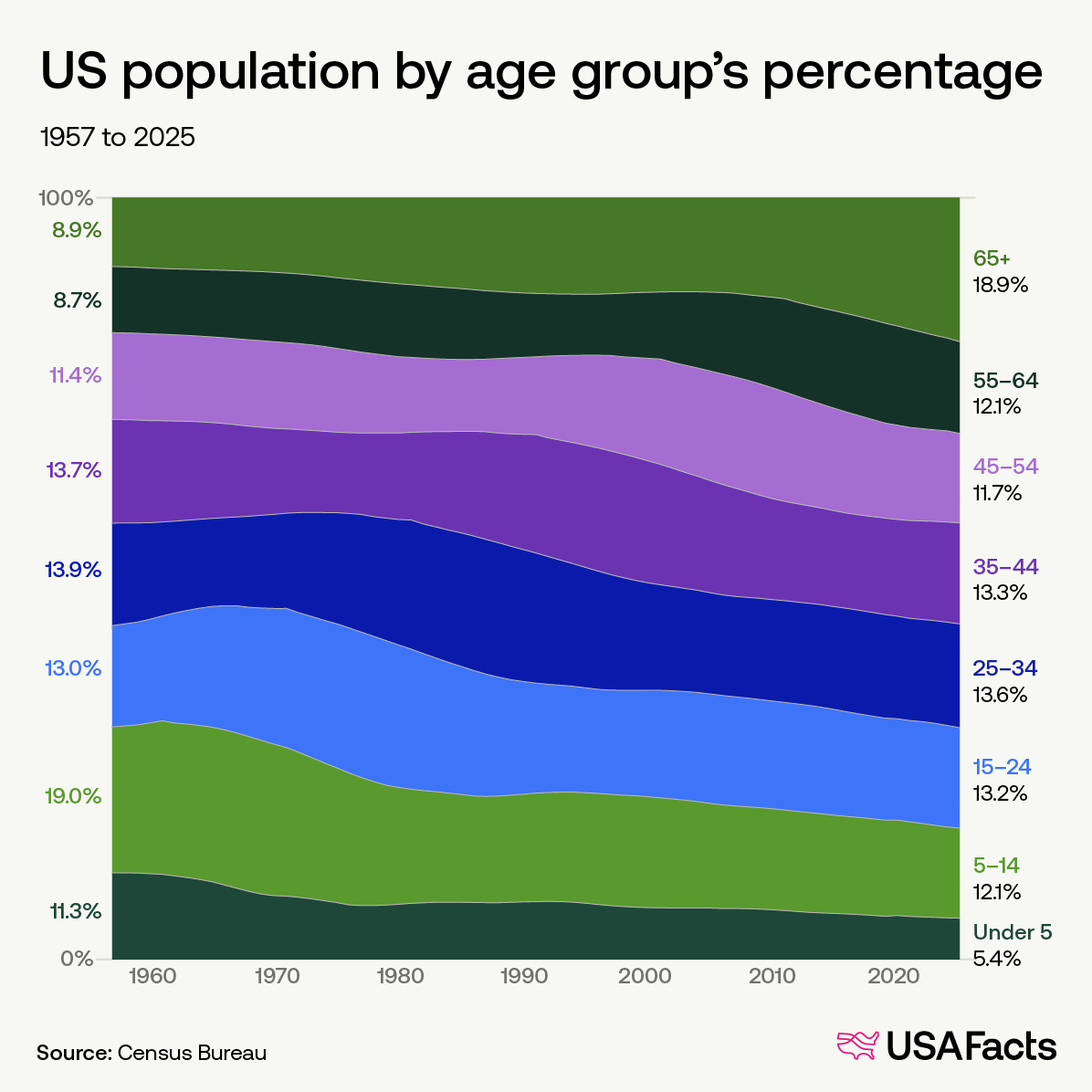
America’s population is aging

RG Richardson Communications News

I am a business economist with interests in international trade worldwide through politics, money and banking. Interactive Internet VoIP and secure eMail Communications. The author of RG Richardson City Guides has over 300 guides, including restaurants and finance.