Prediction Market or Wall of Shame?

 Prediction Market or Wall of Shame?

Prediction Market Celebrity Endorsement Tracker

Every major celebrity and athlete deal across Kalshi, Polymarket, Novig, and other prediction markets. 

 Last updated: Sept. 17, 2026
Platform
Celebrity / Athlete ▲Platform ◆Category ◆Deal statusDeal type ◆Year ◆Notable campaign / context ◆
Ajay MitchellKalshiNBA playerEquity holderPromotional campaign2026Series E round
Alexandra DaddarioPolymarketActressPromotional partnerPromotional campaign2026“Polymarket HQ”
Bob StoopsPolymarketFormer football coachPromotional partnerPromotional campaign2026“Polymarket HQ”
Breanna StewartKalshiWNBA playerEquity holderFinancing Round2026Series E round
Bryson DeChambeauKalshiLIV golferAmbassadorAthlete ambassador2026Kalshi's first individual athlete partnership
Connor McDavidKalshiNHL playerEquity holderPromotional campaign2026Series E round
Conor McGregorPolymarketMMA fighterPromotional partnerPromotional event2026UFC 329 promo
Craig RobinsonPolymarketActor / ComedianPromotional partnerPromotional campaign2026“Polymarket HQ”
Derek JeterPolymarketFormer MLB playerPromotional partnerPromotional campaign2026“Polymarket HQ”
Devin BookerKalshiNBA playerCreative partnerCreative partnership2026$1 Billion bracket promo
Diana TaurasiKalshiFormer WNBA playerEquity holderPromotional campaign2026Series E round
Eli ManningPolymarketFormer NFL QBPromotional partnerPromotional campaign2026“Polymarket HQ”
Emily RatakjowskiPolymarketActressPromotional partnerPromotional campaign2026“Polymarket HQ”
FuturePolymarketRapperPromotional partnerPromotional campaign2026World Cup commercial
Giannis AntetokounmpoKalshiNBA playerEquity holderShareholder + marketing partner2026Shareholder campaign
J BalvinKalshiMusicianCreative partnerCreative partnership2026World Cup commercial
Jaime Jaquez Jr.KalshiNBA playerEquity holderPromotional campaign2026Series E round
John LeguizamoPolymarketActorPromotional partnerPromotional campaign2026“Polymarket HQ”
LeBron JamesPolymarketNBA playerPromotional partnerPromotional partnership2026“Polymarket HQ”
Lionel MessiKalshiSoccer playerPromotional activationAFA-linked promotional campaign2026Argentina / Kalshi World Cup promotion
Luka ModrićKalshiSoccer playerAmbassadorGlobal ambassador2026World Cup campaign
Marshawn LynchKalshiFormer NFL playerPromotional partnerPromotional campaign2026Commercial appearance
Paige SpiranacPolymarketGolferPromotional partnerPromotional event2026Polymarket classic
Peso PlumaPolymarketSingerPromotional partnerPromotional campaign2026World Cup commercial
Pete SamprasKalshiFormer tennis playerCampaign participantCampaign star2026“Don't just accept the odds. Make them.”
Rajon RondoPolymarketFormer NBA playerPromotional partnerPromotional campaign2026“Polymarket HQ”
Reggie BushPolymarketFormer NFL playerCampaign participantCampaign appearance2026“Polymarket HQ”
Richard ShermanPolymarketFormer NFL playerCampaign participantMedia partner2026Richard Sherman Podcast
Rick RubinPolymarketMusic producerPromotional partnerPromotional campaign2026World Cup commercial
Ross SmithOG.comComedianCampaign participantCampaign star2026Ring for a KISS campaign
Saquon BarkleyKalshiNFL playerEquity holderFinancing Round2025Early financial stake
Spike LeePolymarketFilmmakerCampaign participantCampaign appearance2026“Polymarket HQ”
Sue BirdPolymarketFormer WNBA playerCampaign participantCampaign appearance2026“Polymarket HQ”
Sydney SweeneyNovigActress / ProducerEquity holderStrategic partner + equity holder2026“Just Sports” national campaign
Timothée ChalametKalshiActorCreative partnerAdvertising partnership

Mets sign Novig as first MLB club with prediction market sponsor

Mets sign Novig as first MLB club with prediction market sponsor
By Joe Lemire
07.30.2026


The Mets are the first MLB club and only the third North American sports franchise with an official prediction market sponsor.Courtesy of Novig

The Mets have added Novig as its exclusive prediction market partner, becoming the first MLB club to fill this new sponsorship category. While Kalshi, Polymarket and Novig have all signed league deals, this is believed to be only the third sponsorship of a pro sports team, following a pair of NHL agreements: Polymarket with the Rangers and Kalshi with the Blackhawks.

Novig, which touts itself as the lone sports-only prediction market product, received its CFTC approval last month and will begin its brand awareness campaign with ballpark, broadcast, digital and social activations imminently. In time, the goal is for Novig and the Mets to develop interactive gaming experiences that educate fans about prediction markets.

“We want to be really fan-focused with our partnership strategy,” said Mets SVP/Corporate Partnerships Zach Feldman. “We want to be always thinking about how do we improve the fan experience and how do our partners play into that? And then as well, we want to be innovative. ... We want to be leaders in every emerging category.”

N.Y.-based Novig raised a $75M Series B in February after originally adding a $6.4M in a 2023 seed round in its original incarnation as a peer-to-peer sports betting platform. It raised another $18M in a 2025 Series A round.

Novig sought out the Mets because of geography and their reputation “as the most pro-tech, pro-engagement, pro-innovation of any of the sports teams, not just in the MLB,” said Novig co-founder & CEO Jacob Fortinsky. He added that brand awareness is his firm’s top priority, given how competitors -- such as Kalshi and Polymarket -- have become household names, but Fortinsky added that he would still be discerning and thoughtful about the best approach to future sponsorships.

MLB designated Novig as an authorized prediction market this week, enabling it to receive official data and operate within the league’s integrity framework. As attention and participation grow around prediction markets, as well as proposed legislation to regulate them, the Mets said they collaborated with the league on ensuring that this was a good sponsorship category in which to engage.

“We’re always thinking about what’s appropriate and what’s responsible. MLB was out at the forefront of this, as they need to be with any new category, and so we’ve been working diligently in partnership with them as they’ve gone and done their own diligence on prediction markets,” Feldman said, adding:

“From our perspective, any category, any brand that allows our fans to engage with the sport and our team in a more integrated fashion is something that we get excited about.”

Both Feldman and Fortinsky noted that Novig’s key differentiator is that it is purpose-built for sports. Platforms like Kalshi and Polymarket offer sports markets -- in fact, sports constitute about 80% of all trading volume -- whereas Novig exclusively offers sports contracts. The goal, Fortinsky noted, is “building an experience that is familiar to users of traditional sportsbooks with the efficiency and the social aspects and the fairness and transparency that come with prediction markets.”

Hackers Figure Out a Trick to Steal Bitcoin From Cold Wallets, Grab $110 Million

 Hackers Figure Out a Trick to Steal Bitcoin From Cold Wallets, Grab $110 Million


Futurism · 2 hours ago
by Victor Tangermann · Future Society

Hackers made away with more than $100 million worth of Bitcoin from thousands of supposedly secured “cold” wallets hosted by Canada-based company Coinkite.

As Bloomberg reports, the hackers managed to infiltrate the wallets despite clients having a physical hardware key associated with their accounts, which was supposed to provide nearly impenetrable security.

“The moment it loaded I knew I was screwed because I saw red lines for withdrawals,” one of the victims, Johnathan Goodman, told Bloomberg. “Between 9:36 and 9:43 pm on July 29th, all three of my wallets were completely drained.”

Crypto insights company Galaxy Research estimated that around $110 million worth of Bitcoin had been drained from around 5,000 wallets last week, a figure that grew to at least 7,300 by Monday.

The incident highlights persistent lapses in security plaguing the largely unregulated cryptocurrency industry.

In the case of Coinkite, it was a particularly egregious lapse in security. The firm warned its customers on July 30 that hackers were exploiting a software bug that allowed them to reconstruct wallet “seed phrases,” which are sequences of random words that act as a master key to “cold” — or offline — wallets.

Coinkite promised in an email to Bloomberg in a followup story that it was racing to get a full picture of the embarrassing situation, saying it was working on “helping affected customers.” However, the company refused to estimate the scale of the losses, vowing to conduct a “post-mortem” at an unspecified future date.

“We’re not in a position to independently confirm total losses or validate the specific figures being reported by third parties,” the company told Bloomberg. “We won’t speculate on a number we can’t verify directly.”

The company also kicked off an “ongoing ecosystem-wide security audit” which has revealed “numerous critical bugs in key software systems across the ecosystem using frontier AI models.”

The cryptocurrency firm has since gone into full damage control mode as it investigates the major slipup.

In an “update on customer data retention” published on its website today, the company said that “due to legal obligations arising from the security incident, including the preservation of records that may be relevant to ongoing and anticipated legal proceedings, we have temporarily suspended our automated data-blanking process.”

“This means that customer records that would otherwise have been blanked under our standard schedule will be retained until further notice,” the company wrote.

More on crypto: Trump Boasts That He Can Profit Off Presidency as Much as He Wants: “I Found Out That Nobody Cared”

The post Hackers Figure Out a Trick to Steal Bitcoin From Cold Wallets, Grab $110 Million appeared first on Futurism.

How Carney Is Changing Notions of Canada
How Carney Is Changing Notions of Canada
Some may find it jarring that we’re eager to sell arms, rake in Saudi money and gain special status in Europe.
Michael Harris YesterdayThe Tyee

Michael Harris, a Tyee contributing editor, is a highly awarded journalist and documentary maker.Our journalism is supported by readers like you. Click here to support The Tyee.

SHARE:
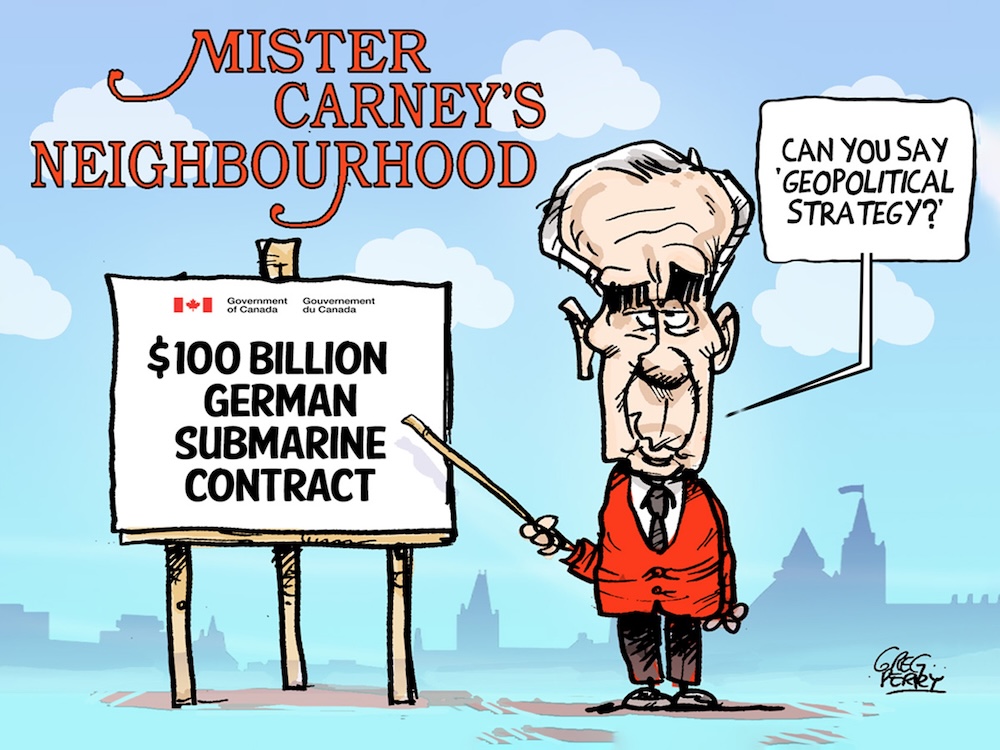
Cartoon by Greg Perry.

Listen to this article
8 min

It bears remembering that the only superpower to threaten Canada has been not Russia or China but the United States.

Announcements, Events & more from Tyee and select partners
CONTEST: Win Two Festival Passes to VIFF 2026

One lucky reader will enjoy access to some of the best of this year’s cinema from around the globe.
Cory Doctorow Headlines BC Policy Solutions Gala

‘Breaking free from the US tech grip’: The bestselling author and activist keynotes the organization’s first-ever fundraiser Nov. 12 in Vancouver.

Prime Minister Mark Carney makes no bones about it. Donald Trump, he said, is waging a trade war to “break us so that they can own us.”

The Carney government is responding in ways that will test perceptions of who Canadians are and how we see our role in the world. Here are three examples.

1. Choice of global investment partners

Carney is sending a strong signal with his investment summit to be held this week in Toronto. The event is made possible in part by Carney’s connections and the command he respects from banking and business. Canada also has great development potential in both energy and critical minerals, as well as transportation, digital technology, and advanced manufacturing.

The Tyee is supported by readers like you Join us and grow independent media in Canada


As many as 250 senior financial executives are expected from the world’s largest investment groups such as Blackrock, Blackstone, Barclays and the mammoth Saudi Arabia Investment Fund. Some of these players face criticism from environmentalists and Saudi Arabia has a notoriously poor human rights record. But the group does oversee an incredible $120 trillion in assets.

Carney’s pitch will be that Canada is a safe and stable place to invest, boasting a AAA credit rating and a world-class banking system. Unlike Trump, if Carney signs a deal, it will be in ink, not pencil. He is a leader known to keep his word.

More than 160 projects are open for investment, including a planned $57 billion expansion of Port of Churchill, perched on the edge of an emerging, fast arctic sea lane to Europe. The first shipload of durum wheat to leave the port this year is bound for Italy, Antwerp, and the Mediterranean. Three more grain ship voyages are planned for the 2026 season.

2. Betting on Europe over the US

Those grain shipments represent Canada’s larger effort to turn away from Trump’s unstable America and forge closer ties with the European Union. So close that the EU’s ambassador to Canada says a “unique” partnership is in the works. Carney is reported to be pursuing EU “associate member” status for Canada, possibly higher than any other non-EU country.

It is an epic pivot that rejects the “Donroe Doctrine” — the Trumpist notion that by geographic proximity Canada must serve as vassal of the United States.

This week Carney will go to Strasbourg, France, to significantly deepen our strategic partner agreement and free trade deal already in place with the EU.

He’ll arrive with fanfare, having been offered a rare invitation to address the 720 members of the European Parliament on Sept. 17. While there he’ll not only pitch to the world’s third largest economy he’ll look to forge deeper military connections.

Under Carney, Canada already is the first non-European partner in an EU loan program fund for joint defense projects called Security Action for Europe, or SAFE.

3. Ramping up Canada’s military capacity

Signing on to SAFE fits a larger shift. Those who prefer to think of Canada as primarily a soft power peacekeeper are seeing a different vision from Carney. He makes no apologies about building a war fighter with expensively sharp teeth. That distresses isolationists, peace activists and anyone who asks why we are investing billions more in our military machine rather than social programs.

But it’s happening fast. As one Canadian robotics company CEO told the CBC, “defence was a dirty word” in Ottawa just a few years ago when federal “trade commissioners wouldn’t help.”

Now, using an approach some call “Keynesian militarism,” Carney says he’s boosting the economy by injecting tens of billions more public dollars into a Canadian defence industry that currently generates about $10 billion and supports about 81,000 jobs.

Meanwhile, the Canadian Army is revamping to be ready for the “future battlefield.” As Maj.-Gen. Wade Rutland put it, the point is to be “be more agile, more lethal, more relevant to defend Canada.”

To prepare for major conflicts, the army has been reorganized into three divisions focused on home defence, infrastructure support, and foreign combat. Canada also showed up at the International Defence Industry Exhibition in Poland in full force — the largest Canadian delegation to a European trade fair ever. Military bagpipes could be heard from the Canadian Pavilion and a Mountie in dress uniform stood guard.


Postcard from Germany’s Anti-Fascist Ralliesread more

At the same time, Canada is lessening its dependency on U.S. defence companies. Ottawa recently bought its submarines from Germany, and Canadian firms will be in the supply chain when they are built. Membership in SAFE also allows Canada to bid on European defence contracts.

In a world bristling with weapons, what might Canada contribute? The war in Ukraine has changed the nature of warfare. As the U.S. has seen in the Middle East, if you use a multi-million-dollar missile to take down a small drone that is not cost effective.

Now Canada plans to produce millions of drones within the next two years in partnership with Ukrainian companies. “As a result,” Carney said, “Canadian industry will learn from the most battle-tested developers on Earth.”

This flows from a 100-year pact inked by Canada and Ukraine to defend both countries. At the signing ceremony in Calgary, Carney said, “Canadians understand in our bones the importance of your struggle. There is no qualification to our commitment because your cause — freedom, democracy, sovereignty — is our cause.”

Carney has assayed threats that Canada faces, including the machinations of great powers, climate change and new technological advancements. He is telling Canadians and prospective global partners that we face a “more dangerous and divided world” with new potential adversaries.



Shooting Down Carney’s Faulty NATO Pledgeread more

Note that Trumpists in the U.S. have cheered on the rise of far-right movements in Europe and around the world. Both U.S. Vice President JD Vance and tech tycoon Elon Musk have expressed support for the proto-fascist AfD in Germany, which recently won the most seats and 44 per cent of the vote in an election in the eastern state of Saxony-Anhalt. AfD is just three seats short of an outright majority, and the first far-right party to win in Germany since the Second World War.

The AfD supports “remigration” for immigrants at gunpoint, much like Trump’s plan to force immigrants into detention camps for deportation from the U.S. While most Germans are worried by the AfD’s hard-right agenda and electoral breakthrough, Trump gloated.

Against this backdrop, Ottawa is working to make Canada less reliant on the U.S. for either trade or defence.

When you live next door to a country that cheers on far-right movements while insulting your leaders, threatening to blow up your economy with crippling tariffs and vowing to “annex” you, that is not an over-reaction.

That is transformation borne of necessity and hard choices.


Read more: Politics

Amazon Is Gutting Its AI Division

 Amazon Is Gutting Its AI Division After Sustained Failure

Wait, Amazon has AI models?

By Joe Wilkins

Published Jul 29, 2026 1:57 PM EDT
Add Futurism(opens in a new tab)More information


Getty Images / Futurism

Sign up to see the future, today


Can’t-miss innovations from the bleeding edge of science and tech

Email address Sign Up

By now, you’d be hard-pressed to find anyone who isn’t broadly familiar with the AI heavyweights and their flagship models. OpenAI has ChatGPT, Anthropic has Claude, Google has Gemini. But what does Amazon have?

Not a whole lot, it turns out. Unlike its competitors in the tech megacorp scene, Amazon’s standout AI model — organized under the name “Nova” — is about the farthest thing from a household name. And that’s not likely to change anytime soon, because the ecommerce giant is now gutting its in-house AI labs, Bloomberg reports.

Per the outlet, Amazon is scaling back the ambitions of most of its Nova AI models and reorganizing its AI development teams as part of an effort to narrow its focus on “highest priority” goals, after its power-hungry large language models turned out to be a bust.

Accordingly, the company has put most of its AI models on ice, Amazon insiders told Bloomberg. This includes its text-based Nova models, as well as video- and image-generating models, all of which have been placed in a state of “keep the lights on,” meaning they’re technically still supported, but only receive the bare minimum resources needed to sustain them.

Instead, labor and computing power are being diverted toward a singular “frontier-model effort” led by Pieter Abbeel, director of the Berkeley Robot Learning Lab whose robotics company Covariant was hoovered up by Amazon in 2024. At the time Abbeel joined the tech giant, Covariant’s founders were working on AI models for robots, which lines up pretty well with Amazon’s push to automate everything it possibly can.

News of the shift in Amazon’s strategic focus comes a week after it closed one of its key AI offices in San Francisco, an 80-person site specializing in research on artificial general intelligence, the supposed next-level of AI development where the tech obtains human-level intelligence and reasoning skills.

With urgent questions swirling over whether LLMs can ever usher in a return on investment — let alone AGI — it may be that Amazon is jumping out of the AI hype cycle while it still can.

More on Amazon: Amazon’s AI-Generated Animated Series Canceled After Relentless Derision


Joe Wilkins
Correspondent


I’m a tech and labor correspondent for Futurism, where my beat includes the role of emerging technologies in governance, surveillance, and labor.

Mexico’s top university orders 58,000 students to resit entrance exam

Mexico’s top university orders 58,000 students to resit entrance exam after suspected cheating

National Autonomous University of Mexico says applicants must take test in person after online debacle

Oscar Lopez in Mexico City Wed 5 Aug 2026 10.00 BST
Share

Prefer the Guardian on Google

Mexico’s largest and most prestigious university has announced that about 58,000 students will have to resit their entrance exam after abnormally high test results raised suspicions of widespread cheating.

The National Autonomous University of Mexico (Unam) said the exam would take place in person after its first attempt at a fully remote online version led to a debacle and thousands of annulled results.

“The Unam, the home of science, humanities and understanding, knows how to recognize mistakes and self-correct,” the university’s rector, Leonardo Lomelí, said on Monday. “There is no evasion or complacency. There is responsibility, and we act accordingly.”

Nearly 160,000 students took the entrance exam earlier this summer. The at-home test included an AI-powered webcam to monitor candidates with voice and facial recognition to ensure no cheating took place. But the results indicated that the checks had failed to stop fraud.

Between 2021 and 2025, only 3.5% of applicants obtained a score of 100 or more out of 120, but this year the figure was 16%. The proportion of students who achieved a score of 110 or more increased sixfold from 0.9% to 5.5%.

Almost 30% of candidates for the medicine programme, among the most competitive undergraduate tracks in the region, obtained a score of 100 or more, compared with 9% last year.
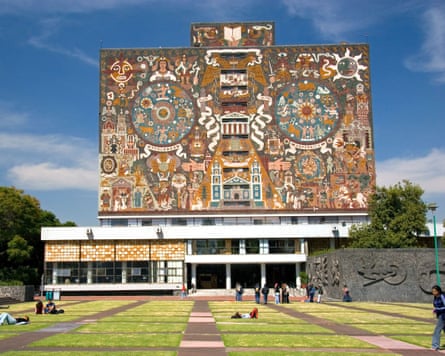
View image in fullscreenUnam’s central library in Mexico City. Photograph: David R Frazier Photolibrary, Inc./Alamy

The results sparked a national scandal, leading the country’s president, Claudia Sheinbaum, to suggest the country’s attorney general may have to investigate. “Support is always available, but in any case if a crime has been committed it is a matter for the prosecutor’s office,” she said.

Hundreds of Unam applicants protested in Mexico City on Monday against having to take the control exam, blocking major thoroughfares in the south of the capital.

Lomelí said: “I offer an apology to the candidates who, having been fairly accepted, will be called upon to take the control exam. However, it is necessary to ensure certainty and guarantee equity in access.”


Calls grow ‘to flunk’ Portugal’s education minister amid exam marking fiasco

Read more


The drive for more equitable access led the university to offer the exam online for the first time this year. Students previously had to travel to Mexico City from their home states, sometimes many hundreds of miles away.

The entrance exam is notoriously competitive. The more than 150,000 applicants this year were competing for 21,962 places.

Just before the results were to be publicly released, the university announced it had annulled the results of 2% of tests – 3,174 exams – after detecting irregularities such as identity impersonation, external assistance and the use of AI.

A technical expert who reviewed the results told the New York Times (NYT) that nearly half of the exams – 75,000 tests – could have involved some degree of cheating. AI may have played a role, but test questions were also leaked and even sold online while the exam was open in May and June.

Cheating tips were also widely passed around before the test went live, according to the NYT.

The Unam announced in July that it had filed a criminal complaint after detecting the alleged irregularities. It said authorities would investigate potential misconduct involving individuals or companies that allegedly offered fraudulent services to applicants and their families.

The cheating scandal compelled the institution to halt all admissions and appoint a technical committee to decide the fate of the 158,712 young people who took the exam, an unprecedented measure in the university’s 115-year modern history.

Lomelí also announced that the academic year for new students would begin on 31 August, rather than 10 August as originally scheduled.

Consumer Price Index, August 2026

Consumer Price Index, August 2026

Released: 2026-09-14
The Consumer Price Index (CPI) rose 3.0% year over year in August, matching the 3.0% increase in July.

Year over year, prices for gasoline rose at a slower pace in August compared with July, putting downward pressure on the all-items CPI. Excluding gasoline, the CPI rose 2.4% in August, after increasing 2.2% in July.

In August, the slowdown in gasoline prices on an annual basis was offset by higher prices for travel tours and rent.

The CPI fell 0.1% month over month in August. On a seasonally adjusted monthly basis, the CPI rose 0.2%.

Chart 1
The 12-month change in the Consumer Price Index (CPI) and CPI excluding gasoline


Chart 2
Prices increase at a slower pace in five major components in August

Prices for travel tours accelerate on a base-year effect

Year over year, prices for travel tours rose at a faster pace in August (+26.1%) compared with July (+15.2%), partly due to a base-year effect. Canadian travel to the United States declined sharply in 2025, putting downward pressure on prices for airfares and travel tours. Given that this decline has now stopped affecting the 12-month price movement, along with the introduction of fuel surcharges amid higher prices for jet fuel, upward pressure has been put on the travel tours index.

On a monthly basis, prices for travel tours fell 2.9% in August.
Gasoline prices increase at a slower pace

Prices for gasoline rose 22.8% year over year in August, following a 25.7% increase in July. Despite the year-over-year slowdown, prices for gasoline remained elevated, as the conflict in the Middle East continued in August.

Chart 3
Prices for gasoline decelerate year over year

Consumers pay less for clothing

On a year-over-year basis, consumers paid less for clothing in August (-1.1%) compared with July (+0.9%). The decline was driven by lower prices for men's clothing (-2.3%) and children's clothing (-1.9%), following increases of 2.0% for men's clothing and 4.0% for children's clothing in July.

Conversely, women's clothing was unchanged (+0.0%) year over year in August, after falling 0.7% in July, moderating the decline in clothing prices.
Grocery price growth falls below headline inflation

Price growth for food purchased from stores continued to slow in August, rising 2.8% year over year after increasing 3.1% in July. For the first time since July 2024, grocery price growth increased at a slower pace than the all-items CPI in August 2026.

Prices for dairy products led the deceleration in grocery prices; they rose 0.7% year over year in August compared with a 3.1% rise in July. Cheese and yogurt were the top contributors to the slowdown in dairy prices.

Smaller price increases for fresh or frozen pork (+1.6%), condiments, spices and vinegars (+0.7%) and fresh fruit (+4.7%) also contributed to the year-over-year slowdown in grocery inflation in August.

Although prices for groceries decelerated this month, prices have increased 29.0% since August 2021.

Chart 4
Grocery prices increase at a slower pace than the all-items Consumer Price Index

Regional highlights

Year over year, prices rose at a faster pace in six provinces in August compared with July.

Among the provinces, the Atlantic provinces had the highest rates of inflation in August, with price growth accelerating in Prince Edward Island, Newfoundland and Labrador and Nova Scotia. Prices for fuel oil and other fuels rose at a faster pace in August (+43.7%) compared with July (+29.5%), putting upward pressure on prices in these provinces, where fuel oil is more commonly used.

At the national level, prices for rent increased 2.8% year over year in August compared with a 2.5% increase in July. Higher prices in Manitoba (+4.3%) and Ontario (+2.4%) drove this acceleration.

RG Richardson Communications News

I am a business economist with interests in international trade worldwide through politics, money and banking. Interactive Internet VoIP and secure eMail Communications. The author of RG Richardson City Guides that has over 300 guides, including restaurants, real estate and finance.