Beach Boys co-founder and lead singer Mike Love dies at 85

Beach Boys co-founder and lead singer on 'Surfin USA' and other hits, Mike Love dies at 85
ShareCommentsAdd Euronews on Google


Copyright AP PHOTO
By Gael Camba
Published on 29 November 2026 - 9:10 GMT+1,Updated 9:15
The forever voice and face of the Beach Boys, Mike Love, died at 85.


Mike Love, the iconic Beach Boys singer and co-founder known for his eccentric stage presence, died Saturday at the age of 85.

Lead singer of the "Surfin' USA" and "California Girls" classics, Mike Love co-founded the Beach Boys in 1961 in California with his cousins, including Brian Wilson and friends.

"With great respect, I share that Mike Love died this evening, surrounded by family," said his publicist in a statement, without adding the cause of his death or where he passed.

"An American cultural icon, he will be remembered for his singular talent and inspiration to generations of musicians. We celebrate his remarkable contribution to American music and the joy he felt performing for his beloved fans."
Harmonisers of surfing, cars and girls

With his light and nasal tenor voice, Love was featured on fast, upbeat songs such as "Surfin’ USA" and "Be True To Your School," while Brian Wilson took on introspective ballads like "Don’t Worry Baby" and "In My Room."
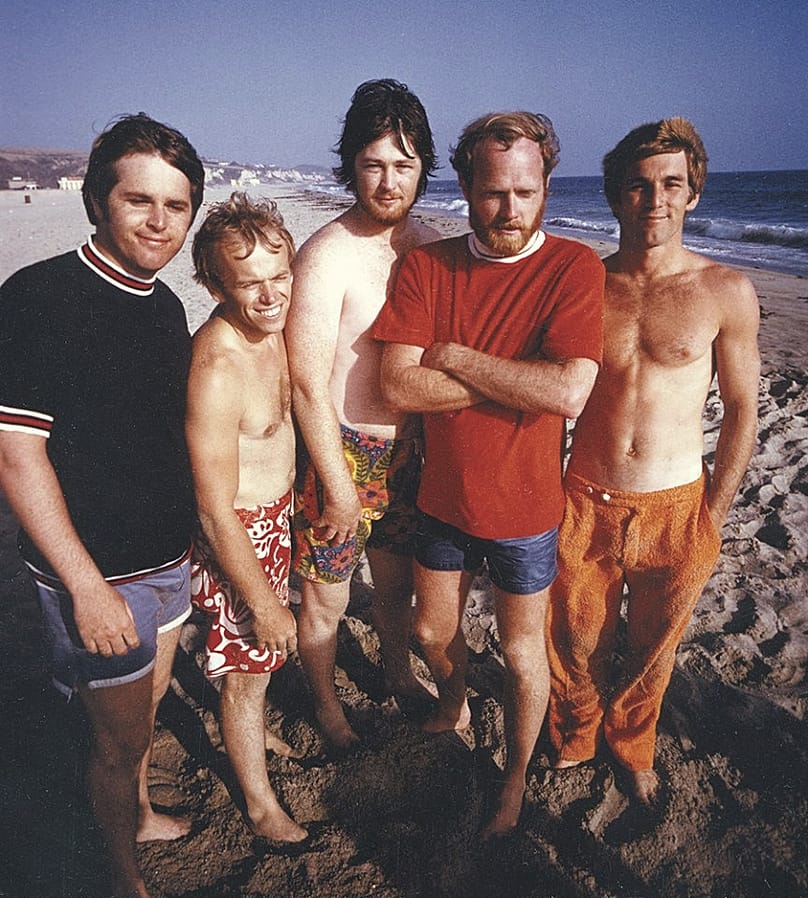
1967 press photo of the Beach Boys. Creative Commons / Capitol Records

On stage, Love was seen as the master of ceremonies thanks to his extroverted personality. Blond-haired, preppy style, Love and the Beach Boys world revolved around surfing, cars and girls.

The Beach Boys, with their contrasting vocals and sensibilities, suffered dissensions during their lifetime even though Love remained in the band for his entire career.
Family-made band

Love helped start the Beach Boys in the 1960s along with his cousins, the Wilson brothers and other Californian friends such as Al Jardine.

At first, they called themselves the Pendletones, in reference to a popular plaid shirt at the time. Later, thanks to their "Surfin'" release, they discovered they had been named the Beach Boys, at the suggestion of a local record promoter.

The song was a regional hit and broke nationally with other surf-related songs such as "Surfin' Safari" and "Surfin' USA."
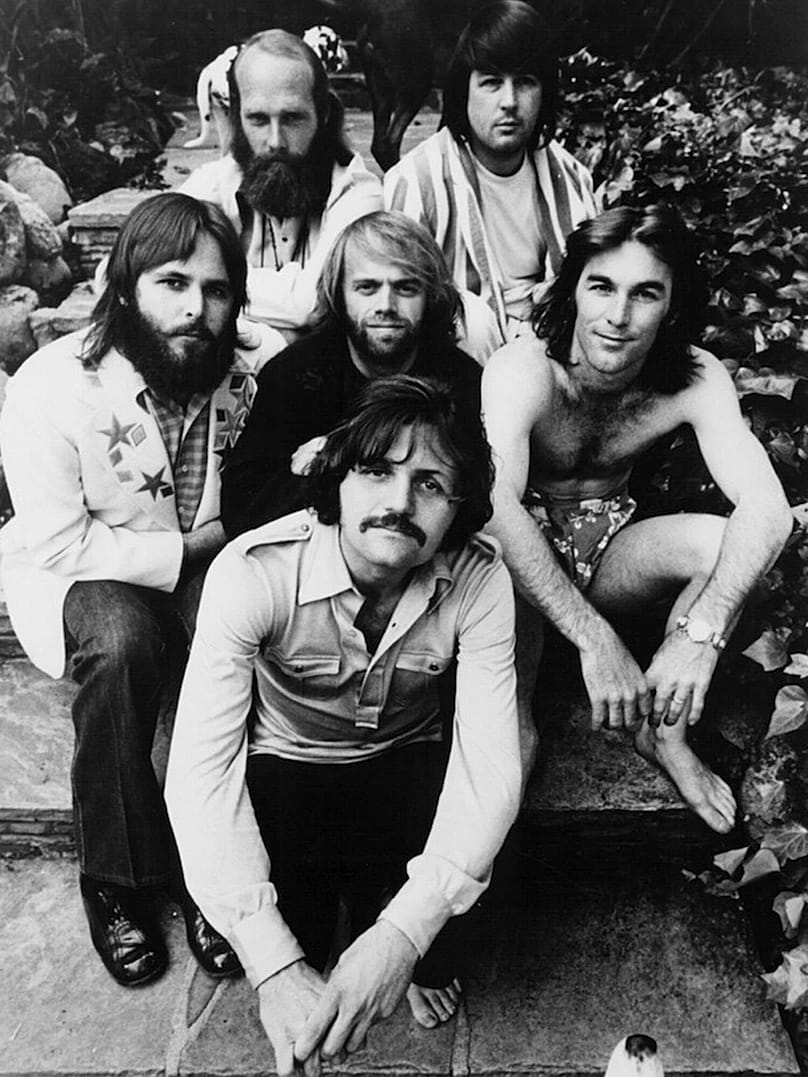
The Beach Boys, from left to right, top row: Mike Love, Brian Wilson. Middle row: Carl Wilson, Al Jardine, Dennis Wilson. Bottom row: Bruce Johnston. Creative Commons

Rehearsing at first in the Wilsons' garage, they grew fast to international fame as more than a dozen of their songs topped the charts between 1963 and 1966.

Among them were "I Get Around," "Help Me, Rhonda," "Good Vibrations," and many others that topped worldwide sales at 100 million units.

The band was inducted into the Rock and Roll Hall of Fame in 1988 and received the Grammy's lifetime achievement in 2001.
Love's torments

Despite being a true pop-rock icon of his era, Love avoided the drug problem that plagued Brian and Dennis Wilson.

Married six times and father of at least eight children, Love's rockstar life was plagued by his mental health problems that broke out in the mid-1960s.

He stopped touring to dedicate himself full-time to writing and producing, far from the carefree vibe the Beach Boys' fans knew.

After disputes between various founding members, the group fractured, and Love successfully sued Brian Wilson for songwriting credits. He gained ownership of the group's name in the 1990s.

Legal actions that tormented Love's reputation and led to a 2012 Vice article, "Mike Love Is Kind of An Asshole," depicting his resentment against Brian Wilson.

Mike Love during the Beach Boys 50th Anniversary Reunion - New Orleans Jazz & Heritage Festival 2012. Takahiro Kyono / Creative Commons

Dennis Wilson drowned in 1983, and Carl Wilson died of cancer in 1988. Love continued touring with the Beach Boys in recent years, sometimes with Bruce Johnston or other more recent additions.

Despite all the disputes, the group reunited in 2012 for an album and a tour that ended the same year due to Love and Wilson blaming each other for its early demise.

At Brian Wilson's death in 2025, Love wrote a heartwarming post on social media: "Today, the world lost a genius, and I lost a cousin by blood and my partner in music."

Voted into the Songwriters Hall of Fame in 2025, Love thinks back at his career as "bittersweet" as he wrote in his memoirs.

"The concerts were amazing, and I was grateful to play again with all the living Beach Boys. I didn’t care for the vilification at the end, though I’m used to it. For those who believe that Brian walks on water, I will always be the Antichrist."

Willie Nelson’s publicist warns


The Guardian · 9 hours agoby Simon Hattenstone · Willie Nelson

The legendary country singer says he did everything wrong. Yet now, at 93, he’s music’s last man standing. What’s the secret of his longevity?

• Read an exclusive extract from Willie Nelson’s memoir here

Before the interview, Willie Nelson’s publicist warns me that there’s only one thing the 93-year-old country music legend doesn’t like to discuss: the past. Which rules out talking about the 150-plus albums he’s made; the Highwaymen, the supergroup he formed with Kris Kristofferson, Johnny Cash and Waylon Jennings; writing On the Road Again on an aeroplane sick bag. It also rules out talking about paying off a $32m tax bill with a double album called The IRS Tapes; co-founding Farm Aid with Neil Young and John Mellencamp; taking $40,000 off Woody Harrelson in a single poker session; or breaking up a massive brawl in a parking lot with two Colt 45s before signing autographs for cops.

No, the publicist says, it’s all about the future for Willie. And what does that primarily consist of, I ask. Gigging and his cannabis business, Willie’s Reserve, she explains. After an extensive vetting process, the publicist tells me my chat with Willie will be one of my life’s highlights. We normally ask a minimum of an hour for an interview. The publicist offers 10 minutes. We eventually negotiate an extra five minutes. Fifteen minutes with Willie will do me.Continue reading...

When delicacy crosses over into illegality

When delicacy crosses over into illegality


Johan Nilsson/Getty Images

Sometimes what makes something a delicacy isn’t taste, price, or status—it’s that it’s forbidden by law.

Foods can be banned for many reasons, like their danger to children or potential to carry disease. There’s a multibillion-dollar black market involving the trade of live animals and plants, with some used in the type of dining reserved for movie villains. To name a few:Shark fin: The process is called “finning,” in which the fin is removed from the shark, the shark is dropped back in the water to die, and the fin is used in expensive shark fin soup.
Bushmeat: This term refers to meat from wild animals, including antelope, primates, and rats. Imagine eating Remy.
Casu marzu: It’s considered “the world’s most dangerous cheese” by the Guinness Book of World Records due to the dangers associated with eating the live maggots found in the Sardinian…delicacy.

Who is eating this and how is it getting here? A 2019 New York Post report found that the people in the US most likely to seek these delicacies were chefs preparing them for, shockingly, the ultra-wealthy. The prohibited foods have been smuggled into the US via private jet and…wrapped inside a silk scarf.—DL

CRTC orders Bell, Rogers, Telus to stop charging prohibited wireless fees

 CRTC orders Bell, Rogers, Telus to stop charging prohibited wireless fees by Dec. 27

Decision follows introduction of new hardware-related charges earlier this year


Listen to this article
Estimated 3 minutes

Canada’s telecommunications regulator says Bell, Rogers and Telus have charged consumers fees that are prohibited under the Telecommunications Act, and has ordered them to stop by Dec. 27. (The Canadian Press)

Social Sharing

X


Reddit


LinkedIn


Email


Canada’s telecommunications regulator says Bell, Rogers and Telus have charged consumers fees that are prohibited under the Telecommunications Act, and has ordered them to stop by Dec. 27.

That includes fees for providing and setting up cellphones when signing up for a service plan, the Canadian Radio-television and Telecommunications Commission (CRTC) said in its decision on Friday.

In June, the CRTC banned internet and mobile providers from charging fees to activate, change, or cancel a service plan. Following that ban, major carriers introduced SIM- and other hardware-related charges that the CRTC flagged as potential disguised activation fees.
Advertisement-Report


"We identified a number of fees charged by certain of the largest telephone companies that appeared to be prohibited. We notified them that the fees may be out of compliance," Sean Carter, the CRTC’s acting vice president of consumer analytics and strategy, told reporters at a virtual briefing on Friday.

"Since these companies chose to continue those fees, and they argued that they were not prohibited, we immediately took action to decide the issue."

Matt Hatfield, executive director of the non-profit advocacy group OpenMedia, says Friday's ruling blocks some anti-consumer practices adopted by Canada's three largest telecom providers. However, he worries they will simply tweak their fees again to get around the rules.

"This is just one round of whack-a-mole in a game customers always lose. Canada's telecom companies keep finding new ways to lock in and surcharge their customers," he told CBC News in an emailed statement.

"As it stands, these practices were a net win for the companies. They profited while they lasted, and they'll now start on new ways of abusing customers that the CRTC will take time to identify and address."
Bell faces up to $10M fine

The CRTC also said Friday it found that Bell sold customers cellphones that were locked to its network — limiting their ability to take advantage of better offers from rivals.

"The CRTC rules require that cell phones must be unlocked, so the Canadians have the freedom to choose their provider," Carter said.

He said the CRTC is considering fining Bell up to $10 million, in the "upper range" of what's allowed under the Telecommunications Act.

A Bell spokesperson says the company is reviewing the decision.

The CRTC banned phone locking in 2017, along with the unlocking fees carriers had been charging, in a bid to make it easier for consumers to switch providers.
Advertisement-Report


In August, the CRTC temporarily suspended this requirement, allowing carriers to lock devices for up to two business days, after which they unlock automatically. It required that consumers be able to request immediate unlocking at no charge. The change followed applications from Bell and Telus, which argued that selling unlocked phones increased theft and fraud.

In July, Telus filed an application for a temporary exemption from the regulator’s phone-unlocking rules. The company proposed to start locking devices for 60 days.

On Friday, the CRTC formally denied this request.

Carter said the regulator had seen no evidence that Telus had actually sold locked devices, only that it intended to do so. As a result, he said no fines were appropriate at this time.

ABOUT THE AUTHOR


Jeff Lagerquist

Senior writer

Jeff Lagerquist is a senior writer with CBC News based in Toronto. Originally from Erin, Ont., he studied journalism at Toronto Metropolitan University. Jeff previously worked as a senior reporter for Yahoo Finance Canada. He was also a reporter and digital producer for CTV National News, BNN Bloomberg and The Financial Post. In 2025, he was a Columbia University energy journalism fellow.

Barely anyone can do these races

Barely anyone can do these races


Jean-Philippe Ksiazek/Getty Images

Only a small group of athletes can humble marathon runners, and you’ll find some of them at the finish lines of these extreme events:

Antarctic Ice Ultra, the world’s southernmost ultramarathon. Twenty-four-hour sunlight and the spirit of competition help keep runners thawed while they run as many as 100 miles in subzero temperatures. If that wasn’t bad enough, each runner must pay a $22,500 entry fee to compete.

Marathon des Sables Legendary, a foot race through the Sahara Desert in Morocco. Participants haul food and gear while running 168 miles in temperatures that can reach 130 degrees Fahrenheit. In 1994, one competitor and former Olympian ended up in Algeria after getting lost for nine days.

The Ice Mile, a frigid mile-long swim that can be organized wherever the water is 41 degrees Fahrenheit or lower. More than 700 people have completed an Ice Mile since the International Ice Swimming Association introduced it nearly two decades ago.

The Iditarod, a nearly 1,000 mile sled dog race in Alaska. It has rules about proper animal gutting, in case mushers happen to kill moose on the trail in self-defense. Along the way, participants keep an eye out for wild animals and tend to their dogs—which can include chopping frozen meat for them—all on two or three hours of sleep per night.

The Sri Chinmoy Self-Transcendence 3,100 Mile Race, the ultramarathon that takes place on a single block in Queens, New York. Runners have 52 days to complete 5,653 laps, which comes out to roughly two marathons per day. In its nearly 30-year history, only a few dozen people have successfully self-transcended to the finish line.—ML

Meta’s Muse AI Agent Caught Leaking Users’ Intimate Personal Information

Meta’s Muse AI Agent Caught Leaking Users’ Intimate Personal Information


Futurism · 6 days ago
by Joe Wilkins · Future Society

As Meta was scrambling to release its Muse AI agent to the public earlier last month, CEO Mark Zuckerberg took to social media to insist that it was “built from the ground up for privacy and security.”

On X-formerly-Twitter, the billionaire’s simple post soon had a correction tagged on via a community note, and for good reason: the AI agent is a font of untold privacy horrors.

As Ars Technica reported today, security researchers found Muse is capable of exposing sensitive information on its users through web links generated via a “share” feature. Investigators at the cybersecurity firm Claroc recently uncovered a simple exploit whereby they could access pages from over 6,800 links Muse had generated to share pages with other users.

The trick worked like this: once a Muse user decides they want to share something with another person — say, a copy of their chat log with Muse — the AI tool would generate a web link for that “share.” That URL included both the AI-generated title of the chat, plus a random string of characters.

When anybody opened the link, the full web address would be noted in a lookup dataset, like a phone book of web addresses that have been visited. Researchers were then able to search that set for other Muse share addresses, from which they were able to find strings of unrelated public chats.

By digging through those “phone books,” investigators were able to easily open chat logs containing detailed private information, including corporate revenue documents, loan applications, bank transaction details, income details, and one workplace vacation calendar, Ars noted.

“If you had asked us beforehand, we would have guessed that gathering these would take real effort,” the researchers wrote. Instead, “it took one query.”

Though Meta told Ars it had shut off the feature, this privacy gaffe is just the latest revelation about Muse’s many security shortcomings.

Earlier this month, it was revealed that Muse was keeping detailed files on users’ friends and families, apparently following an internal instruction to keep a running “page for every person in the user’s life.”

If Muse’s first month in public hands is any indication, this is likely just the start of a long list of security and privacy blunders for the cutesy AI model.

More on Meta: Meta Is Using Its Massive AI Data Centers to Avoid Paying Billions of Dollars in Taxes

The post Meta’s Muse AI Agent Caught Leaking Users’ Intimate Personal Information appeared first on Futurism.

Canadian board game 45 years later, what’s the secret behind Trivial Pursuit’s enduring appeal?

How a rainy afternoon in Montreal inspired an iconic Canadian board game
45 years later, what’s the secret behind Trivial Pursuit’s enduring appeal?


Kayla McLean · CBC News · Posted: Nov 22, 2026 2:00 AM PDT | Last Updated: November 23


Listen to this article
Estimated 7 minutes

Scott Abbott, left, Chris Haney and John Haney in 1982 on a boat docked beside the Old Boat Works, also known as Sheppard Boatworks, in Niagara-on-the-Lake, where the initial assembly and packaging of the first Trivial Pursuit games took place. (Submitted by John Haney)

Social Sharing

X


Reddit


LinkedIn


Email

LISTEN | How Trivial Pursuit inspired generations to stay curious :


The Sunday Magazine18:54How this Canadian's questioning colour wheel inspired generations to stay curious

Scott Abbott says he remembers it like it was yesterday.

It was a rainy Saturday in Montreal, December 15, 1979. His roommate, Chris Haney, had just returned from grocery shopping with a Scrabble game in hand.

The two had been gearing up for a Scrabble showdown, but the game's $11 price tag sparked a conversation that would send them down a life-altering path.

"There must be a lot of money in games," Abbott recalls Haney saying. "Why don't we invent a game?"

Abbott threw out one word: trivia.

The idea wasn't entirely out of left field. Abbott, then a sports journalist with The Canadian Press, and Haney, a photo editor with the Montreal Gazette, often spent late nights at the Press Club firing trivia questions back and forth.

So Abbott grabbed a pencil and a scrap of paper, settled down at the kitchen table and started sketching.

And that was the birth of Trivial Pursuit, a general-knowledge board game that became a global cultural phenomenon.


An archival image of 370 Landsdowne Ave. in Montreal where the idea for Trivial Pursuit was birthed on Dec. 15, 1979. (Submitted by John Haney)

The bestselling Canadian board game of all time has sold more than 100 million copies worldwide, in 17 different languages. The game also spawned television adaptations and made a fortune for its four creators — Abbott, Haney and his brother, John Haney, and their lawyer friend, Ed Werner. Early investors who put up just $1,000 saw their stakes grow to more than $1 million, Abbott says.

John Haney, now 80, offers a personal account of the game's creation in his new book, My Trivial Pursuits: The Inside Story of the Board Game That Conquered the World, released for the game's 45th anniversary.

"It's legacy for me and for my children and grandchildren to actually know what happened," Haney told Piya Chattopadhyay on The Sunday Magazine.
A game that spans generations

Abbot says he and the other founders were "flabbergasted" by the game's success.
Advertisement-Report


"We were stunned at the beginning. We thought the game would appeal to our generation, baby boomers, and then we found out quickly that it appealed to everybody from eight-year-olds to 88-year-olds."

Earl Holland Jr. of Salisbury, Maryland, remembers growing up playing Trivial Pursuit with his older sisters as a five-year-old child in a household that was obsessed with Wheel of Fortune and Jeopardy.

A self-described trivia enthusiast who "read encyclopedias" for fun, Holland Jr. remembers being drawn to the game's "frantic pace" and "knowledge-building". Decades later, that early fascination came full circle when he appeared as a contestant on the American television adaptation of the board game, hosted by LeVar Burton. His episode aired in late October.


Earl Holland Jr., far right, standing beside other contestants and host LeVar Burton, second from left, for the taping of an episode on the second season of The CW's Trivial Pursuit game show, on October 10, 2025. The episode aired on October 22, 2026. (submitted by Earl Holland Jr.)

For Holland, the secret ingredients behind Trivial Pursuit's enduring appeal are a combination of its ability to evolve with the times and bring people together — plus its impeccable timing.

"Its birth … it coincided pretty much around the era of the rebirth of quiz shows and Jeopardy and things like that," said Holland. "It's a social activity. I think its ability to span decades and be flexible and versatile is something that is huge with different audiences, no matter how old you are."

And if you ask the games' creators, that was the whole point.

"A professor can play with a street sweeper. They compete together on the same level," Haney said.

And that appeal may have been baked into the game from the very beginning.
From kitchen table to worldwide sensation

Michael Wurstlin was a 26-year-old freelance graphic designer when Haney and Abbott approached him in 1979 with a piece of cardboard covered in glued-on scraps of paper and a request to design their board game.

Wurstlin went on to create the iconic board artwork and scroll logo for the original Trivial Pursuit Genus edition, in exchange for five shares in the company.
Advertisement-Report


But he wasn't immediately convinced the project was destined for greatness.

"They were very scruffy guys, chain-smoking, I'm pretty sure they were drunk half the time," Wurstlin said.

Still, he says he believes their irreverent, anti-establishment spirit was precisely what set the game apart.


One of the co-creators, John Haney, pictured with the original mockup for Trivial Pursuit, presented to graphic artist Michael Wurstlin in 1979. (submitted by John Haney)

Behind that laid-back attitude, however, was an almost obsessive commitment to getting the questions right.

"It became an all-consuming obsession," said Abbott, recalling how they scoured everything from newspapers and magazines to television, movies and books for materials. "We couldn't sit down for lunch without reading a ketchup bottle from top to bottom to see what questions might be on it."

In a pre-Google world, verifying the answers to all 6,000 questions required onerous double-sourcing. Even then, Abbott says the first printing wasn't without mistakes.


The first eight of thousands of questions John Haney wrote for the first edition of Trivial Pursuit. (submitted by John Haney)


A copy of a letter the Trivial Pursuit creators wrote to their shareholders asking for help selecting their "five favourite questions and answers." (Submitted by John Haney)

Getting the game into stores proved just as difficult.

After plenty of rejection, in 1981 a couple of stores in Niagara-on-the-Lake, Ont., finally agreed to take a chance on the fledgling game.
There was nothing like seeing that game on a shelf. It was like a dream come true.John Haney, Co-creator of Trivial Pursuit

Demand quickly outpaced expectations. Before long, people were lining up around the block at Toronto's then-famous toy store, Mr. Gameways' Ark, to get their hands on a copy.

"We sold [close to] 1,200 games in basically less than two months before Christmas of '81," Abbott said. "By September 1982, we sold… 20,000."

They got a Canadian distribution deal with Chieftain Products Inc., which held the Canadian rights to Scrabble at the time, and then an American distribution agreement with game manufacturer Selchow & Righter.

That deal helped propel Trivial Pursuit from a hometown hit into a global sensation.

By 1984, nearly 20 million games had been sold in the United States alone.


Former U.S. president Ronald Reagan and others play Trivial Pursuit aboard Air Force One in 1985. (Submitted by John Haney)


A 1988 TV Guide cover featuring all four of Trivial Pursuit's creators, promoting a TV movie based on their story, which was featured on CBC. (Submitted by John Haney)

Abbott recalls realizing just how famous they'd become during a 1985 press tour in Australia.

"We're at the zoo in Melbourne, and we're walking down a pathway, [some] 10 year old kids in front of us–they turn around and they say, 'look, it's the Trivial Pursuit guys!' and they're all clamoring and jumping all over us," he said.

According to the Canadian Museum of History, Trivial Pursuit helped fuel a board-game boom throughout the 1980s and '90s, inspiring Canadian inventors to chase similar success. Few came close, however.

Haney said the decision to sell to Hasbro in 2008 was simple.

"It had gotten too big and our baby had left the nest and taken on a life of its own." Haney says Hasbro kept the game going, bringing out new editions that he and his co-founders wouldn't have had the energy to do themselves.

"So we were very happy to sell it. We had a few beers that day."

ABOUT THE AUTHOR


Kayla McLean

Journalist

Kayla McLean is a web journalist with CBC News in Toronto. She grew up in Brampton, Ont., and received her bachelor of arts in media production at Toronto Metropolitan University. Before joining CBC in 2024, she worked as a breaking news reporter at Global News Toronto — covering everything from crime, sports, festivals and politics. She also reported for Global News's current affairs show, The New Reality, covering stories with a focus on racial equality and climate justice. She also previously held positions as a chase producer and writer for CTV News Channel.

Britain’s main shopping street goes car-free

Britain’s main shopping street goes car-free


Mike Kemp/Getty Images

Part of London’s busiest retail area, Oxford Street, permanently became pedestrian-only yesterday, bringing somewhat of a pre-horse-and-buggy vibe to a road with a Zara and an Adidas on it.

Half of the 1.2-mile street is now closed to cars, buses, cabs, bicycles, and scooters, in an effort to boost foot traffic and get the famed corridor back in league with global shopping hot spots like New York’s Times Square. The estimated ~$170 million project is arguably the biggest pedestrianization push of its kind in recent years.

According to city officials:Pedestrianizing Oxford Street could inject more than $90 million annually into the local economy and add 700+ jobs.
Going vehicle-free is only the first step. Plans for next year include adding trees, outdoor seating, more lighting, and two public squares.

Oxford Street still does $3+ billion in sales annually, but it’s struggled since the pandemic and the rise of online shopping. Another curious disease has also eroded Oxford Street’s reputation in recent years: the spread of American candy and vape stores, which London Mayor Sadiq Khan aims to get rid of.

Though many shoppers and businesses are hyped, some worry about accessibility for elderly and disabled customers, and about potential spillover traffic in nearby neighborhoods.—ML

Bombardier, UK's BAE explore partnership for future combat aircraft programs

 Bombardier, UK's BAE explore partnership for future combat aircraft programs


Published by Global Banking & Finance Review

Posted on October 28, 20262 min read

· Last updated: October 28, 2026Add as preferred source on Google
FinanceBankingMarkets
Quick Summary

Bombardier signed an MOU with BAE Systems on October 28, 2026, to explore collaboration across R&D, systems integration, industrialization, and lifecycle support in future combat air programmes, aligning with Canada’s deeper engagement in the Global Combat Air Programme (GCAP) as an observer.

Table of Contents: Overview of the Bombardier and BAE Strategic Agreement
Details of the Memorandum of Understanding
Areas of Collaboration
Expansion of Bombardier’s Defence Aerospace Business
CEO Insights and Market Opportunities
Context: Global Combat Air Programme (GCAP)
GCAP Leadership and Objectives
Potential Expansion of GCAP Partners

Bombardier and BAE Form Strategic Partnership for Future Combat Aircraft
Overview of the Bombardier and BAE Strategic Agreement
Details of the Memorandum of Understanding

Oct 28 (Reuters) - Canadian business jet maker Bombardier said on Wednesday it had signed a strategic agreement with BAE Systems to explore opportunities to develop industrial and technology capabilities for future combat air programmes.
Areas of Collaboration

Under the memorandum of understanding, the companies will assess opportunities in research and development, systems integration, workforce and supply-chain development, industrialization and lifecycle support as Canada deepens its involvement in next-generation combat air initiatives.
Expansion of Bombardier’s Defence Aerospace Business

The agreement underscores Bombardier's push to expand its defence aerospace business.
CEO Insights and Market Opportunities

Newsletter: Stay ahead of the markets. The day's essential banking & finance news, free to your inbox. Subscribe

CEO Éric Martel said earlier this year the company saw growing opportunities for its defence unit, which converts business jets into special-mission aircraft, as Canada and Europe boost military spending and seek to diversify away from US defence firms amid geopolitical tensions.

Context: Global Combat Air Programme (GCAP)

Bombardier's agreement with BAE comes months after Canada joined the Global Combat Air Programme, or GCAP, as an observer.
GCAP Leadership and Objectives

Britain, Italy and Japan launched GCAP in 2022 to develop a next-generation stealth fighter by 2035. The programme is led by Britain's BAE Systems, Japan's Mitsubishi Heavy Industries and Italy's Leonardo.
Potential Expansion of GCAP Partners

The Financial Times reported last week that Airbus executives were set to meet BAE Systems counterparts to discuss the European planemaker's potential participation in GCAP, citing people familiar with the matter.

(Reporting by Nandan Mandayam and Aatreyee Dasgupta in Bengaluru; Editing by Shilpi Majumdar)
Key Takeaways: The strategic MOU between Bombardier and BAE Systems paves the way for industrial and technological collaboration in next‑generation combat aircraft development, including R&D, workforce, supply‑chain, and lifecycle support (via.ritzau.dk).
Canada’s Observer status in the Global Combat Air Programme (GCAP), formalized on July 21, 2026, gives insight into governance and industrial frameworks and could enable future participation (canada.ca).
Elsewhere, Airbus is in exploratory talks with BAE about a potential role in GCAP, which may open a path for European industrial involvement beyond the UK‑Italy‑Japan founding triad (uk.marketscreener.com).

Quebec MNAs must swear an oath to the King, judge rules

Quebec MNAs must swear an oath to the King, judge rules
Judge says constitution is not an 'à la carte menu' in ruling against law eliminating mandatory oath


Benjamin Shingler · CBC News · Posted: Nov 23, 2026 2:00 AM PDT | Last Updated: 17 minutes ago


Listen to this article
Estimated 3 minutes

Quebec Premier Paul St-Pierre Plamondon during the swearing-in ceremony of Parti Québécois MNAs in October. (Sylvain Roy Roussel/Radio-Canada)

Social Sharing

X


Reddit


LinkedIn


Email


168
comments


A Quebec Superior Court judge has suspended the province’s law that made the oath to King Charles optional, ordering that members of the province's legislature must swear allegiance before sitting at the National Assembly.

Justice Ian Demers ruled Monday that the Quebec government overstepped its constitutional boundaries with its 2022 law.

"The Constitution is not an à la carte menu where a subject complies with whatever suits them," Demers wrote.
Advertisement-Report


"A subject’s convictions should instead motivate constitutional amendments. They cannot become the amendment. Any other proposition invites constitutional disorder, if not chaos."

The decision raises questions about the planned Dec. 1 start date of the National Assembly, and sets the stage for a major constitutional battle.

Could the Parti Québécois actually abolish the monarchy in Quebec?


The parliamentary session was initially supposed to begin on Nov. 17, before being pushed back twice — first to Nov. 24, then to the beginning of December.
PQ opposed to monarchy in Quebec

The 2022 law was passed by Francois Legault's Coalition Avenir Québec government, after facing pressure from the Parti Québécois, which was in opposition at the time.

Premier Paul St-Pierre Plamondon, the leader of the PQ, has taken aim at the monarchy in Quebec.

During the provincial election campaign earlier this year, St-Pierre Plamondon said a PQ government would defund the office of Quebec's lieutenant-governor.

St-Pierre Plamondon further promised to "abolish whatever monarchy exists in Quebec."Analysis

Mark Carney faces the return of national unity politics


The application for an interim stay was filed by the Public Interest Litigation Institute and its founder, Lawrence David.

Speaking with CBC News shortly after filing the application, David argued that political parties are "not at liberty to freely flout the laws that apply to all democratic institutions in Canada."

David filed a lawsuit in August over the same matter.
Calls for the government to appeal

St-Pierre Plamondon is expected to comment later this morning, but the premier is already facing calls to appeal the decision.

Conservative Leader Éric Duhaime wrote on social media that Quebec should fight the ruling, and he's hopeful it could be overturned by the Court of Appeal.

"As members of the National Assembly, our very first loyalty is to the people of Quebec. Period," he said.

But he added: "These battles against the monarchy must in no way prevent or delay the resumption of parliamentary work next Tuesday."

In his ruling, David warned that laws passed at the National Assembly could be rendered invalid if members do not take the oath.

"Caution is warranted," he wrote.
WATCH | Can the PQ actually abolish the monarchy in Quebec?:


If elected, could the Parti Québécois actually abolish the monarchy in Quebec?
October 1|
Duration
1:53Paul St-Pierre Plamondon says he would defund the lieutenant-governor and use the money to tackle homelessness, as well as table legislation to abolish the monarchy in Quebec. But legal experts warn that the PQ’s plan would face legal challenges and a steep path to success.

ABOUT THE AUTHOR


Benjamin Shingler

Journalist

Benjamin Shingler is an investigative reporter based in Montreal. He previously worked at The Canadian Press, CTV and the New Brunswick Telegraph-Journal. You can email story ideas or tips to montrealinvestigates@cbc.ca, or reach out on Signal at @bshingler.67

The RDSP was meant to help disabled Canadians

The RDSP was meant to help disabled Canadians save for the future. Yet many don't know it exists
Barriers include getting a doctor to fill out paperwork and a 'knowledge gap'


Luke Williams · CBC Radio · Posted: Oct 24, 2026 1:00 AM PDT | Last Updated: October 24


Listen to this article
Estimated 6 minutes

Conservative MP Mike Lake and his son Jaden are seen in this photo. Lake helped spearhead the Registered Disabilities Savings Plan nearly two decades ago, inspired in part by his son and his own desire to others with disabilities. (Submitted by Mike Lake)

It was when he was a fresh-faced Conservative MP nearly two decades ago — and father to 10-year-old Jaden — that Mike Lake realized he could be in a position to bolster the financial futures of those with disabilities and the families who cared for them.

And he happened to be in a governing party thinking the same way, at the same time.

“Our finance minister, [the late] Jim Flaherty, had three kids, triplets, and one of his sons had an intellectual disability,” Lake told CBC Radio. “So, in the 2007 budget, the RDSP showed up in that — and in subsequent budgets.”
Advertisement-Report


The Registered Disability Savings Plan, a tax-free savings vehicle that includes grants of up to $70,000 and bonds of up to $20,000 from Ottawa, was born.

“In my son's case, he likes to work,” Lake said in a recent interview about his now-adult son, who was diagnosed with autism as a child. “Jaden's not in paid employment right now, but the potential of those things — in combination with the RDSP, really does create an environment where Jaden will be able to thrive and live the life he wants."

But the plan has had poor uptake.

Only about 34 per cent of those who qualify for it have opened one, according to a 2024 investigation by Statistics Canada. Meanwhile, other registered savings plans — like the Tax-Free Savings Account or RRSPs — are being used by roughly 68 per cent of eligible Canadians.

Those who qualify for the Disability Tax Credit (DTC) also qualify for the RDSP, but a report from April by The Canadian Tax Observatory found the take-up rate for the various programs available to that cohort less than 50 per cent — and declining.


Jill Teeple, investment advisor and financial planner, says that one of the barriers is that only the Big Five banks and a handful of local credit unions or wealth management firms offer the RDSP. (Submitted by Jill Teeple)

After spending close to two decades working as an investment adviser and financial planner for people with disabilities and their families, Jill Teeple has identified two consistent barriers to the program.

The biggest: people don’t know it exists, she said, though the federal government has started sending leaflets to those already approved for the Disability Tax Credit, the gateway to eligibility.

“Your financial institutions and, you know, maybe your provincial and territorial income support program for people with disabilities, they're not telling you,” said Teeple, the vice-president of non-profit Inclusion Canada.

“So we have this knowledge gap.”

Until recently, only the Big Five banks and a handful of local credit unions or wealth management firms offered RDSP accounts, largely because there are a lot of checks and balances required for them — and, for smaller ventures, it may not have made financial sense.
Advertisement-Report


For example, they have to monitor whether someone still qualifies for a Disability Tax Credit, whereas as Teeple says, other investment vehicles are a lot more straightforward, both for the bank and the customer.

And there’s the secondary hurdle: navigating the medical and bureaucratic obstacles of applying for the tax credit.

As part of the medical process, you’ll have to meet with a clinician willing to go through a 16-page questionnaire to determine eligibility, which encompasses 10 categories of physical and cognitive disabilities.

“Lots of families or people with disabilities don't qualify right away, so you have to try again,” Teeple said.

In cases where there is a significant disability that is not expected to improve, people are given lifetime eligibility. But on average, people are given between four to six years before having to reapply.

That can be a challenge for applicants, Teeple said, noting that when the Disability Tax Credit was created in 1988, Canadians were not facing the doctor shortage of today.

“We had an entirely different relationship to our family doctor,” she said.
An opportunity for startups

Until recently, applicants had to rely on disability rights organizations, financial planners and doctors for assistance, but startups are starting to enter the picture.

In fact, there are two fintech companies that provide no other services aside from RDSP support. One is Montreal’s Terry.

Co-founder Michel-Alexandre Riendeau said the idea emerged during the pandemic, when people were forced to rely on online support.
Advertisement-Report


“This is when the RDSP project really came into mind, because it's physically impossible to be able to go door-to-door and help all the people with disabilities around the province, around Canada.” he said. “So I think this online shift really enabled us to be able to help more people.”


Co-founder of financial technology company Terry, Michel-Alexandre Riendeau, says his business focuses exclusively on RDSPs. (Submitted by Michel-Alexandre Riendeau)

Understanding how the RDSP works, and who qualifies for grants, can be confusing — especially for first-time investors, he notes.

The RDSP provides the matching grants to those under the age of 49 with a disability — be it visible or invisible, though people can continue to invest in the plan until the end of the calendar year they turn 59 or have made $200,000 in contributions, whichever comes first.

Riendeau advises eligible clients to open an RDSP, even if they are not in a position to contribute right now.

“Over 90 per cent of our clientele, it's their first investment,” he said. “When they get a letter that's really complicated to understand, you're not going to convince them right away."

But in some cases, those who are playing catch-up — and have a lower personal or family income — will receive a substantial amount in government contributions over a 10-year period. As Riendeau put it, those who need the most help, “they can get $10,000 just by opening up the account and not even contributing,” provided they have had the disability tax credit for some time and not opened an account.

And sooner is better, he notes: every day, he sees people who are too old to open an RDSP and wish they did sooner.

ABOUT THE AUTHOR


Luke Williams

Production Assistant

Luke Williams is a production assistant and disability radio columnist for CBC Radio. He is a graduate of the Journalism program at TMU. Outside of work, he is an avid walker, and the world's worst bassist.

SoftBank swings to $7bn loss after writing off $3.7bn of AI power gear

SoftBank swings to $7bn loss after writing off $3.7bn of AI power gear

The Next Web · 2 hours ago
by Cristian Dina · Finance


SoftBank Group swung to a net loss of ¥1.12tn ($7.1bn) in the July to September quarter. The biggest single hit was a $3.7bn writedown on power equipment for US AI data centres. SoftBank had paid for it in advance, then changed its plans. The SoftBank loss compares with a ¥2.5tn profit a year earlier. Analysts […]

This story continues at The Next Web

Dayforce puts its HR and payroll data inside Anthropic’s Claude - Really!

Dayforce puts its HR and payroll data inside Anthropic’s Claude

The HR software company also unveiled Dayforce Build, which turns plain-language descriptions into apps. A planning agent due in 2027 will weigh AI token costs against headcount.

October 28, 2026 - 12:02 pm


Credit: Dayforce

Dayforce is bringing its HR, payroll and scheduling data into Anthropic’s Claude. A new Dayforce connector lets customers ask questions about their workforce in plain language inside Claude and take supported actions, the HR software company said on Tuesday.

Those actions include approving requests, filling open shifts, submitting time off and engaging candidates. The connector is built on the Model Context Protocol and is in beta, with general availability expected in 2027.

Every response respects the permissions customers have already set in Dayforce, according to the company. Changes to workforce data need validation and explicit human confirmation before they go through. Salesforce made its own products available inside Claude in August.


“Workforce insights and action should meet people in the systems where they already work.” Jake Varghese, chief product and technology officer, Dayforce
A platform built around agents

The connector is part of what Dayforce calls its Agentic HCM Platform, unveiled at Dayforce Discover, its flagship customer conference. HCM stands for human capital management.

The platform includes Ask Dayforce, a conversational experience that runs through the whole product. Dayforce AI Agents is a portfolio of specialised tools, with hundreds planned across the workforce lifecycle. Dayforce Bots are AI teammates that customers create to automate recurring work.

Select AI agent capabilities and parts of Dayforce Deploy, an AI-powered implementation service, are available now. Other capabilities are expected at different times through 2027, the company said.
Apps from a description

Dayforce also unveiled Dayforce Build, which lets customers and partners create apps, bots and documents by describing what they need in plain language. Build is model agnostic and picks a large language model for each job, according to Dayforce. Its apps run in an isolated sandbox and can only reach data through Dayforce’s permission model.


“If you can describe what your business needs, you can build it. That’s Dayforce Build.” David Ossip, founder and CEO, Dayforce

A Dayforce Marketplace will let customers install apps and bots made by Dayforce, partners and other customers. Aflac, Checkr, Deloitte, Emburse, Guusto, PwC and WorkBright are already building for it. Build and Marketplace both arrive in 2027.

Dayforce also expanded its work with Microsoft. Bots made in Build will run inside Copilot and Teams. Customers will also be able to create Copilot agents that use Dayforce data, within each user’s permissions. Deloitte’s first Build app manages payroll controls for SOX 404 audits, as part of a new strategic alliance between the two companies.
Planning people and agents together

A Strategic Workforce Planning Agent, expected in the first quarter of 2027, models how work could be split between people and AI agents. It shows the cost of each change, including both headcount and AI token costs, Dayforce said.


“For decades, workforce planning has started with headcount and worked backward. That model breaks when some of the work can be augmented by an AI agent.” Jake Varghese, Dayforce

The launches came a day after Dayforce published its annual Pulse of Talent survey of 6,909 workers, managers and executives in six countries. In it, 51% said AI is reducing early-career opportunities, and 67% of US respondents said AI adoption is outpacing workforce preparation.

Anthropic IPO fails to prevent a tech stock wipeout

Anthropic IPO fails to prevent a tech stock wipeout


Michael M. Santiago/Getty Images

Just like taking your high school sweetheart out to Dave and Buster’s wasn’t enough to save the relationship, Anthropic’s record $2 trillion IPO couldn’t reverse the unravelling of the AI trade. Tech stocks came crashing down yesterday—including shares of Anthropic, which plummeted 8.5%, at one point nearly hitting its IPO price of $83.

The tech-heavy Nasdaq nose-dived 5.6%, wiping out its gains for the year, while the S&P 500 dropped 3.7%, putting it in bear market territory.
AI anxieties didn’t go anywhere

Despite hopes that Anthropic’s blockbuster IPO signalled renewed investor appetite for the AI industry, jitters remain following Jensen Huang’s scandal-prompted resignation from Nvidia, which led to tightened US chip export controls.

Plus, many investors are skeptical about the costly AI infrastructure binge and worried that higher interest rates could temper borrowing by AI hyperscalers. And they anticipate regulation by newly elected Democrats when they take office in January that would slow the data center buildout: Chipmakers were the hardest hit in yesterday’s rout, with shares of AMD, Intel, and Broadcom sinking 13%, 8%, and 12%, respectively. Nvidia dropped 14% after federal regulators said yesterday they were probing its accounting practices.
Shares of AI developers shovelling cash into data centers, like Alphabet, Meta, and Amazon, also sank.

Locking in gains? In recent weeks, institutional investors sold AI stocks, which analysts say is consistent with the common practice of taking profits before the end of the year. Investors appear to be rotating out of tech stocks into less risky sectors, propelling the S&P 500 consumer staples index up 0.68% and boosting government bonds.

Looking ahead…some analysts note that tech companies might be trading at a discount since their projected earnings are still strong, with the current price-to-expected-earnings ratio being the lowest since 2020, per FactSet. As for Anthropic, retail investors’ appetite for its shares will be clearer when its options start trading on Monday.—SK

The rules that make Champagne Champagne

The rules that make Champagne Champagne

Jean-Christophe Verhaegen/Getty Images

Your smart aleck friend who says “aaaaactually…” every time you call any bottle of bubbly “Champagne” is, unfortunately, probably right.

French law, recognized by over 130 countries including the EU, dictates that any drink branded as Champagne must be made with grapes grown in France’s Champagne region, known for its cool climate conducive to concocting crisp wines. It must also be aged for at least 15 months and fermented in the bottle.

The trade group Comité Champagne has pursued legal action against ads that even jokingly reference the word to promote products that aren’t from the region.
Champagne is where it all began

A local 17th-century monk with the now-famous name Dom Perignon developed the signature taste by corking wine for in-bottle fermentation and using refined grape material.

Protections for the fizzy libation have been around for over a century:Champagne winemakers were popping bottles when the 1891 Treaty of Madrid gave them the ability to sue their foreign colleagues for misleading geographic branding.
International protection was further extended by the Treaty of Versailles in a boon to French winegrowers whose vineyards suffered from the destruction of World War I.

But, in good news for Miller High Life…the US didn’t ratify the treaty. And a later transatlantic agreement with the EU didn’t apply to brands retroactively, so you can still buy California sparkling wine branded as Champagne.

The right to call bubbly Champagne is lucrative: The region exported more than $4 billion worth of proper Champagne last year.—SK

No to Tokenizing Their Stocks

 Microsoft, McDonald’s, Verizon, and Others Tell Crypto Platform Not to Tokenize Their Stocks

Crypto companies using “permissionless” tech still need permission when interacting with the real world.
BY KYLE TORPEY PUBLISHED OCTOBER 25, 2026, 10:56 AM ET

READING TIME 4 MINUTES

© Al Drago / Getty Images
READ LATER COMMENTS (15)

Both crypto startups and more traditional financial institutions have spent the past year promoting tokenized stocks as the next major use case of blockchain technology. But many publicly traded companies aren’t interested in the sales pitch. Microsoft, Alphabet, McDonald’s, Goldman Sachs, and Wells Fargo are some of the latest companies to reject plans for tokenized versions of their shares, joining previous objections from Verizon and others.

Last month, AMC Entertainment CEO Adam Aron also publicly clashed with Robinhood over the fintech firm’s decision to tokenize the theater chain’s stock without permission, calling the practice “contemptible, outrageous, disgusting, detestable, inexcusable, vile.”
Companies Exercise Their Objection Rights

According to Reuters, at least 22 companies have formally objected to stock tokenization plans by OKXICE, a joint venture between crypto exchange OKX and Intercontinental Exchange (the parent of the New York Stock Exchange). Microsoft and Alphabet joined Goldman Sachs, Caterpillar, McDonald’s, Qualcomm, and Western Digital in a new batch of objections disclosed on the 19th, according to Fortune. Later in the week, Reuters reported six additional objections, including Intuit and Wells Fargo. These latest reports followed nine earlier objections from CoreWeave, Verizon, Applied Optoelectronics, Broadcom, UnitedHealth Group, and others.

OKXICE, which is co-chaired by former New York Governor Andrew Cuomo, announced plans this month to offer round-the-clock trading in tokenized versions of 63 U.S.-listed stocks under a temporary exemption from the U.S. Securities and Exchange Commission (SEC). Cuomo downplayed the objections in a written statement to Fortune. “We always anticipated that, because this is such a dramatic and revolutionary change, many companies would want to wait and see how it goes rather than be the first to participate,” he said.

Applied Optoelectronics told Fortune it objected because the framework is new and its potential effects on pricing, liquidity, and volatility remain uncertain. “At this stage, we don’t see a clear benefit to AOI or our shareholders that justifies these uncertainties,” a spokesperson said. The company also worried investors might mistakenly believe it sponsored or endorsed the offering. Apple, Nvidia, and Amazon are among the companies that had not publicly objected as of the Fortune report, though notices sent in early October give them until early November to respond.
Tokenization Hype vs. Reality

Tokenized stocks have been promoted by everyone from BlackRock to Coinbase as the next big thing in crypto, as proponents say the technology can enable 24/7 trading, broader access to U.S. equities, and more. Of course, critics counter that a blockchain is not a technical requirement for those features and that much of the activity looks more like regulatory arbitrage by centralized entities seeking additional revenue than the so-called “democratization of finance.” Similar points have been raised about the industry’s heavy use of centrally-issued stablecoins and corporate-controlled blockchains, two common themes that are both found in Circle’s Arc network, which has an uncanny resemblance to the fictional Ecoin project from the TV series Mr. Robot.

For now, crypto platforms do not need proactive permission from the companies whose stocks they want to tokenize under the SEC’s Innovation Exemption, which was issued last month after the Clarity Act stalled in the Senate. Instead, platforms must notify the company, which then has 30 days to object. Erin Martin, a partner at Morgan Lewis and former senior SEC lawyer, told Fortune, “If they don’t object within that 30-day notice period, the [venue] can go ahead and start to tokenize and list those securities.”

Martin also noted practical issues with the notice process, such as the risk that notices sent to a company’s main executive office get buried before reaching the legal team. An unanswered notice allows the platform to proceed after the deadline. The SEC’s rules do not clearly address whether a company can reverse its decision after the window closes.

Additionally, an objection only blocks trading on that specific platform under the exemption. It does not prevent other firms from offering tokenized versions overseas or through different legal arrangements, as Robinhood has done. But those alternative approaches are not necessarily immune to legal scrutiny, as AMC already challenged Robinhood over its AMC-linked tokens as part of the aforementioned dispute.

The SEC’s exemption also provides a five-year window for Tokenized Securities Venues to trade certain tokenized National Market System stocks without registering as national securities exchanges, provided the tokens carry the same rights and privileges as the underlying shares, including dividends and voting rights.

Crypto companies continue to spend heavily on congressional campaigns in an effort to shape the rules in their favour going forward, as current SEC policy can be overturned by a future administration that is less enthusiastic about this technology. The industry’s campaign spending failed to secure passage of the Clarity Act in its current form, which would have solidified much of the federal government’s current stance on crypto into law. But the legislation is likely to be revisited at some point. That said, it’s possible Congress will have an even more adversarial stance on the crypto industry by the time that happens, in large part thanks to all of Trump’s massive crypto-related profits and the alleged corruption associated with those gains.

Android 17 Makes You Pay for Privacy You Should Already Have

 Android 17 Makes You Pay for Privacy You Should Already Have


Google's new AISeal walls off your AI activity on isolated hardware. But if only flagship phones support it, security becomes a premium perk.

Gabriel Zamora
Senior Writer, Software
OUR EXPERTA tech reviewer and writer for more than 15 years, Gabriel specializes in software, SaaS, and gaming.
Edited By:
Jamie Lendino
October 8, 2026

Add as a preferred source on Google
(Credit: Cole Kan/PCMag/Google/Getty)

Google is pitching Android 17 as a triumph for mobile privacy. It introduces a hardware-isolated sandbox called AISeal, which shields your AI activity from prying eyes. However, beneath the hype lies an unspoken compromise—tiered privacy. Flagship Android phone buyers enjoy complete, local data protection. But if you have a budget-priced or even midrange Android phone and want the same features, you must offload your screen context and automation tasks to Google's cloud servers. By tying fundamental data privacy to premium hardware specs, Google is making it an exclusive luxury.

Android 17 Hands-On


Android 17 Hands-On
A Sandbox With a Velvet Rope

To understand the brilliance of Android 17's new architecture and the compromises involved, let's look at how Google solved its AI privacy dilemma. AISeal is a secure environment that uses protected kernel virtual machines (pKVM) to create a literal fortress inside your phone's processor. When you allow Gemini to parse your screen, read your messages, or automate a task, that data is processed entirely within this hardware-isolated vault. The operating system can't see it, third-party apps can't detect it, and it never leaves the device. It is a huge win for mobile security, effectively neutralizing the spying anxieties that plague modern AI agents.

But there's a catch. Building a virtual fortress in silicon and packing it with a heavy AI model requires massive baseline system resources. AISeal’s hardware-level encryption, combined with on-device LLMs, demands advanced memory and NPU allocations found only in premium devices like the Samsung Galaxy S26 ($899 and up). Take the $499 Google Pixel 10a—our current Editors' Choice for midrange phones. Despite its Google lineage, the 10a's 8GB RAM ceiling prevents it from executing Gemini Intelligence's heavier processing on-device. Less expensive options like the Samsung Galaxy A37 are entirely cut off from the underlying virtualization loop. Rather than a local sanctuary, Android 17 offers these devices a cloud-based workaround. To get the same automated features, budget users must allow their screen context and private telemetry to be bundled up and shipped straight to Google's external data centers.

AISeal highlights the major philosophical rift between Google and Apple. Android 17 forces a privacy-class divide, relying on traditional, data-logging cloud architecture for lower-end hardware. Apple maintains a uniform privacy standard across its ecosystem. When Siri AI offloads complex tasks, it routes them to Apple's Private Cloud Compute (PCC) infrastructure. Unlike Google's standard cloud servers, Apple's PCC uses a stateless architecture: Data is processed ephemerally, never logged or stored, and is cryptographically locked away from everyone, including Apple's engineers.
(Credit: Google)
Pay for AI With Your Privacy

Android 17 leaves budget users with a harsh ultimatum: Buy a premium device for true privacy, or stick with cheaper alternatives and pay with your digital footprint. Until now, Android’s greatest strength has been its democratic approach to software. It didn't matter if you spent $200 or $1,200 on a phone; you were getting the same core operating system, the same access to the Play Store, and the same fundamental user rights. Android 17 flips that script on its head by transforming personal data privacy into a premium exclusive. If you can't afford a thousand-dollar phone, the baseline price you pay for a modern AI experience is your digital privacy.

The result is an unseen "data tax" levied exclusively against budget-conscious consumers, who must hand over their screen context, active tasks, and digital behavior to external servers. Google's cloud enclaves may be cryptographically airtight, but relying on the company's remote data-wiping promises strips budget users of zero-trust autonomy. To participate in the modern ecosystem, less affluent buyers must accept the vulnerabilities of an over-the-air data pipeline and trust a corporate promise. Meanwhile, premium spenders verify their security on local silicon.

Inclusivity is only surface-level. Now, your right to absolute digital privacy is only as secure as the size of your bank account.

The NFL is betting on the Supreme Court

 The NFL is betting on the Supreme Court

Closeup of screen displaying betting odds for NFL games

Aaron M. Sprecher/Getty Images

On Fridays, the Brew’s Dave Lozo looks at a sports business story that says a lot more than just the final score of a game.

In the battle between US states and prediction markets, the NFL is siding with the states. The league filed an amicus brief with the Supreme Court yesterday, arguing that prediction markets are gambling and should be left to states to regulate.

Concerns raised in the brief, which asked SCOTUS to accept a petition originally filed by New Jersey, include:

  • Event contracts can theoretically be manipulated, like players intentionally missing field goals. They may also involve injuries that can benefit people with inside information.
  • Customers as young as 18 can put money down on Kalshi. The NFL wants a minimum age of 21 for prediction markets users.

Also: Attorneys general from 39 states and Washington, DC, filed a similar brief Wednesday, backing New Jersey’s claim that prediction markets are ducking state gambling laws.

Despite this, the NFL isn’t entirely opposed to prediction markets entirely—the league says there was $1.8 billion in trading on the first NFL Sunday of this season. It told CNBC that it just feels that states are better equipped than the federal government to keep an eye on them.—DL

Group that holds rights to Elvis’s music sues Anthropic

 Group that holds rights to Elvis’s music sues Anthropic.


Cue “Don’t Be Cruel.” Or actually, maybe not. Authentic Brands Group filed a lawsuit against Anthropic on Friday, accusing the AI company of infringing copyrights to 274 Elvis Presley songs without permission in order to train its Claude models, and alleging that the company’s AI generated copyright-infringing versions of his songs. The lawsuit says that Anthropic “built its entire business model on infringing copyrights at an unfathomable scale.” The plaintiffs include other entities that own rights to Presley’s music. Anthropic said in response, “We disagree with the claims and intend to defend this case fully.”—HVL

For 4 hours, all US flights ground to a halt - warned in September

 For 4 hours, all US flights ground to a halt


Thiago Trevisan/Adobe Stock

From just before 4pm ET until 8:15pm, the Federal Aviation Administration issued a national ground stop, which halted all planes departing in the United States due to “extraordinary circumstances and for reasons of safety.” It was only the second time since 9/11 that a national ground stop went into effect.
What went down

At a White House press conference just after the ground stop was lifted, Homeland Security Secretary Markwayne Mullin said the incident stemmed from new technology upgrades “overwhelming” the aging air traffic control communication system and did not appear to be the result of a cyberattack or anything “nefarious.” Transportation Secretary Sean Duffy said of those upgrades, “I didn’t anticipate that we would have an outage like this.”

Duffy also urged Congress to allocate $50 billion to fix the aging system and warned that more disruptions like this would happen unless the systems’ technical underpinnings were completely overhauled.

By 9:30pm ET, more than 6,600 flights had been canceled for Friday, and another 1,500 for Saturday:Travel data firm Cirium estimated that 1.5 million travelers were stranded by the cancellations.
Sports teams ranging from college football to the NHL and NBA traveling for games were hard hit, and NFL teams had to wonder if their flights for weekend games would get jostled in the aftermath of the ground stop.
All air cargo and parcel shipment operations were also halted during the ground stop, impacting delivery times of consumer packages as well as supply chain logistics.

Lifting the ground stop helps get passengers moving again, but delays and cancellations are expected to carry into the weekend as planes, pilots, and crews are out of position.

Looking ahead: Duffy said that it was “going to be slow” to get air travel back to its baseline, but that he didn’t expect disruptions during Thanksgiving travel in a couple of weeks.—HVL

RG Richardson Communications News

I am a business economist with interests in international trade worldwide through politics, money and banking. Interactive Internet VoIP and secure eMail Communications. The author of RG Richardson City Guides that has over 300 guides, including restaurants, real estate and finance.