RG Richardson Business & Economics

RG Richardson Business & Economics
Interactive financial ebooks

Inside one Havana apartment building as Cuba went dark


Exclusive news, data and analytics for financial market professionals

Inside one Havana apartment building as Cuba went dark
By Ayose Naranjo and Laura GottesdienerJuly 13, 20263:05 AM PDTUpdated 4 hours ago

HAVANA, July 13 (Reuters) - Most nights, Frank Alfonso sleeps on the roof to escape the suffocating heat during Havana's increasingly frequent blackouts. But on Friday afternoon, the rain arrived just as Cuba's national grid collapsed, leaving him without even that respite from the island’s dire energy crisis.
Alfonso, 39, lives in one of Havana’s thousands ​of cramped tenements known as “solares,” decades-old buildings that residents have subdivided into tiny living quarters. Six months into the U.S.-imposed oil blockade, many of ‌these complexes routinely suffer extended electricity shortages as Cuba’s aging infrastructure strains to provide power with less and less fuel.

The Reuters Power Up newsletter provides everything you need to know about the global energy industry. Sign up here.
Advertisement · Scroll to continue


"We didn’t even realize this time that the whole grid had collapsed, because we were already in a blackout,” he said.
Over 24 hours this weekend, as the system failure continued across much of the island, Reuters documented how Alfonso and his neighbors weathered what has become their daily reality: ​life in the dark.
WITHOUT POWER, RESIDENTS GO DAYS WITHOUT WATER
Next to Alfonso’s apartment, 51-year-old Yunaisi Durruti sat in an armchair late Friday night, the tip of ​her cigarette the only dot of light. Her main concern: water.
Her tap had been dry for a week because the pump that ⁠transports the water from the cistern on the ground level to her apartment’s tank on the second floor requires electricity. During the few hours a day when there is ​power, she said, the cistern’s often empty due to routine water cuts.
Advertisement · Scroll to continue


Durruti arrived in Havana in her youth to study gastronomy and then worked for a decade in the ​kitchen of a beach resort managed by the Spanish hotel group Melia.
Those days of pursuing her culinary passion are gone. She works as a security guard and after work heads to her parents' house in a neighborhood with less frequent blackouts to shower, cook, and wash her clothes. She keeps her own refrigerator empty as the food would spoil anyway. Melia said it was exiting Cuba after the U.S. ​tightened sanctions this spring.
Durruti said that Cuba's strong culture of neighbors helping neighbors — a sense of solidarity forged over decades on the island — helps blunt the impact of ​the severe shortages. But there are limits.
"Everyone can share a small bucket of water,” she said. “But in this crisis, more than that is impossible.”

Item 1 of 6 Frank Alfonso, 39, sits on a mattress on the roof of a building to keep cool as Cuba's national power grid collapsed, marking the second total blackout in a week amid a severe energy crisis that has turned power outages into a daily reality, in Havana, Cuba, July 11, 2026. REUTERS/Norlys Perez
[1/6]Frank Alfonso, 39, sits on a mattress on the roof of a building to keep cool as Cuba's national power grid collapsed, marking the second total blackout in a week amid a severe energy crisis that has turned power outages into a daily reality, in Havana, Cuba, July 11, 2026. REUTERS/Norlys Perez Purchase Licensing Rights, opens new tab

A PROPHECY COME TRUE
The island’s aging infrastructure, including its electrical ‌grid, has ⁠been deteriorating for years. But the tenement building’s residents said the occasional energy cuts from years past have grown interminable in recent months, as the U.S.-imposed oil blockade set in.
On Saturday afternoon, ThalĂ­a Castillo, 28, nursed her 3-month-old infant, Thayler, as a small rechargeable fan kept the hot air and mosquitoes off his back in their first-floor apartment.

Unlike most of their neighbors, Castillo and her husband, Lazaro Herrera, enjoyed electricity for hours after the grid collapsed, thanks to a power station sent to them by Castillo’s grandmother in the United ​States.
But that power quickly ran out. A ​frozen package of meat — another luxury funded ⁠by their U.S.-based relatives — was thawing in the freezer. Every few hours, Castillo cleaned the pools of blood seeping into the refrigerator.
Small statues of Yoruba deities decorated their kitchen. Herrera is a priest — known as a babalawo — in the Afro-Cuban-based religion, which is widely ​practiced on the island. Each year begins with a series of predictions, issued by community elders. This January, the prophecy warned ​of convulsions and conflict.
“Everything ⁠has come true, so far,” he said.
A MOMENT OF LIGHT
Shortly before 9 p.m. on Saturday, Alfonso rushed back to the tenement building. The electricity was still out. But Argentina's World Cup quarter-final against Switzerland was about to begin.
Since the start of the tournament, he and Herrera had devised a plan to deal with the repeated blackouts: mount Herrera’s television on a rack ⁠outside and hook ​it up to a generator across the street.
By kickoff, a few dozen of the building’s residents and ​nearby neighbors were already gathered around the screen, standing in the street. An elderly woman who lives on the building’s second floor sat on the doorstep, scolding youngsters who blocked her view. Cheers erupted when Argentina ​scored its first goal.
The rest of the street, all the way to Havana’s seafront boulevard, was still dark.


Reporting by Ayose Naranjo and Laura Gottesdiener in Havana; Editing by Aurora Ellis

Our Standards: The Thomson Reuters Trust Principles.

Canadian 'banking' company linked to sanctioned money-laundering network

 Canadian 'banking' company linked to sanctioned money-laundering network

Visual investigation reveals 'red flags' experts say should prompt review of secretive firm
Ivan Angelovski, Eric Szeto · CBC News · Posted: Sep 04, 2026 9:00 AM PDT | Last Updated: 36 minutes ago

Latvians Andrejs Carenoks and Janis Zvigulis are behind a B.C. company linked to a Russian money-laundering operation. Carenoks was sanctioned in 2024 by the U.S. for his role in the TGR network. (Illustration: Froilan Untalasco/CBC, LinkedIn, Instagram, Maple Finance, CBC)

Maple Digital Financial Solutions describes itself as a "revolutionary banking" company, with an address in a skyscraper in the heart of Vancouver's financial district.

On paper, the company is registered with Canada’s financial intelligence agency, and offers "fast and easy" global currency transfers and "convenient banking" with the click of a button.

In practice, however, it’s a shell company. Its website offers no option to open an account and provides no employee names, while phone calls go straight to voicemail and emails go unanswered.


A CBC News visual investigation, in collaboration with the Centre for Information Resilience (CIR), reveals this shell company is closely linked to the TGR network, accused by international law enforcement of laundering billions of dollars for ransomware gangs, drug cartels and wealthy Russians.

"Red lights are flashing, there are a number of red flags here," said Denis Meunier, former deputy director at the Financial Transactions and Reports Analysis Centre of Canada (FINTRAC), who reviewed the findings.

Maple Finance’s web site markets a 'revolutionary approach to banking solutions.' (Maple Finance)

A report by CIR, a U.K.-based research organization, used digital clues to connect Maple Digital Financial Solutions with a series of companies called The OneGate and the TGR network.

CBC shared its findings with multiple legal and financial experts, and each had a similar takeaway: Maple Digital Financial Solutions, also known as Maple Finance, is at "high risk" for suspicious activity.

Unlike traditional banks, money services businesses (MSB) such as Maple Finance already pose a threat of laundering illicit funds due to a lack of transparency and the fact that they don’t require an operating licence in many provinces.

This, coupled with ties to a sanctioned network and individuals known for money laundering, should put authorities in Canada on alert, said Meunier.

This graphic shows the connections between Carenoks, Zvigulis, Maple Finance, The OneGate and TGR. (Illustration: Froilan Untalasco/CBC)
TGR network: transnational money-laundering

The CIR report and the experts CBC News spoke to acknowledge there's no definitive proof of money laundering. But there are substantial digital clues that connect Maple to TGR — primarily Andrejs Carenoks, a Latvian sanctioned by the U.S. in 2024 for his role in a sophisticated money-laundering operation allegedly led by Yury Maksakov, a Ukrainian national born in Russia.

Carenoks, according to corporate records, was a director at Maple Finance in 2021.

The current director is Janis Zvigulis. He is also director of The OneGate and a registered director of TGR Wealth Solutions in the U.K., which was sanctioned in 2024.

Zvigulis has not been sanctioned.

Andrejs Carenoks's name appears in BC Registry records for Maple Finance. Carenoks was sanctioned by the U.S. in 2024. (Illustration: Froilan Untalasco/Daniel Rofusz/CBC; LinkedIn)


Authorities in the U.S. and U.K. described TGR as a full-service shadow financial hub, offering unregistered crypto exchanges, prepaid credit cards and sanctions evasion services, helping cybercriminals and drug traffickers.

For example, if a Russian cybercrime group held $1 million US in cryptocurrency paid by the victim of a ransomware attack and a drug gang in the U.K. had a similar amount in cash that needed to be laundered, TGR would arrange for the U.K. drug gang to be paid in crypto in exchange for their cash. The cash would then be laundered through a network of international business accounts.

Investigators at the U.K.’s National Crime Agency (NCA) have seen similar exchanges where cash handovers were followed almost immediately by the movement of a similar denomination of crypto.

Both Carenoks and Maksakov are accused of playing major roles in the TGR network, according to authorities in the U.K. and U.S.

"TGR is massive. It's really, really huge," said Elise Thomas, senior open-source investigator at CIR and author of the OneGate report. "To have Carenoks’s name on the actual company documents [for Maple Digital Financial Solutions], I think it's some really strong connections to TGR."

Janis Zvigulis is the current director of Maple Finance and TGR Wealth Solutions in the U.K. TGR Wealth Solutions was sanctioned in 2024. (Instagram)

CBC tried reaching out to Maple Finance and The OneGate through email and phone but did not receive a response.

The registered Vancouver address on the Maple Finance website led to Canadian business law firm Osler, Hoskin & Harcourt LLP.

In a call, Osler lawyer and partner Matthew Burgoyne said, "the Law Society code of conduct doesn't let us disclose who our clients are and who they're not. So, unfortunately, I wouldn't even be able to tell you if we acted for them or not."

CBC followed up via email requesting that the lawyer ask Maple Finance for comment on this story. The firm wrote in an email, "we cannot help with your story."

"I think it sort of underscores that this is not a normal business. Because normally, when you call the business, they answer," said Thomas. "And when you try to contact them through the channels that they've given to be contacted by customers, they would respond."
'Silent director'

CBC News reached out to Careneks, Zvigulis and Maksakov but did not receive a response.

Attempts were also made to reach former directors of Maple Digital Financial Solutions.

One of those former directors, Elen Kazarian, is based in Ontario. In an email, she told CBC News she was appointed as a "silent director" because the “owner and CEO of this company are foreigners I was told by my cousin — who knew these owners to help them to register this Corporation."

She said she didn’t do anything during her tenure as a director and wasn't paid.

Maple Digital Financial Solutions is part of a group of companies connected to The OneGate.

The financial network offers products such as virtual and physical payment cards, and services such as cryptocurrency trading through shell companies spread across at least seven jurisdictions, from the U.S. to Switzerland to Hong Kong.

"OneGate seems to be presenting [itself as a] payments service company that provides a number of different financial products and services," Thomas said. "Under the hood, there are all these deep historical connections to TGR, which obviously is accused of being a transnational money-laundering ring."

The TGR network was disrupted in 2024 after a three-year international probe led by the NCA codenamed Operation Destabilise. It was a global effort to dismantle a multibillion-dollar shadow banking and cryptocurrency network that laundered proceeds for violent drug cartels, ransomware gangs and Russian intelligence operations.

It resulted in 128 arrests worldwide and the seizure of more than $44 million Cdn in cash and digital assets.

A screen cap from a web page promoting Operation Destablise on the website of the U.K.'s National Crime Agency. (U.K. National Crime Agency)

The OneGate network was operating in parallel to TGR and started with a virtual office in Vancouver when Maple Finance was still called Fexcool Payments.

The CIR report further detailed the digital forensic connections. When it changed its name to Maple Digital Financial Solutions, it registered a website: maplefinance.ca.

Andrejs Carenoks was the one who registered that domain.

CIR found website registration records for maplefinance.ca showing Andrejs Carenoks’s name. (Illustration: Froilan Untalasco/CBC)

At the same time, Carenoks was the director of a TGR entity later sanctioned by the U.S.

The overlap between Maple Finance and TGR went beyond Carenoks. Archived records of that website show that Maple Finance listed a Toronto-area phone number also used by TGR Partners.

CIR used digital clues to discover Maple Finance had the same number as TGR Partners, a sanctioned entity. (Illustration: Froilan Untalasco/CBC)

Maple Finance provided clients with a branded payment card issued by OneCard — a service in part operated by TGR at the time.

Maple Digital Financial Solutions is named in TGR-connected OneCard and The OneGate. TGR is sanctioned by the U.S. and accused of being a money-laundering network by the U.K.’s National Crime Agency. (Illustration: Froilan Untalasco/CBC)

In 2023, Maple Finance became the acting primary legal entity behind The OneGate. Its customer portal was fully merged into the main OneGate domain a short time after.

TGR Partners also actively recruited staff for Maple Finance online, including posting job listings for an IT project manager to work out of TGR's physical office in Podgorica, Montenegro, under a TGR human resources manager.

Job postings for Maple Digital Financial Solutions request applicants to contact someone on the social media site Telegram with TGR in its username. (Illustration: Froilan Untalasco/CBC)

PDF files created for Maple’s privacy agreements contained metadata listing the author as "Max Travel," a likely digital trace left by TGR leader Yury Maksakov, who uses the username "Max Traveller" on Facebook.

The digital clues and overlaps between Maple Finance and TGR are consistent with "illicit financial activities," said Peter Dent, a former forensic services lead for global professional services firm Deloitte who is also part of the Vancouver Anti-Corruption Institute.

"I'm certainly concerned," said Dent. "They share a common directorship, they share a phone number with another entity that has been alleged to be involved in illicit financial activity. They don't even have a phone number in Canada."

Metadata for OneGate, OneCard and OneRemit showed the author as Max Travel, a likely digital trace left by TGR leader Yury Maksakov, who uses the username "Max Traveller" on Facebook. (Illustration: Froilan Untalasco/CBC)
FINTRAC registration

Following the global crackdown on the TGR Network in December 2024, Maple Finance was scrubbed from the active provider list on The OneGate website, as its FINTRAC registration expired.

The FINTRAC registration has since been renewed and Maple Finance now advertises itself as an "innovative financial ecosystem for modern business owners to manage their finances on their own terms."

FINTRAC shows Maple Digital Financial Solutions registration. The address links to the law firm Osler, Hoskin & Harcourt LLP. (FINTRAC)

FINTRAC wrote in an email to CBC News that it is "prohibited from disclosing information on the compliance history of individual entities... except in the case of a public notice of an administrative monetary penalty imposed."

"If I was the government authority in charge of money-laundering enforcement, like FINTRAC here in Canada, I think I'd be looking at this report," said William Pellerin, international trade lawyer at McMillan LLP, who also reviewed the report and CBC’s findings.

"You have known actors that have been under investigation in other jurisdictions … in conjunction with everything else, maybe this is something we ought to dig into."

Do you have any tips on this story? Email at VI@cbc.ca


With files from Matthew Pierce

A Tiny BC Farming Town’s Fight Against Billionaire Speculators

A Tiny BC Farming Town’s Fight Against Billionaire Speculators
A US company’s pursuit of land near Dunster has reignited calls for stiffer foreign ownership rules.

Spencer Hall 13 Jul 2026The Tyee

Spencer Hall is the editor and publisher of the Rocky Mountain Goat, a community newspaper covering Valemount and the surrounding area.Our journalism is supported by readers like you. Click here to support The Tyee.


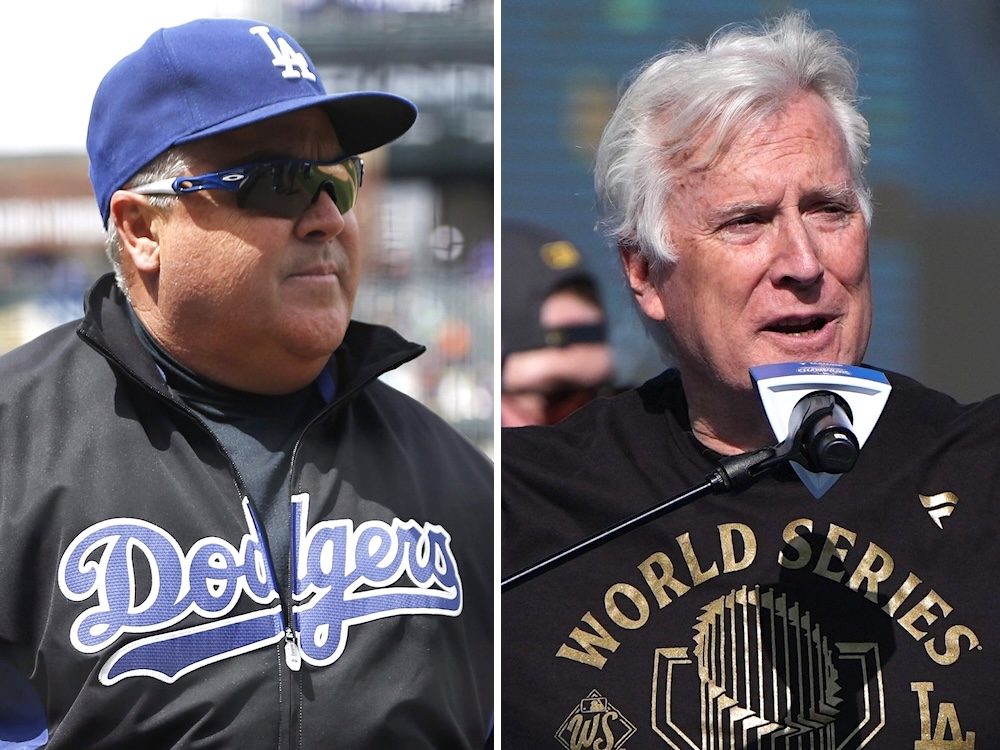
US billionaires Bobby Patton Jr., left, and Mark Walter, co-owners of the Los Angeles Dodgers, now own 25 properties outside of Valemount, BC. Patton Jr. photo by David Zalubowski, Walter photo by Gregory Bull, the Associated Press.
Listen to this article
14 min

[Editor’s note: This story was produced in partnership with the Rocky Mountain Goat, a community newspaper based in Valemount.]

The purchase of dozens of farm properties by two U.S. billionaires has prompted a small B.C. community to call for restrictions on foreign ownership of agricultural land.

Announcements, Events & more from Tyee and select partners
Eight Local Books to Upgrade Your Summer Reading List

A curated booklist to suit varied seasonal whims.

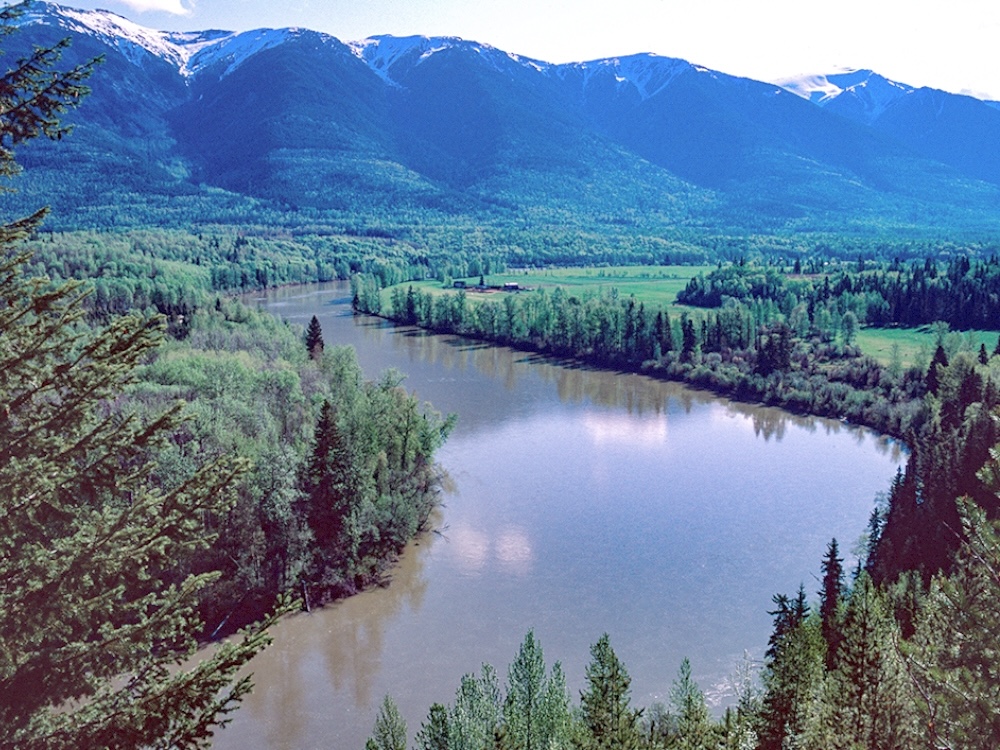
Since 2008, a company co-owned by American billionaires Bobby Patton Jr. and Mark Walter has bought 25 properties in Dunster, an unincorporated community of approximately 240 people located 40 minutes north of Valemount.

The properties, which were bought through a company registered in Canada called Fraser River Landholdings Ltd., include 16 homes, almost all of which are now vacant. Locals say the purchases have significantly affected Dunster, with the already small community losing residents while houses are left empty.

Patton Jr. and Walter are co-owners of the Los Angeles Dodgers through their company Guggenheim Baseball Management, and were estimated to have a combined net worth of more than $5 billion in 2020. By contrast, the average household income for those living in the Dunster area is about $60,000 per year.

All but one of the properties bought by Fraser River Landholdings are in the Agricultural Land Reserve, or ALR, and the company has installed locks, gates and security cameras on the land it acquired, alarming residents who have historically known their neighbours and consider Dunster to be a community with a high level of mutual trust between residents.

The company’s arrival first drew attention more than a decade ago, with more than 1,000 acres having been acquired by 2014. Fraser River Landholdings has continued purchasing land in the years since, with the most recent acquisition completed last fall. That property, valued by BC Assessment at $676,000, contains a two-storey house on about 139 acres of land.

Today, the company owns about 3,500 acres of land in Dunster.

Unlike many other provinces, British Columbia has no restrictions on foreign ownership of agricultural land.

But Dunster residents are asking the provincial government to change that. They want B.C. to restrict the foreign ownership of agricultural land — and redefine what it means to be a Canadian company in the province.
Map: Tyler OlsenCreated with Datawrapper

The neighbours who aren’t there

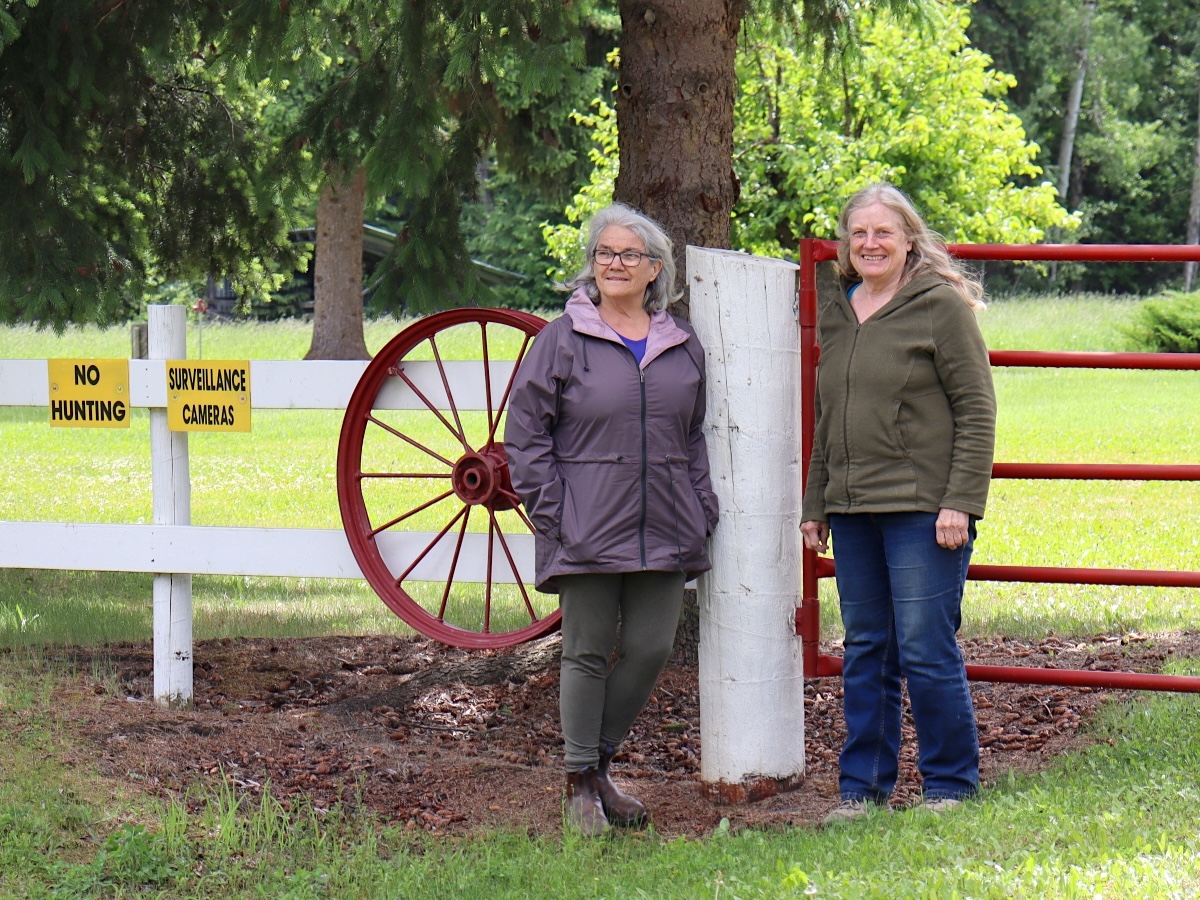
Nancy Taylor and Loretta Simpson have lived in the Dunster area since the 1970s. Since 2008, the pair have watched the population of their community fall from 350 to 240, a decline they attribute to the many homes that now sit vacant on properties acquired by Fraser River Landholdings.

Information on Fraser River Landholdings is limited; The Tyee attempted to contact Patton Jr. and Walter through Guggenheim Partners, one of their other companies, but did not hear back by press time.

The impacts go beyond simply the lack of occupants of 25 properties, say the women, who are both members of the Dunster Community Association.

“There’s ripple effects, right? No people, no neighbours, no succession planning that’s going to benefit the community,” Taylor said. “When the only succession is Fraser River Landholdings buying places, the community’s going to completely die.”
Nancy Taylor, left, and Loretta Simpson are among a group of Dunster locals who say the acquisition of land by two US billionaires is hurting their community. Photo by Spencer Hall.

Despite its size, Dunster has a vibrant non-profit sector. But without new neighbours bringing new energy to the organizations, the capacity to plan and host community events is dwindling.

“We’re all aging,” Taylor said. “You come to any meeting and you’ll see all grey hair. I’m getting so that I’m just tired of volunteering all the time and there’s nobody stepping up.”

Simpson estimated that about one-quarter of the land in Dunster has been purchased by the company.

The concern is that the company not only is outbidding would-be buyers who might be interested in moving to town, but is also holding on to the land indefinitely.

“When these farms are being bought up, there’s not a real opportunity for new people to move in,” Simpson said.

The company’s land purchases have been facilitated by Vince Lorenz, a longtime Dunster resident, according to Country Life in BC. Lorenz also works as a guide outfitter for Fraser River Partners, which arranges hunting and wildlife viewings on properties owned by the company.

Lorenz didn’t reply to The Tyee’s emails, but in an interview with Country Life in BC, he disagreed the company is preventing potential newcomers from purchasing property in Dunster. Lorenz said most of the properties were too expensive for other buyers and had been on the market for quite some time.

He told The Tyee that he wouldn’t be bothered if the province restricted foreign purchase of farmland, as the company is not buying much more property in the area.

Lorenz also pushed back on claims made by some locals that a minimal amount of farming is being done on the land now owned by the company. He told the publication that some of the properties are used to grow hay, which is then either sold to other residents or used as bait for elk.

The legacy of a financial crisis

University of Northern British Columbia professor David Connell says speculative purchases of farmland accelerated during the 2008 global financial crisis.

“Traditional avenues for financial investments kind of lost their lustre, and people started turning to agricultural land as this longer-term, much safer investment vehicle,” Connell said.

The process, known as financialization, has had significant negative impacts on farmers and on Canadian society in general, Connell said.

Farmland in B.C. is scarce. Less than five per cent of land in the province is farmable, with only 0.06 per cent classified as highly productive, according to a policy brief Connell recently wrote.

Connell said speculative ownership leads to land consolidation and shifts the ownership of land to wealthier entities. The demand from investors pushes up prices. Farmers who can buy property have to take on more debt, making them more vulnerable to market and interest rate fluctuations. Those who can’t afford to buy land are forced to consider leasing properties, which comes with short-term contracts and less security and can hinder key investments in their farming operations. More competition for farmland also makes it harder for multi-generational farming families to transfer land to the next generation.

Speculative investors buying up agricultural land can accelerate rural decline as communities lose their small farms and, with them, their residents, Connell said.

But although the speculative purchase of farmland is often framed as being caused solely by foreign ownership, Connell said non-Canadian investors are just one group of buyers affecting B.C.’s supply of agricultural land.

“What we are facing in B.C., and across Canada, is the purchase of agricultural land by different types of speculative buyers,” he wrote. “Investors include people, private corporations, investment companies and pension funds, including both Canadian (resident) and foreign (non-resident) buyers.”

No restrictions on BC farmland ownership

As the Dunster Community Association’s members have sought to bring awareness of what is happening to their community, they have found an ally in BC Green Party Leader Emily Lowan.

After connecting with the community association and doing further research, the Greens identified several other areas in the province, including Kamloops and Pemberton, where wealthy, foreign interests have been acquiring land.

In May, the party launched a petition calling on the province to restrict the ownership of farmland by investment firms and non-residents. The petition also called for municipal and regional governments to tax unused farmland purchased for speculation.

“It just seems like a really natural issue for the Greens to champion, specifically on the concern about protecting local ownership, protecting our food security and ensuring we have the safeguards in place to protect our farmland,” Lowan said.

Lowan cited Stan Kroenke, the owner of the National Hockey League’s Colorado Avalanche, as an example of a wealthy American who has bought up B.C. farmland. Since 2003, Kroenke has purchased several historic B.C. ranches, including Alkali Lake, Riske Creek, Gang, and Douglas Lake ranches. The latter, near Merritt, is Canada’s largest working cattle ranch; in total, Kroenke’s ranches control more than 1.8 million acres of farmland.

The Tyee attempted to contact Kroenke through Douglas Lake Ranch but did not hear back by press time.

BC Assessment reported that just one per cent of B.C.’s farmland is foreign owned, but Lowan said the Greens’ own calculations suggest the figure is likely much higher.

“Stan Kroenke owns or controls 13 per cent, including the grazing permits — that’s huge [amounts] of farmland,” she said.

Lowan puts the blame on the fact that B.C. is one of five provinces in Canada with no policies in place restricting the ownership of farmland by foreign entities. The other provinces with no foreign ownership restrictions are Ontario, New Brunswick, Nova Scotia, and Newfoundland and Labrador.

Regional District of Fraser-Fort George director Dannielle Alan, who represents Dunster residents, echoed Lowan.

“We have foreign interests who are controlling large amounts of agricultural land, and they’re not doing so for the benefit of the people who live in B.C. or even Canadians,” she said, echoing the call for stricter land ownership rules.
More than two dozen properties in Dunster have been purchased by a company called Fraser River Landholdings. Photo via Rocky Mountain Goat News.

Lowan, Alan and the Dunster residents are hardly the first to call for the province to restrict foreign farmland ownership.

In 2018, a panel appointed by the Ministry of Agriculture recommended the province consider adopting land ownership policies similar to those of other jurisdictions in Canada.

The committee cited concerns about the “unlimited demand” of foreign buyers for B.C.’s limited protected agricultural land and questioned whether foreign ownership of land in the ALR is in the long-term interest of the province’s agricultural industry. The panel said residents were concerned that foreign ownership of farmland could cause higher land prices and jeopardize the security and sustainability of B.C.’s food production. It suggested the province review the restrictions imposed by other municipalities and study the impact of foreign investment on B.C. farmland prices.

At the 2024 Union of BC Municipalities convention, local politicians from around the province endorsed a resolution brought forth by the Regional District of Fraser-Fort George to support the 2018 recommendation and calling on the province to restrict foreign ownership in the ALR.

For this year’s Union of BC Municipalities convention, the regional district has asked delegates to ask the province to provide an update on how it has responded to the 2024 resolution.

In an emailed statement to The Tyee, a spokesperson for the province’s Ministry of Agriculture wrote: “We share the concerns around land use and affordability in the ALR and have been clear that land in the ALR should be used for farming as it remains the foundation of our province’s food security.”

The statement did not answer questions about whether the province plans to restrict foreign ownership of farmland, or what it might do to protect the province’s farmland from corporate interests. Instead, the statement said that farmland owners must follow provincial laws and Agricultural Land Commission rules.

Quebec: A potential model for BC?

Other provinces regulate foreign farmland ownership differently.

In Alberta, foreign citizens and foreign-controlled corporations can own up to two parcels, totalling 20 acres. Corporations are not eligible to own farmland if foreigners control at least 50 per cent of the company.

Alan, Lowan and Taylor all point to recent legislation enacted by Quebec’s provincial government as a potential model for how British Columbia could address speculative farmland purchases.

In March 2025, Quebec passed a bill that restricts foreign ownership of farmland to four hectares and expands the powers of the Quebec land commission to review purchases of agricultural land made by non-farmers. Buyers will need to convince the commission they intend to work the land, instead of using it for investment.

The bill also allows municipalities to impose a tax on agricultural land that isn’t being actively farmed.

Although restricting foreign ownership of land in other provinces has met with success, Lenore Newman, the director of the University of the Fraser Valley’s Food and Agriculture Institute and a member of the 2018 B.C. panel, says the issue isn’t as straightforward as it appears.

Newman said the worldwide acquisition of farmland by pension funds presents the question of which entities can effectively manage farms. Many of the funds have time frames of 100 years and are satisfied with small returns on investment, she said.

“They are content with smaller steady returns around four per cent annually, and can achieve meaningful farm and environment improvements through scale,” Newman said in an email. “We could limit land sales of this sort to Canadian funds. Really it’s philosophical: Do we believe farming can only be done by owner-operators? Then what about land trusts? Co-ops?”

The issue is complex and requires policies informed by more information, she said.

“It is likely one tool won’t fit all situations,” Newman wrote. “I would want to see firm provincial-level data before committing to a course of action.”


I Love Farming. Why I May Have to Quitread more

Much of that data is elusive, however. Connell said information about who owns agricultural land isn’t readily accessible and can be difficult to confirm, making it hard to know the extent of the issue and the effect of any potential policy change.

Dunster’s advocacy continues

At a regional district board meeting in June, Dunster Community Association members told local politicians their voices are finally being heard.

Rashmi Narayan, the co-ordinator of the group’s farm hub project, said provincial officials have committed to reviewing land records to examine ownership trends and how they are affecting communities.

“That’s been a big achievement for us,” Narayan said.

Simpson and Taylor said they’ve felt shy and aware they may be labelled as radical for speaking out about an issue they feel has significantly eroded the population of Dunster. But it hasn’t stopped them.

“We’re trying to protect our community and make changes that everyone will benefit from in the end,” said Taylor.

LVMH CEO’s new PR strategy: sarcastic tweets


LVMH CEO’s new PR strategy: sarcastic tweets

Bernard Arnault in front of a wall of color blocks

Luc Castel/Getty Images

After France’s biggest newspaper published a sweeping exposĂ© of the country’s richest person, he told his PR team “hold my Hennessey” and fired off his first-ever X post.

The (typically offline) head of fashion juggernaut LVMH Bernard Arnault posted an open letter on X this week accusing Le Monde of distortions in its recent deep dive into the $260+ billion luxury empire run by what the newspaper called “France’s last royal family.” Among other things, Le Monde’s reporting claimed that the 77-year-old billionaire actively influences editorial choices at the publications he owns and that his five children are locked in an intrigue-fueled power struggle to replace him.

Posting through it

Arnault accused Le Monde of sensationalism to sell newspapers, rejected the claims about his family, and scoffed at its descriptions of the atmosphere at LVMH:

  • Arnault mocked the insinuation that LVMH doesn’t hire overweight employees, saying he’ll “raise the matter with the company canteen.”
  • He denied that visitors to the company’s HQ have their ties confiscated if they’re from rival Hermès, saying he owns multiple.

Adding to the intrigue, Le Monde’s main shareholder is Xavier Niel, a fellow billionaire—and Arnault’s daughter’s partner. Niel now follows Arnault on X.

Big picture: More CEOs are choosing to communicate with the public directly through social media or casual podcast interviews, instead of old-school media.

World Plunged Into Chaos as ChatGPT, Claude, and Grok Suddenly Go Down

World Plunged Into Chaos as ChatGPT, Claude, and Grok Suddenly Go Down Simultaneously: “Finally I Can See the Sun!”

Futurism · an hour ago
by Victor Tangermann · Artificial Intelligence


As if a million white collar workers suddenly cried out in terror at once, a great disturbance in the AI force forced down every major AI chatbot service — a brief moment of reprieve from our AI empire overlords.

OpenAI’s ChatGPT, Anthropic’s Claude, Google’s Gemini, and X’s Grok mysteriously went down Thursday morning, and we still don’t know what’s behind it.

“All the AI is down,” as one X user put it buntly.

OpenAI’s status page noted “elevated errors across ChatGPT and Codex.”

“We have applied the mitigation and are monitoring the recovery,” the company wrote.

While X’s Grok shows widespread outages, Anthropic’s Claude status page noted that the “only affected models right now are Opus 4.8 and Opus 5.”

“The rest of the models have recovered to baseline error rate,” Anthropic’s website reads.

Spiking and falling reported incidents on Downdetector suggest outages affecting OpenAI’s services have largely been resolved. Other services, including Google and the popular video game “Fortnite,” continue to experience issues.

Netizens were quick to joke about out the unusual outage affecting almost every major AI chatbot service, describing a momentary glimpse of lucidity for a society obsessed with a tech that’s deteriorating our cognitive abilities.

“Finally I can see the Sun!” one account tweeted.

“And for a brief moment, millions of people had to use their brains again,” journalist and noted AI critic Paris Marx quipped in a Bluesky post.

“If you are renting your brain, what happens during global rent-a-brain outage?” another user joked.

Claude chats were showing up in Google searches


Claude chats were showing up in Google searches

Illustration of a person typing on a laptop, having a conversation with Claude, but some of their chat messages are blowing off the screen into cyberspace.

Niv Bavarsky

Conversations with Claude that were intended to be private—some involving medical data and children’s phone numbers—were discovered in search engine results by Reddit users over the weekend.

How it happened: Users can create a shareable public link for Claude chats (much like you can with Google Docs), so friends or coworkers can view them. While a public Google Doc with your 80-page screenplay no one wants to read isn’t indexed for search, the Claude creations were.

Claude creator Anthropic told TechCrunch that those links only become public if they are posted where web crawlers can find them, like on a social media platform. Search engine companies had other explanations:

  • A Google spokesperson told Wired that it gives Anthropic and any website owner “clear controls” over whether web pages are crawled or indexed.
  • Microsoft’s Bing (it still exists) says that developers can use tags to block indexing. But when Wired reviewed the exposed Claude chats, it did not find the recommended “noindex” tag on those pages.

Chat, are we cooked? The Claude links were still publicly available as of Monday, but appear to have been erased from search results as of yesterday. However, it’s possible that third parties have already gotten their hands on the data.

John Roberts stuns with dissent as Supreme Court rules for Trump’s ballroom

John Roberts stuns with dissent as Supreme Court rules for Trump’s ballroom

Chip Somodevilla/Pool via REUTERS/File Photo
Nick Hilden August 31, 2026 | 04:39PM ET

Make us preferred on Google

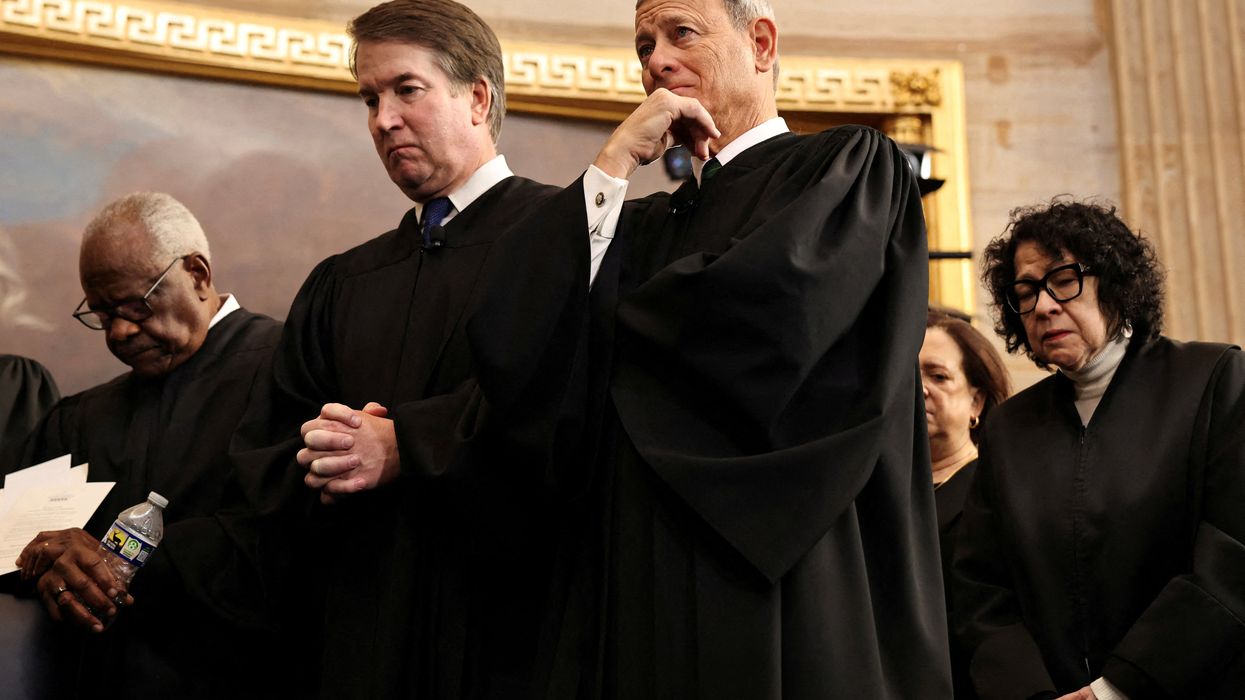
On Monday, the Supreme Court ruled that President Donald Trump can move forward with the construction of his much-demanded White House ballroom. The opinion was split 5-4, with conservative Chief Justice John Roberts siding with his liberal counterparts in opposing the ballroom. According to Roberts, "The President ordered the demolition of the East Wing of the White House to make way for a new, privately funded state ballroom in its place. Construction of the ballroom has proceeded apace for the better part of a year. That construction is likely unlawful."

As NBC News explains, "The court, divided 5-4, granted an emergency request filed by the Trump administration, blocking lower court rulings that would have put the aboveground portion of the project on hold. This followed an interim decision along similar lines issued by Chief Justice John Roberts on Aug. 21. The legal challenge was brought by the National Trust for Historic Preservation, which argued that the president did not have unilateral authority to proceed with construction. In the unsigned ruling, the court said that the trust likely does not have legal standing to bring the underlying lawsuit. The court did not reach any conclusion on whether Trump has authority to carry out construction without congressional approval."

“Today, we do not pass upon the legality of the government’s East Wing project. We conclude only that, based on the submissions before us, the government is likely to prevail in showing that the Trust lacks ... standing to challenge the project in federal court,” the court declared.

This technicality emerged from the unusual nature of the original lawsuit. According to NBC, "The trust’s claim for standing hinges on a declaration made by member Alison Hoagland, a preservationist who lives in Washington and serves on the organization’s board of trustees. Hoagland regularly walks by the White House, adding that she would 'suffer both professional and personal injuries, including to my aesthetic, cultural and historical interests, if a ballroom of the proposed form and scale were constructed.' The Supreme Court majority concluded the court had never found legal standing in such a situation before."

"Barring another lawsuit," noted Washington Post White House reporter Dan Diamond, "Trump poised to get his ballroom."

According to the Hill, "In recent days, the Trump administration has insisted the ballroom is now too far along to stop construction. The Justice Department indicated in its Supreme Court filings that the project is 65 percent complete, with a concrete-and-steel structure already stretching five stories deep and 70 feet high." A report by the Washington Post released on Friday, however, suggested that the White House may be dramatically inflating that number.

Democratic Socialists of America - want it this way

The world is in chaos, but for the bosses, it’s all going according to plan. We can see their plan in the countless heartbreaking images coming out of war zones like Beirut, Gaza, and Tehran. We can hear it in the rumble of bulldozers making way to build detention camps and data centers. We can feel it in the air as the summer heat becomes unbearable, and in the pits of our stomachs when faced with the price of gas and rent. We’re promised magical technology with AI, but in reality, the bosses lay us off and track our every move. The billionaire class is dividing workers against each other, and it’s making us desperate and miserable.

The political and economic system under which we live is built on private ownership and profit at all costs. As capitalism fails to solve problems of its own making, it turns to right-wing authoritarianism. Big business makes deals with the government to line their pockets, and politicians stoke hatred between working people. Instead of offering real solutions to unemployment and the cost of living, they attack immigrants, communities of color, and trans people. Rather than fixing our broken healthcare system, they push snake oil and circulate conspiracy theories. The Republicans are in on it, the Democratic Party is asleep at the wheel, and both are funded by the same criminal class of billionaires and war profiteers.

Democratic socialists know that no one has to live like this. If we lived in a classless society and governed ourselves, we could freely build a world without war or poverty. We could build a world where no one suffers for their race, gender, or religion, and everyone is free, equal, and cared for. Building this world is the guiding star of our movement. When we labor for our common good instead of private profit, we can all have a secure and dignified life, and use our time and talents how we wish.

To achieve this future, our class must organize. The Democratic Socialists of America is building a party whose goal is a democratic society of the working class. Our enemies are not just individual bosses, but the entire global system of capital; not just this or that cop, judge, or president, but the entire anti-democratic structure of our society. We are workers fighting to transform society: to win the battle for democracy, draft a new constitution, and create a democratic socialist republic.

DSA has written this program for ending capitalist oligarchy and creating a real democracy. Some of these demands may be won under our current system, but we know complete victory will require building a new society from the ground up. We push these demands to their furthest extent today, so we can fight for their fullest realization in a socialist future.

Bill Gates warns ‘there is no plan’ for AI transition


Bill Gates warns ‘there is no plan’ for AI transition

Photo of Microsoft co-founder Bill Gates, and older man with short salt and pepper hair, wearing glasses and a suit and tie.

Kent Nishimura/Getty Images

One of the world’s greatest tech innovators just rang one of the loudest AI alarms yet. “AI will either be the greatest equalizer ever invented, or the worst source of injustice,” Bill Gates wrote in an essay yesterday, saying he doesn’t “see evidence that leaders, experts, and communities are confronting the challenges adequately. There is no plan to ease the entry into the AI era.”

“We need time to prepare for the social, political, and economic upheaval,” the Microsoft co-founder and former AI optimist wrote in the nearly 6,000-word essay. According to Gates:

  • The threat that AI and robotics present to blue- and white-collar jobs isn’t comparable to previous technological transitions, which happened over generations and resulted in tech that required—not replaced—human cognition.
  • “This would be the worst possible time for humans to lose their critical thinking skills,” Gates wrote, referencing the rise of deepfakes and chatbot sycophancy alongside AI’s burgeoning capabilities for cyberattacks and bioterrorism.

What do we do? Gates urged governments to impose taxes on AI tokens and bots, set aside certain jobs for humans, and cooperate internationally on regulation—especially the US and China.

Tea: “I don’t really know anybody who’s not concerned,” Gates told Axios, saying that many of the largest tech companies are privately worried about what they might create.

'Lake America' change highlights Canada's reliance on U.S. tech | CBC News

'Lake America' change highlights Canada's reliance on U.S. tech | CBC News

'Lake America' change highlights Canada's reliance on U.S. tech
Tech industry experts say Canadian consumers and businesses have few non-U.S. options


Jeff Lagerquist · CBC News · Posted: Aug 31, 2026 3:15 PM PDT | Last Updated: August 31


Listen to this article
Estimated 4 minutes

A person holds an Apple iPhone Air during an event at the Steve Jobs Theater on the Apple Park campus in Cupertino, California, on Sept. 9, 2025. (Nic Coury/AFP/Getty Images)

"Lake America" labels are live on Google Maps, and U.S. President Donald Trump wants Apple to follow suit with the navigation app preinstalled on every iPhone.

Tech industry experts say the situation highlights an uncomfortable reality for many Canadian consumers and businesses: they're effectively "locked in" to these U.S.-owned platforms, with few, if any, viable non-American alternatives.

"Canadians really do live under the shadow of American tech monopolies, and we often forget that this is a fact until there are these moments of controversy," said Anne Pasek, Canada Research Chair in Media, Culture and the Environment at Trent University in Peterborough, Ont.


"Our digital lives, and a lot of our life that extends from that, falls under the jurisdiction of American companies, and therefore American law."
WATCH | Canadian government websites display 'Lake America':


Canadian government sites display ‘Lake America’ thanks to Google
August 31|
Duration1:47Some Canadian websites, including for the federal government, displayed maps with Lake Ontario renamed as Lake America on Aug. 30, a day after Google Maps announced the change to align with an executive order by U.S. President Donald Trump. Google said the change would only impact U.S. users, but some Canadian sites that use third-party protocols that pull data from Google’s U.S. API found themselves caught up in the change.

Some Canadian websites, including federal government sites and some of the country's largest banks, have recently displayed maps with Lake Ontario renamed Lake America.

The changes follow an executive order from Trump directing the U.S. federal government to officially rename one of the Great Lakes separating the two countries amid an increasingly bitter trade war.

Google made the change for users in the U.S. and introduced an option for non-American websites to display the label "Lake Ontario" by localizing their maps and setting their region to Canada.

"These updates follow our long-standing policy for bodies of water with names that vary from country," the company stated on Saturday.

U.S. Interior Secretary Doug Burgum told Fox Business on Monday that Trump contacted Apple to request that Lake Ontario be changed to Lake America on its apps. Apple has not responded to multiple requests for comment from CBC News.

Beyond providing real-time directions to millions of users, mapping tools from U.S. tech giants are woven into the websites and operations of scores of Canadian businesses.

They provide hours of operation, contact information, reviews and other critical details. Behind the scenes, they help e-commerce sites auto-complete addresses and allow rideshare and food-delivery apps to monitor traffic and road construction.

"There is a pretty clear monopoly," Pasek said. "Folks are locked in."
Will Trump seek tech-based 'choke points' against Canada?

Emily Osborne is a policy research associate at the Canadian Shield Institute. The Toronto-based think-tank was launched by BlackBerry co-founder Jim Balsillie to modernize public policy on technology and national security and safeguard Canadian intellectual property.


"We rely on American companies like Google and Apple for many different digital services and products online, and navigation is certainly one of those," Osborne said.

For basic navigation, she suggested Dutch companies TomTom and HERE Technologies as potential alternatives to Google and Apple.

Until recently, Canada had a homegrown alternative. Toronto-based Avenza Systems was acquired by Maine-based Blue Marble Geographics for an undisclosed sum in a deal that closed in April.

If tensions continue to rise between Canada and the U.S., Osborne worries the Trump administration may look for other tech-related "choke points" to pressure Canada. She pointed to payment processing and cloud storage.

"Think of the AWS (Amazon Web Services) outage that happened last fall. So many Canadian businesses were affected by that," Osborne said.

Osborne said that the outage illustrates how vulnerable Canadian businesses can be when they depend on U.S.-owned digital infrastructure, particularly if access were ever restricted by government order.

"Canadian businesses rely on Visa and MasterCard for credit card payments. We don't have a Canadian alternative there," she said.

ABOUT THE AUTHOR


Jeff Lagerquist

Senior writer

Jeff Lagerquist is a senior writer with CBC News based in Toronto. Originally from Erin, Ont., he studied journalism at Toronto Metropolitan University. Jeff previously worked as a senior reporter for Yahoo Finance Canada. He was also a reporter and digital producer for CTV National News, BNN Bloomberg and The Financial Post. He was also a Columbia University energy journalism fellow for 2025.

Google has promised to pay $44bn of rent on buildings it will never own

 Google has promised to pay $44bn of rent on buildings it will never own


Google has promised to cover up to $44bn of rent on data centres it does not own, if the tenants stop paying. Nine months ago that promise was worth $6.5bn. The guarantee is how Google sells chips against Nvidia, and it is the clearest measure yet of an AI build-out being financed by moving risk off the books rather than putting money down. Three more giants report earnings this week.

July 27, 2026 - 11:14 am


Image by: The Pancake of Heaven!


Start with the number, because the number moved fast.

Google has agreed to cover as much as $44bn of lease payments on data centres owned by other people, should the tenant default. It disclosed the figure last week. At the end of September the same commitment stood at $6.5bn, The Information reported.

That is close to seven times larger in nine months.

The promise is simple to state and hard to price. Google does not own the building. It does not occupy the building. It has told the lenders that if the company renting the building stops paying, Google will.
Why a search company is underwriting other people’s rent


TNW City Coworking space - Where your best work happens

A workspace designed for growth, collaboration, and endless networking opportunities in the heart of tech.


The answer is chips. Google wants customers for its tensor processing units, the in-house silicon it is pitching as an alternative to Nvidia.

A guarantee from a company with Google’s balance sheet lets a data-centre developer borrow more cheaply. Cheaper debt makes the project work. The project buys TPUs. Anthropic rents them.

Readers here have seen the mechanism. In June we reported how Google borrowed Nvidia’s own playbook, including a $3.2bn guarantee at Lake Mariner in western New York, $7bn at River Bend in Louisiana and $1.4bn in Texas.

What is new is the total, and the speed. Those individual guarantees have now consolidated into a single disclosed figure that has grown almost sevenfold since September.
A different kind of balance sheet

Until a year or two ago the giants had simple accounts. Cash covered debt several times over. That is no longer the shape of the thing.

Now they use techniques long familiar on Wall Street, expanding the business without carrying all of the risk themselves. The guarantee is the purest example. It commits nothing today and everything in the wrong scenario.

We have covered the aggregate before. Five US giants carry $1.65tn of off-balance-sheet AI debt, more than they report outright. This is the same story told through one company and one line item.
The machinery, and why it is legal

Moody’s set out the mechanics earlier this year. The five biggest US hyperscalers had amassed $969bn of future lease commitments by the end of 2025. Some $662bn of that had not yet commenced, so none of it sat on a balance sheet, Fortune reported. That hidden portion equals 113% of the five firms’ adjusted debt.

The cause is the kit. Data-centre leases used to run 10 to 15 years. AI hardware is useful for four to six. So tenants now demand short leases with options to renew, and landlords demand security before they will build.

The security is usually a residual value guarantee. If the tenant walks away and the building is worth less than an agreed threshold, the tenant pays the difference.

Accounting rules let that sit off the books. A renewal counts as a liability only if it is “reasonably certain”, a test above 70%. Since nobody can say what AI hardware will need in 2031, firms can argue the renewal is likely without being certain, and the guarantee stays in a footnote.

Meta shows the scale. It disclosed data-centre leases starting in 2029 worth about $12.3bn, alongside a residual value guarantee with a $28bn threshold. It judged a payout not probable, so no liability was recorded. Its $50bn Hyperion campus in Louisiana runs on a version of the same structure.
‘Every nook and cranny’

The reason for all this creativity is that the money required has outgrown the ordinary ways of raising it.

John Greenwood, Goldman Sachs’s global head of infrastructure and real asset finance, said he is “looking for capital in every nook and cranny” to support an expected $7.5tn of spending on chips, data centres and power over the next five years, The Information reported.

The hunt does not stop there. Much of that spending goes on chips that need replacing every few years, so the bill arrives again.
The thing money cannot buy quickly

Capital is not the only bottleneck. Nvidia says the harder constraint is physical.

“What’s limiting the access to compute capacity is the fact that it’s very hard to find powered data centers, powered land,” said Raj Mirpuri, Nvidia’s vice president of global AI clouds and infrastructure.

That is why the guarantees exist. A promise from a trillion-dollar balance sheet is the fastest way to turn a plot of land with a grid connection into a building full of chips. Nvidia is now doing the same thing, using its own balance sheet to help customers afford chips and help partners finance the halls to put them in.
Why it matters on Wednesday

Meta and Microsoft report on Wednesday. Amazon and Apple follow on Thursday. Alphabet went first last week and lifted its capital-expenditure guidance to $205bn.

The reported debt will look manageable. The guarantees will not be in the headline numbers.

Investors are already uneasy. Meta is down about 10% this year and Microsoft about 21%, while Apple, which barely spends on AI, is up 23%. Microsoft is short of compute and rationing it. Amazon has guided to roughly $200bn of capital spending against about $185bn of expected operating cash flow, according to S&P Global Market Intelligence, which means dipping into reserves it has topped up with bond sales.

It is in talks to backstop about $250bn of OpenAI’s financing, and it just put $1bn into Korea’s Naver alongside $9bn from Brookfield. The guarantee has become standard equipment.

None of it is improper. The disclosures exist. Moody’s analysts David Gonzales and Alastair Drake made the narrower point that these obligations are not missing, only early. They have not yet been triggered, but they will be.

Their warning was about what the accounts cannot show. “The accounting liability is unlikely to reflect certain plausible future scenarios,” they wrote.

A guarantee costs nothing at all, right up until the moment it costs everything. Google has written $44bn of them in nine months, on buildings it will never own.

China successfully tests high-speed laser link between Earth and the Moon


China successfully tests high-speed laser link between Earth and the Moon

Chinese researchers have successfully established a two-way high-speed laser communication link between Earth and the Moon, spanning more than 400,000 kilometers. Announced by the Technology and Engineering Center for Space Utilization of the Chinese Academy of Sciences, the milestone follows more than a year of in-orbit testing and represents a significant extension of China's laser communications capabilities beyond near-Earth orbit into deep space. Compared with traditional microwave systems, laser communications deliver faster speeds, greater bandwidth, stronger security, and more compact hardware, advantages that become increasingly critical as lunar ambitions grow more complex.

To recover a signal so faint that ground telescopes catch only a handful of photons at a time, drowned out by moonlight, starlight, and urban light pollution, the researchers developed superconducting single-photon detection hardware and high-sensitivity algorithms. Special coding schemes and high-bandwidth signal processing pushed the link to verified rates of 1.25 Mbps uplink and 100 Mbps downlink. With China planning manned lunar landings and a permanent lunar research station, the volumes of imagery and scientific data that future missions will generate would quickly overwhelm conventional radio links, making this laser highway a foundational piece of infrastructure for the next era of lunar exploration.

Iceland rejects EU-accession talks in close-fought referendum - Really

Iceland rejects EU-accession talks in close-fought referendum
By Johan Ahlander and Tom Little
Sun, August 30, 2026 at 7:48 AM PDT
4 min read
Add Yahoo as a preferred source to see more of our stories on Google.
Add Yahoo on Google
398


A man with an Icelandic flag rolls around in a park ahead of a referendum on whether Iceland should resume accession negotiations with the European Union, in Reykjavik, Iceland, August 29, 2026. REUTERS/Leonhard Foeger

A European Union sign outside their delegation building ahead of a referendum on whether Iceland should resume accession negotiations with the European Union, in Reykjavik, Iceland, August 29, 2026. REUTERS/Leonhard Foeger


People enjoy a sunny day on Rainbow Street ahead of a referendum on whether Iceland should resume accession negotiations with the European Union, in Reykjavik, Iceland, August 29, 2026. REUTERS/Leonhard Foeger


Reykjavik ahead of a referendum on whether Iceland should resume accession negotiations with the European Union
1 of 8
A man with an Icelandic flag rolls around in a park ahead of a referendum on whether Iceland should resume accession negotiations with the European Union, in Reykjavik, Iceland, August 29, 2026. REUTERS/Leonhard Foeger


By Johan Ahlander and Tom Little

REYKJAVIK, Aug 30 (Reuters) - Icelanders voted to stay out of the European Union, referendum results showed on Sunday, as they rejected a government push to reopen membership talks and sided with those who said Iceland's fishing waters were too important to risk.

The Arctic island of 400,000 ‌people has debated whether to join the EU for well over a decade and had initially been expected to narrowly back holding membership talks, but opinion polls ‌this month showed views had changed.


Prime Minister Kristrun Frostadottir told a press conference that Iceland would focus on strengthening its existing ties with the European Union through the European Economic Area agreement, which it shares with Norway and ​Liechtenstein.


"A big lesson for me and also for the government is that people are happy with the EEA agreement," she said.

A European Commission spokesperson said it respected the choice of the Icelandic people and noted that Iceland remained a close partner of the European Union.

Frostadottir now plans to call Norway's prime minister, public broadcaster RUV reported.

In Saturday's referendum, 52.8% of ballots cast were against the government's proposal to hold negotiations with Brussels, 47.2% were in favour, and 82.5% of eligible voters took part.


Out of six constituencies, only the two in central Reykjavik had a majority that voted ‌in favour, while the rural areas and the Reykjavik suburbs voted ⁠against.

The government had framed membership as a shield against trade wars and Arctic rivalry and presented the referendum as a "now or never" moment. Frostadottir said the "no" would end the debate for as long as her centre-left coalition was in power.

More in World


Russia is slowly grinding through the Donbas as Ukraine braces for a brutal fight over its last strongholds
Business Insider
215


Transcript: Sen. Richard Blumenthal on "Face the Nation with Margaret Brennan," Aug. 30, 2026
CBS News


'Like something out of 'Saturday Night Live': Ontario premier laughs off ‘Lake America’ executive order
Politico
171


DECADES OF MEMBERSHIP DEBATE

In Brussels, some officials had ⁠voiced hopes a vote to join from Iceland could ease scepticism toward EU enlargement and strategically strengthen the bloc when Arctic security is in focus.


"This is a clear setback for Brussels," an EU diplomat told Reuters, adding that the issues of fishing and independence had been decisive.

Iceland, a NATO member state but with no standing army of its own, also debated whether EU accession could boost the country's ​security ​when U.S. President Donald Trump has cast doubt on the U.S. commitment to the military alliance.

Trump has also ​repeatedly said he wants to acquire Greenland, another Arctic island.

But for ‌some Icelanders, fishing was a sharper focus than security.

The industry is one of Iceland's biggest, making up 15% of gross domestic product in direct and indirect contributions, and some 40% of export revenue, data shows.


INTEREST RATES AND THE COST OF LIVING

The island nation first applied to join the EU in 2009 when a financial crisis hit the country's small, exposed economy. A Eurosceptic government ended talks in 2013.

Ahead of Saturday's referendum, finances were again a central issue as Iceland has grappled with high inflation and interest rates.

However, high salaries have helped offset the economic hit for a large majority of Icelanders, Vilborg Asa Gudjonsdottir, a researcher in international affairs at the University of Iceland, told Reuters.

"I think the biggest reason for these results is ‌that there is no economic urgency for Iceland to join the European Union and the public doesn't seem ​to think that there is an urgency when it comes to security and defence either."


Supporters of a "yes" vote ​had said EU membership, and possibly adopting the euro, could bring relief. Iceland's ​central bank interest rate is 8%, compared with 2.25% at the European Central Bank.

"It would not solve Iceland's structural faults, but it could become ‌a catalyst to a more healthy economy," said chief economist Vilhjalmur Hilmarsson ​at Viska, one of Iceland's largest labour unions.

Opposition ​leader Gudrun Hafsteinsdottir, who led the "no" campaign, said the economic case is overstated. "These are not problems that Brussels will solve for us. These are problems that Icelandic politicians must solve," she said.

Under EU rules, fishing quotas are based on historical fishing patterns, among other factors. Some Icelandic officials have said Iceland would therefore retain control of ​its waters, since no EU country has fished there for decades.


Hafsteinsdottir ‌disputed that. "I know that the European Union will come up with some promises of some flexibility, especially in the beginning, but we know that it will ​not be for good," she said.

(Reporting by Tom Little and Johan Ahlander in Reykjavik, Stine Jacobsen and Louise Rasmussen in Copenhagen and Lili Bayer in Brussels; ​Writing by Stine Jacobsen; Editing by Terje Solsvik, Christopher Cushing, Barbara Lewis and Louise Heavens)

Grokipedia Appears to Have Completely Broken

 Grokipedia Appears to Have Completely Broken and Nobody Noticed

"As far as we can tell, no entry has changed in more than three months."

By Victor Tangermann

Published Aug 6, 2026 1:54 PM EDT
Add Futurism(opens in a new tab)More information


Shutterstock / Futurism

Sign up to see the future, today

Can’t-miss innovations from the bleeding edge of science and tech

Email addressSign Up

We certainly wouldn’t blame you for having completely forgotten that last year, Elon Musk tried to reinvent Wikipedia because he thought it was too woke.

In October, his AI startup xAI launched Grokipedia, named after its AI chatbot. The encyclopedia stole human-written and edited pages from Wikipedia wholesale and ran them through a large language model, which also fielded user-submitted edits, to better reflect Musk’s contorted worldviews.

The site was hardly an exemplary of objectivity. It was quickly found to heavily cite an infamous neo-Nazi forum as a source of information, desperately tried to paint Tesla’s Cybertruck as a successful and desirable electric pickup truck, and validated Musk’s favorite conspiracy theories. But it was a major cultural moment, garnering countless stories in the media and discussions on podcasts over Musk’s attempt to control the spread of information.

Perhaps unsurprisingly, the desperate attempt to twist the largest online encyclopedia in human history into an extension of an almost-trillionaire’s bigoted mind appears to have ground to a screeching halt — and, damningly, barely anybody seems to have noticed.

According to a new investigation by Lawfare, Grokipedia appears to have entirely stopped updating itself sometime earlier this year. Reviewing suggested edits from humans has also ground to a halt.

“As far as we can tell, no entry has changed in more than three months,” Lawfare concluded of the site, which is now owned by SpaceX since it merged with Musk’s AI efforts.

Worse yet, the site’s edit log appears to have broken completely as well, making it impossible to track which user-suggested changes were “accepted” or “rejected” by the AI.

By January, the Tow Center for Digital Journalism had already observed that xAI’s Grok was making more edits to its own articles than acting on human-suggested ones, suggesting a bottoming out of interest for the project.

Since then, it has turned into a ghost town, a completely redundant and misinformation-filled copy of Wikipedia, which remains one of the last bastions of human-edited and verified sources of information on the internet.

Even when Lawfare submitted an “uncomplicated factual update” about SpaceX having launched its IPO in June — an irrefutable fact that any allegedly “open source, comprehensive collection of all knowledge” should probably include — the Grokipedia entry remained stagnant.

Even pages that are purportedly drawing millions of views aren’t updating. The most recent approved update Lawfare could locate — to the entry about OpenAI’s ChatGPT — dates back to April 24.

As of today, Lawfare found that that there are 13,002 suggestions that “sit unresolved, trapped ‘in review.'”

“Altogether, what we found was that the ‘live’ change feed is gone, past decisions were retroactively reverted without explanation, new decisions are not being issued, and article text appears frozen (and, in some cases, outdated),” the publication concluded. “We do not know whether xAI is preparing a major revision or has altogether abandoned active development of the project.”

It’s a precarious situation. Despite having been abandoned, Similarweb data suggests Grokipedia received over six million visits in June alone. Hundreds of thousands of sites are also still citing Musk’s encyclopedia, which could spread misinformation even further.

Futurism has reached out to SpaceX for an update on the project, but considering the reputation of Musk’s companies and their refusal to interact with the media, we’re not holding our breath for a response.

More on Grokipedia: Elon Musk Is Not Beating the Allegations: Grokipedia Cites a Hardcore Nazi Website 42 Times


Victor Tangermann
Senior Editor


I’m a senior editor at Futurism, where I edit and write about NASA and the private space sector, as well as topics ranging from SETI and artificial intelligence to tech and medical policy.

TCL built a 22-speaker soundbar for turning living rooms into movie theaters

TCL built a 22-speaker soundbar for turning living rooms into movie theaters, but it’s skipping the US
Here's everything inside TCL's new flagship Q95K soundbar, from its Bang & Olufsen tuning to its 360-degree sound tech.
By Shikhar Mehrotra Published July 27, 2026 11:45 AM

TCL

I’ve used enough soundbars to know most “360-degree audio” claims are marketing fluff dressed up as innovation. TCL’s new flagship might actually have the hardware to back that claim up for once.

The Q95K is TCL’s new flagship soundbar. It’s built around an 11.1.4 channel Hi-Fi architecture and tuned in collaboration with Bang & Olufsen. To me, it sounds like a serious attempt to compete with premium home theater setups.TCL
So what’s actually inside this thing?

The system spreads 1420W of peak power across 22 independent speaker units. The exceptional output is split between a main bar handling seven horizontal channels, two overhead channels, and a subwoofer channel, along with wireless surround speakers covering rear, rear-side, and rear-overhead audio.

This is the kind of speaker layout that doesn’t only make things louder, but also excels at creating a convincing sense of sound moving around you, especially while watching movies.

A three-way acoustic design covers a wide 30Hz to 20kHz frequency range while still keeping distortion under 1%. The device uses neodymium magnets and aluminum diaphragms for clarity in the mids and highs.

Bass comes from a dual-engine subwoofer with opposing 7-inch drivers designed to cancel out cabinet resonance, while 12 separate amplifier chips drive individual speakers to cut down on crosstalk. These additions address the biggest problems with high-powered soundbars: muddy bass and messy audio separation.TCL
What about the rest of the lineup, and can you buy it yet?

TCL’s 360-degree sound field tech leans on software, adapting via the TCL app regardless of your wall layout. Connectivity covers HDMI 2.1 with eARC, Wi-Fi 6, and AirPlay 2, and the floating base design works for both desktop and wall-mounted setups.

TCL also launched two smaller siblings: the Q85K (16 units, 1180W) and Q75K (14 units, 580W). Unfortunately, none of the soundbars are available in the United States right now. The company already sells its flagship TVs and other audio products in the region.

All three are currently China-only, priced at 7,999 yuan (~$1,181), 5,999 yuan (~$886), and 4,699 yuan (~$694) respectively, with no confirmed global release yet.


Shikhar Mehrotra
News Writer
instagramlinkedin
For more than five years, Shikhar has consistently simplified developments in the field of consumer tech and presented them…

RG Richardson Communications News

I am a business economist with interests in international trade worldwide through politics, money and banking. Interactive Internet VoIP and secure eMail Communications. The author of RG Richardson City Guides that has over 300 guides, including restaurants, real estate and finance.