RG Richardson Business & Economics

RG Richardson Business & Economics
Interactive financial ebooks

The history of summer camps in the US

 The history of summer camps in the US

1861 photo of The Gunnery Camp

The Gunnery Camp, 1861. Public Domain

Sending kids away for weeks at a time each summer to commune with nature is as American as patriotism, capitalism, and anxiety. So, unsurprisingly, the history of summer camp twines around all three.

Eight score and five years ago…

In the summer of 1861, just after the Civil War began, the educator Frederick Gunn unofficially brought forth the first summer camp in conjunction with his boarding school in Connecticut. He made around 40 kids hike 42 miles to the Long Island Sound, where they woke up to a bugle call, caught their own fish, and performed military drills.

The first independent summer camp came along five years later, when the North Mountain School of Physical Culture charged the parents of “weakly boys” $200 to spend four months in the woods of Northeastern Pennsylvania to toughen them up.

By the end of World War I, summer camps were well established throughout the US, with options for very poor children to gain the benefits of nature and for very rich children to be whipped into shape outside of their summer hotels.

Postwar changed everything

After World War II, parents increasingly worried that their children had been toughened enough by life—food rations, air raid drills, family members dying in service—and that summer camp could become a place for them to chill out instead. This is how we got to the handicrafts-and-s’mores era.

Specialized camps centered around a particular interest for shorter amounts of time emerged in the last decades of the 20th century:

  • Perhaps the most famous is Space Camp, launched by the US Space & Rocket Center in Huntsville, AL, in 1982.
  • The concept caught on more broadly, with computer camps, basketball camps, dance camps, and theater camps proliferating through the ’90s.

What has changed: It’s hard to find long-term residential summer camps for kids these days, as the market shifts to accommodate the hectic schedules of modern kids and their parents.

When Americans choose Chinese AI

When Americans choose Chinese AI

Developers say DeepSeek is good enough for a fraction of the cost. “You don’t need God to write your email.”

Rest of World/iStock
By VIOLA ZHOU
+
17 JUNE 2026
TRANSLATE


U.S. developers and startups are adopting Chinese AI models to significantly reduce their operational costs.
Chinese models are gaining market share because they can handle most common tasks at a fraction of the price of U.S. alternatives.
Chinese AI companies face major hurdles in converting this popularity into revenue due to political scrutiny and data security concerns in the U.S. market.


Stu Clott, an operations manager and part-time developer in San Diego, used to code with Claude. But he recently found a cheaper alternative: DeepSeek.

While an hourlong coding session would cost about $10 on Claude, the same work cost less than 50 cents on DeepSeek, Clott said. Over the past few weeks, he has used the Chinese model for everything from coding to personal counseling and building software to manage his family’s bank accounts.

“I laugh every time I go see [the costs],” Clott told Rest of World. “The output quality, to be honest, I can’t tell the difference.”

U.S.-based developers and small companies are turning to Chinese models to cut costs. Although Chinese models still lag behind the best American ones in performance, they can handle most tasks at a fraction of the price. But under political scrutiny, Chinese companies still face the challenge of turning that popularity into significant revenue.

Tech reporting from beyond Silicon ValleySee the full picture of how technology is shaping the world. Twice a week, straight to your inbox.

Email

Chinese companies have kept prices low thanks to lower salaries and infrastructure expenses at home. Many have also released open models and offered subsidized plans to attract early adopters. Models from DeepSeek, Xiaomii MiMo, and Minimax are now among the most cost-efficient available, according to an Artificial Analysis index that measures models’ performance against cost.

EXPLORE CHARTS >>

The affordability is especially attractive to independent developers and startups. Lindy, a San Francisco-based company that builds AI work assistants, recently made a switch from Anthropic models to DeepSeek, according to its founder Flo Crivello, who announced the move on X in June. Crivello said the switch saved the firm millions of dollars. “You don’t need God to write your email,” he said on tech news show MTS. “If you can get those lower tiers of intelligence for a tenth of the price, it would be foolish not to do it.”

Ruben Garcia Jr., a Dallas-based developer who builds websites and mobile apps for businesses, told Rest of World he uses both U.S. and Chinese models to run the AI agents that fulfill client requests automatically.

He pays $500 a month for Claude and ChatGPT for the most complex planning and reviewing tasks, and another $200 a month for Minimax, Moonshot’s Kimi, and Xiaomi MiMo — models that handle 90% of the tasks, such as coding and voice recognition.

On OpenRouter, a platform that helps developers direct tasks to different AI models, those from DeepSeek, Tencent, Minimax, and Xiaomi are now the four most popular. Vercel, another AI service provider, said DeepSeek’s share of token usage jumped from under 1% to 17% in May, although its share of revenue stayed near 1%. Tokens are the units of text or data that AI models process.

EXPLORE CHARTS >>

“[AI] adoption at large companies is fairly saturated,” Kyle Chan, a fellow at the Brookings Institution, told Rest of World. “The growth market for Chinese companies would be medium-sized businesses that are starting to get into AI but are wary of the costs.”

In the U.S. market, however, Chinese model developers still face an uphill battle turning their popularity into revenue.

Companies that use Chinese models have come under political scrutiny. Lawmakers launched investigations into Airbnb and Anysphere, owner of coding platform Cursor, after the companies disclosed they had used Chinese open models like Qwen and Kimi to build their AI infrastructure. Airbnb chief executive Brian Chesky later clarified that the company was not sending any data to the model developers.


If the Chinese models come out and they are frontier and cheaper, I’m going that direction.”Ruben Garcia Jr., Dallas-based developer

Large companies, especially those in highly regulated industries, will be reluctant to use Chinese models due to concerns about data security, censorship, and geopolitical risks, Poe Zhao, Beijing-based founder of China tech newsletter Hello China Tech, told Rest of World.

Businesses that do use Chinese models are trying to have their data processed in the U.S. Some run open-source models on their own servers, and others have accessed them through American cloud companies rather than paying Chinese developers directly. Lindy’s founder Crivello said on X that his company accessed DeepSeek through an American provider, after a commenter questioned if user data was being sent to China.
Related Stories


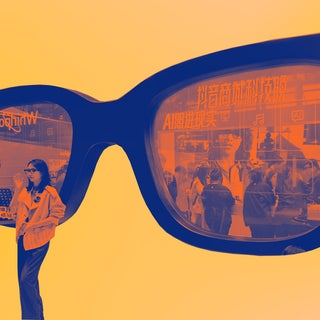
AI glasses are catching on in China, from shopping to cheating


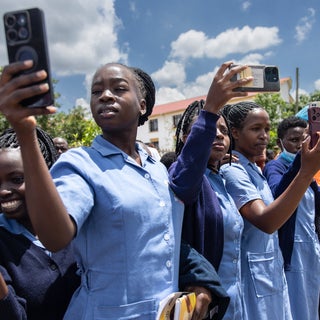
How cheap Chinese phones catapulted Kenya into the global digital economy


Can open-source beat OpenAI?


China builds a rival satellite constellation as SpaceX goes public

These cloud providers may share revenue with Chinese AI companies, but this arrangement prevents the companies from building long-term relationships with American clients, Zhao said. “Chinese models are becoming part of the global AI infrastructure layer,” he said. “But usage is only the first step. The next test is whether Chinese model developers can convert that usage into revenue, enterprise trust, and durable distribution.”

Chinese companies could also lose some competitive edge as U.S. rivals join the price war. OpenAI is now considering significant price cuts as it competes with Anthropic for enterprise users, The Wall Street Journal reported.

For now, developers say Chinese models still provide the best value for what they are paying. Clott and Garcia said they didn’t believe U.S. companies would do any better at protecting user privacy than Chinese companies.

“I don’t mind Chinese [companies] looking at my data: Hey, have fun with it. Learn and get better,” Garcia said. “If the Chinese models come out and they are frontier and cheaper, I’m going that direction.”

Viola Zhou
+ is a reporter for Rest of World covering China's tech scene. She is based in New York City.

Bayer wins protection from Roundup cancer claims

Protestors outside Supreme Court

Tasos Katopodis/Getty Images

The Supreme Court weeded Bayer’s garden yesterday with a 7–2 ruling that the company can’t be sued in state courts over claims that it failed to warn customers that its herbicide Roundup causes cancer.

This is a major victory for Bayer, which has been mired in litigation since it bought Roundup maker Monsanto in 2018. The decision overturns a Missouri jury’s $1.25 million award to a gardener who claimed he got cancer from repeated Roundup exposure and shields Bayer from tens of thousands of similar lawsuits. It also likely clears the way for a proposed $7.25 billion class-action settlement that would largely put Bayer’s Roundup crisis to bed.

Here’s why the court did what it did:

  • Though the World Health Organization considers Roundup’s key ingredient, glyphosate, “probably carcinogenic,” the Environmental Protection Agency (EPA) deems this “unlikely” and doesn’t require cancer warnings on Roundup.
  • Because federal law bars states from imposing pesticide label requirements that differ from the EPA’s, Bayer is protected against state-level failure-to-warn claims, the court’s majority opinion, written by Justice Brett Kavanaugh, said. Justices Ketanji Brown Jackson and Neil Gorsuch dissented.

Trouble in MAHA-dise: The decision is a win for the pesticide industry—and for the Trump administration, which urged the court to side with Bayer. But RFK Jr.’s followers are staunchly opposed to glyphosate and aren’t happy with the Trump-supported decision.


You probably just need some alone time

  You probably just need some alone time

Two colleagues working at computers facing each wearing headphones

Unsplash

On Tuesdays, the Brew’s Matty Merritt brings you the news you need to make life a little easier during your 9-5, 5-9, or OOO.

It turns out the greatest workplace perk is some gosh darn peace and quiet. Consulting group Superteams Inc. surveyed 6,000 workers across different industries and found that members of the most successful teams all reported having uninterrupted time to work solo.

When asked which amenities they had available to them—including collaborative workspaces, free coffee, gyms, etc.—individuals identified as members of “superteams” (i.e. more productive, collaborative, minimal tense Slack DMs) were 52% more likely than teams considered average to have access to spaces for quiet, focused work.

It might not matter where that space is. This research suggests that the debate over remote work or RTO may not be as important as whether employees can find a silent spot and a chunk of time to tackle all the stuff they’ve been brainstorming during the team huddle.—MM

Trust in news hits a new low, research suggests

Trust in news hits a new low, research suggests
7 hours ago
Share
Save
Add as preferred on Google

Paul GlynnCulture reporter

Getty Images


Trust in the news has fallen to an all-time low globally - the lowest since annual reports by the Reuters Institute began more than a decade ago (2015).


The research published on Tuesday suggests that public trust worldwide is at 37%, three points down on this time last year. In the UK, it has fallen by five points to 30% - 20 points lower than 10 years ago.


More than half of respondents said they now get their news from third-party platforms like social media and video networks, although a similar number still use news websites and TV news as well. Traditional sources are still more popular in the UK.


"Our data points to a mix of anxiety, disengagement and cynicism from audiences, many of whom don't like the way publishers are covering long-running news stories such as immigration, inflation and international conflict," the institute said.

AI chatbots


"But the report also finds openness to new sources and formats, and a belief in what news at its best can offer."


Despite more people accessing news via social media, confidence in that format is much lower than in news overall, at 22%.


And just 10% of those who took part said most of their news needs were met by creators and influencers, suggesting they are complementing rather than replacing traditional media.


Meanwhile, faith in answers from AI chatbots from respondents around the world is at 20%, although weekly use of these has grown from 7% to 10% (and to 16% among people under 35).


And support for impartial news remains high, appearing largely unaffected by changes in news consumption, with support falling by 3% since 2020.


In the US, trust in news stands at 25%, and is even lower (15%) among politically right-leaning Americans.


Some major news outlets have seen big drops, with trust in both CBS News and Fox News down 10 points from 2025, and CNN falling by six.


Online news video is now mainstream everywhere: 77% globally consume online news video each week, and a majority now watch online news video in every market covered by the report. It's now ahead of broadcast TV news in every market apart from Germany, Denmark and the Netherlands.


"The popularity of creators and online video is not evidence that people no longer want news, but it suggests they want news to feel more accessible, more understandable, and more relevant to their lives," the report said.


The findings are based on an online survey of almost 100,000 people in 48 markets.

A Vancouver Company’s Role in the Race to Mine the Seabed | The Tyee

A Vancouver Company’s Role in the Race to Mine the Seabed | The Tyee


A Vancouver Company’s Role in the Race to Mine the Seabed
The US has set out to allow companies to bypass UN protections against risks in international waters.
Cara B.G. James TodayThe Conversation

Cara B.G. James is a PhD candidate in geophysics at the University of British Columbia. This article was originally published by the Conversation.Our journalism is supported by readers like you. Click here to support The Tyee.
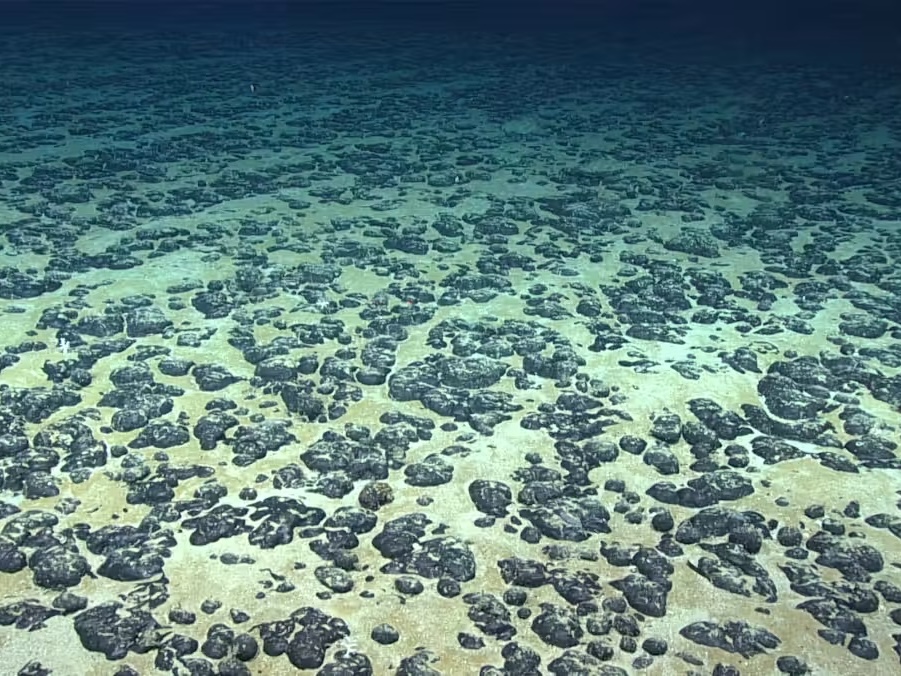
For mining companies, these polymetallic nodules four to six kilometres under the ocean surface are prized because they’re rich in cobalt, nickel and rare earth elements. Photo via NOAA.


Listen to this article
7 min

ACanadian deep-sea mining company may become the first to commercially mine the international seabed under a controversial U.S. executive order that bypasses United Nations regulations. A recent legal analysis suggests that this could place Canada in violation of international law.

Announcements, Events & more from Tyee and select partners
At Knowledge Network, Indigenous Brilliance Shines On

The BC-based public broadcaster delivers 12 powerful films and original series to mark Indigenous History Month.

The U.S. National Oceanic and Atmospheric Administration, or NOAA, recently announced that an application made by Vancouver-based The Metals Company (via their U.S. subsidiary, TMC USA) is fully compliant with NOAA regulations. The next steps include publication of a draft environmental impact statement for public comment, which TMC expects will lead to a permit to mine the seabed by the first quarter of 2027.

As demand for critical minerals grows, governments worldwide are increasingly looking past their borders and coastlines towards the deep sea for mineral resources.

Of particular interest are the billions of tonnes of polymetallic nodules rich in cobalt, nickel and rare earth elements that lie unattached on the sea floor, four to six kilometres below the water surface.

Modern engineering techniques are making polymetallic nodule mining more economically viable for mining companies. However, a complicating factor is that most polymetallic nodules lie in international waters, outside any single country’s territory.

Around 90 per cent of UN member states have ratified the United Nations Convention on the Law of the Sea, or UNCLOS, which asserts that the deep sea is the “common heritage of mankind” and its resources are “vested in mankind as a whole.” The United States never ratified the treaty.

US moves to mine the international seabed

In April 2025, U.S. President Donald Trump signed an executive order that aims to fast-track mining permits for seabed minerals in areas beyond U.S. national jurisdiction.

Put simply, the U.S. wants to start issuing permits to mine areas of the seabed that are not owned by the U.S. or any other country, outside of the UN’s International Seabed Authority regulations.

The same month, TMC USA applied for a first commercial recovery permit to mine approximately 25,000 square kilometres of seabed in the Pacific Ocean. This application was later amended to 65,000 square kilometres, an area more than twice the size of Vancouver Island.

Negative reception of the US executive order

In response to Trump’s executive order, International Seabed Authority Secretary-General Leticia Carvalho asserted that “no state has the right to unilaterally exploit the mineral resources of the [deep sea] outside the legal framework established by UNCLOS.”

UN member states have been working towards a regulatory framework for commercial mining of deep-sea minerals since 2014, under the guidance of the International Seabed Authority. However, as of June 2026, the regulations remain unfinished.

Representatives from the U.S. argue that their country neither signed nor ratified the UN Convention on the Law of the Sea and therefore has no obligation to adhere to the International Seabed Authority permitting process, stating “the United States is not bound by the Convention rules dealing with seabed mining through the International Seabed Authority.”

They instead cite the U.S. Deep Seabed Hard Mineral Resources Act, a little-used legislative pathway through which some exploration permits were handed out in the early 1980s but that has since lain dormant.

Potential legal ramifications for Canada

Whether or not the U.S. actions are legal remains to be seen. However, this issue raises a second question. Will Canada, a state party to the UN Convention on the Law of the Sea, face any legal ramifications if the American subsidiary of a Canadian company begins mining international waters under U.S. permits?

This question is the focus of recent legal analyses of UNCLOS articles 137 to 139 from independent lawyers and a recent report by Greenpeace.

For UNCLOS member states, their obligations under the treaty are very clear: these states are not allowed to mine independently, and they are also bound not to recognize or participate with any unilateral mining.

Crucially, member states also have a “responsibility to ensure” that no enterprise or person under their jurisdiction is involved with any of these unilateral mining activities.

If Canada is found to have breached any of these rules, this would leave the country vulnerable to being brought to disciplinary hearings at the Seabed Disputes Chamber. As an UNCLOS state party, Canada would be legally obligated to comply with a disputes hearing and ruling, and to pay any damages ordered.

The Metals Company is pursuing the U.S. regulatory pathway through its U.S.-based subsidiary company. However, TMC USA has existed by that name only since January 2025, meaning that critical data, funds and proprietary designs used for mining are likely carried over from the Canadian parent company TMC, or other TMC subsidiaries.
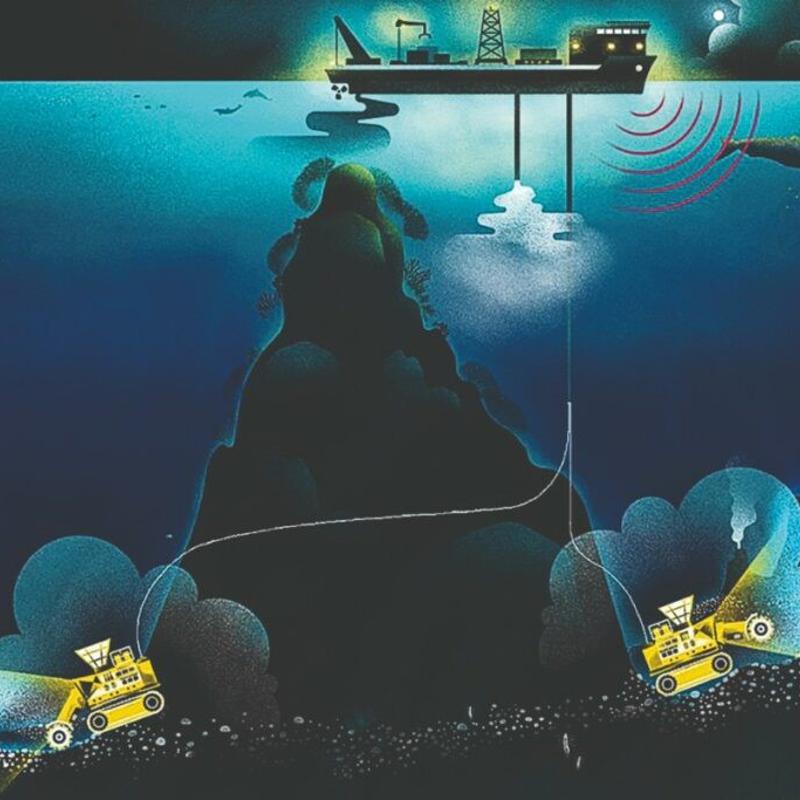


The Fight Over Seabed Mining Comes to Vancouverread more

If an American subsidiary has arguably no functional independence from its Canadian parent company, Canada could have an obligation and responsibility under the UN convention to ensure the company is not participating in mining activities that potentially violate UN regulations.

The Canadian government’s position

In 2023, the Canadian government announced its support for a moratorium on commercial seabed mining in international waters. However, since then the government has remained silent on the issue of deep-sea mining.

In a recent public letter, environmental and social justice organizations and community groups called on the government to “publicly denounce efforts by a Canadian company to engage in unilateral deep-sea mining,” as well as to reaffirm its commitment to UNCLOS and to a moratorium on deep-seabed minerals.

With the upcoming International Seabed Authority assembly meeting scheduled in July, all eyes will be on Canada to see if the government recognizes a responsibility to challenge TMC and the U.S. government’s actions, or if it continues to remain silent.


Read more: Environment

Independent journalism thrives when readers choose to support it

Nearly every week, I see newspapers and magazines that seemed fine suddenly going out of business. Or a private equity fund buying up a chain of newspapers that had been serving communities for decades and stripping them for parts. And now, the thing that’s making all publishers wring their hands is AI – publishers are seeing massive drops to their web visits as AI scrapes their content and delivers it up to people in chatbots, with the journalists who did the original work not even credited with the work.

Despite this, I have hope for journalism because of what’s happening at The Tyee.

Years ago, we made a strategic bet that support from our readers was going to drive our whole future. And thankfully, that is working for us.

Over the past decade, we’ve more than doubled our journalism team and are publishing more work than ever. More people read The Tyee now than at any point in our 23-year history.

This is only possible because we regularly ask our readers to sign up as paying Tyee Builder members. Roughly half of our entire budget is made up of contributions from over 10,000 readers.

We’ve been doing more as our resources have grown. A weekend culture section filled with original essays. Hard-hitting investigative journalism in Alberta. A brand new biodiversity beat. A reporting project called Reality Check, focusing on misinformation and online radicalization. A flagship podcast.

Our model is simple: if more of our readers sign up to support The Tyee, we can keep up with rising costs and keep adding more talented journalists to our roster and set them loose on uncovering truths that would otherwise not see the light of day.

Please help us prove that Independent Journalism Thrives with reader support.


— Jeanette Ageson, Publisher

What to know about Trump’s latest tariffs


What to know about the fresh tariffs...

OUT WITH THE OLD

What to know about Trump’s latest tariffs

Container ship at port with windsurfers in foreground

Mario Tama/Getty Images

In with the new: The US slapped fresh tariffs on dozens of trade partners, accusing them of forced labor violations, right as the clock ran out yesterday on temporary levies that President Trump previously imposed.

Who: The new tariffs apply to 60 trade partners—including China, Canada, and the EU—a group that accounts for 99.4% of US imports, according to the Office of the US Trade Representative.

What: The duties range from 10% to 12.5%. They replace a 150-day global tariff of 10% that Trump imposed in February after the Supreme Court blocked his sweeping “liberation day” tariffs. The new import taxes have some exceptions:

  • Oil, natural gas, and many goods not produced in the US are exempt.
  • Items like aluminum and steel, which already face import taxes Trump enacted last year under a national security trade law provision, won’t have this added.

Why and how: The Trump administration says countries affected by the new tariffs have failed to curb forced labor, which can enable a US president to impose import taxes under Section 301 of the Trade Act of 1974. Section 301 targets countries with unfair trade practices.

How everyone’s reacting

The EU and other countries have recently taken steps to ban forced labor. In a chorus of unhappy trade partners, Australia said the new tariffs are “completely unjustified,” the EU called them “not really grounded,” New Zealand said the US is “looking for any way to put a tariff rate back on,” and Brazil vowed to appeal to the World Trade Organization.

In the US, a group of small businesses sued yesterday to stop the new levies. Economically, the “triple whammy” of more tariffs, war-induced spikes in energy costs, and skyrocketing AI spending is aggravating inflation “angst,” per Bloomberg.

Looking ahead…the US is planning two more waves of Section 301 tariffs on the grounds of 1) excess manufacturing and 2) what Trump called the EU’s “illegal and highly unethical” fines against US tech giants.

Letter to My Fellow Americans: About Canada

Letter to My Fellow Americans: About Canada

Letter to My Fellow Americans: About Canada

We lost our oldest friend on purpose. How we start deserving them back.

I’m an American writer in Baton Rouge. I spent thirty years inside this country’s institutions — utilities, audit agencies, the systems that only work when somebody keeps them honest.

This week a senator asked Canada to be nicer to us. This is my answer, addressed to the right people.


The Letter

A senator from California wrote to Canada this week asking them to be nicer to us.

I read it twice to make sure it was real. Then I got angry, and not at Canada.

Do you know what we did? I’m asking honestly, because most of us don’t. It went by in the noise. Our president called Canada the 51st state. Not once, at a dinner, as a joke. Over and over, from behind the seal of our republic. He looked at a country of 40 million people — a country with its own flag, its own parliament, its own dead from two world wars it entered before we did — and called it a real estate opportunity.

Then we tariffed their steel, and their aluminum too — aluminum we barely make anymore. We shut our own smelters years ago, and then taxed the neighbor who kept our factories running. And he told us Canada would pay those tariffs. That was a lie, and not a complicated one. A tariff is a tax collected at our own ports, paid by our own importers, passed down to us at the register. Canada never wrote a check. We did — on every truck, every beam, every can. He taxed us, and called it punishing them. Then we shook them down over a bridge they built and paid for — his own words: he would not allow it to open until America was “fully compensated” for a bridge that cost us nothing. Then, when they quietly stopped buying our whiskey and stopped driving south, we sent senators to ask why they were being mean.

Nobody has talked to Canada like that in over a hundred years. It took us to do it.

Let me tell you what that border used to be. It was the longest undefended border on earth — our best brag. Not the aircraft carriers. The neighbor who never needed to fear us. My grandfather crossed it to fish. Theirs crossed it to watch a ball game. Nobody checked twice.

In 1979, when our embassy fell in Tehran, six Americans slipped out a back door with nowhere to go. Canadian diplomats hid them in their homes for three months, and Canada’s own cabinet secretly authorized real Canadian passports to smuggle them out — their government put its name on our escape. On September 11th, when our sky closed, a town in Newfoundland smaller than a college campus took in nearly seven thousand of our stranded and fed them for days without asking who would pay. When we went to Afghanistan, they came. They buried a hundred and fifty-eight of their own for our war.

That’s the country our president says shouldn’t exist. That’s the country our senators are scolding.

I’ve walked the stretch of Pennsylvania Avenue in front of the White House. Everybody who’s been to Washington has — it was a park with a famous house in it, and that was the brag too: the most powerful man on earth, and you could stand on his sidewalk. This week they proposed fencing it permanently — Lafayette Square too, the park where we’ve protested every president since Jefferson. There’s already titanium fencing around the new ballroom; he bragged a bulldozer couldn’t knock it over, and there’s a bunker going in six stories beneath it. I saw the photograph of that fence and understood something I’d been avoiding: men do not build compounds against people who love them. And I grew up being told we were the good guys — every movie, every classroom, every Fourth of July. So here is the hardest sentence I have ever had to write. Right now, today, we are the country other countries protect themselves from.

Canada figured that out before most of us would say it. Now let me tell you what their answer looks like, because it isn’t rage. Rage we’d know how to dismiss.

A woman in a liquor store in Sudbury turns a bottle, reads Kentucky on the label, and puts it back. Somewhere in Bardstown, a man who’s filled bottles like it his whole working life watches the orders fall and wonders what he did wrong. The answer is nothing. A family in Mississauga cancels the Florida trip they’d taken for eleven years. The motel in Bangor sits empty. The outlet mall in Buffalo where Ontario plates used to fill the lot every Saturday is asphalt and echoes now. At hockey games, they boo our anthem — and if you knew Canadians, you’d know how much it costs them to be rude on purpose.

Here’s the part I need you to sit with. They aren’t angry at you. Ask any of them — I have — and they say the same thing, almost apologetically, like they’re worried we’ll take it wrong: it’s not the waitress in Bangor, it’s not the vineyard family in Sonoma, it’s him. Our trade representative filed them next to China — “the company they’re running in,” he said, of the people who forged our way out of Tehran. And still they keep separating us from the man behind the seal, more carefully than we ever separated them from anything.

Our oldest friend is boycotting us and apologizing to us at the same time.

It broke something in me.

They watched him threaten Greenland, shake down NATO, send masked agents into our streets — and they still made sure the quarrel was with him, not us. They use a word for him up there that our own senators are afraid of. I’m done being more afraid of the word than the thing. They’re right.

So here’s what I’m asking, and unlike Senator Schiff, I’m asking the people who can actually fix it. Us.

Stop waiting for Canada to get over it. They won’t, and they shouldn’t. The empty shelf isn’t a tantrum. It’s the last polite warning a polite country knows how to give.

And understand what they’re actually asking for, because it was never about wine sales. It’s respect. A sovereign country. An equal. Not the 51st anything.

This November, vote like the border depends on it, because it does. Not just the states that always decide things — all of them, down to the school boards. And if you already vote — you’re not who this paragraph is for. The person you bring with you is. One man is not stopped by one election in one place. He is stopped when a whole country stands up at once and takes Congress out of his hands.

Then make Congress use it. We tried impeachment twice. Seven of them were brave the second time. The rest decided their seats mattered more than their country. Send them home too.

And then let the courts finish it. He broke our laws in the open, daring us to care. So care. Try him. Convict him. Put him where a president who betrays his country belongs — in a cell, for the rest of his life, where he can never again reach across a border he didn’t respect.

Not vengeance. Precedent. Every strongman on earth is watching to see whether America punishes this or forgives it. So is every friend we have left.

Our grandparents crossed an ocean to stop men like him, and Canadians crossed it beside them. All we have to do is cross a parking lot.

And I’ll say the quiet part, because some of us are already whispering it at kitchen tables: what if he doesn’t let November count? Here’s what I know from thirty years of watching systems fail. Rigging works in the dark and in the margins. It cannot survive turnout so large the count is beside the point, and it cannot survive forty million witnesses next door who have already shown they’ll call things by their name. So don’t vote like it’s close. Vote like it’s watched — because it is, from fifty feet across the river.

And when he’s gone — because these men always go, never quietly, and never on their own — I want to be there the day the Canadian plates come back over the Peace Bridge. I want to hear their accents in the motels in Maine again. I want to stand in a bar in Ontario and buy the first round with our whiskey — the day it’s back on their shelf and they’ll take it — and tell them we’re sorry, and mean it.

They spent a hundred years being the best neighbor any country ever had.

It was never them.

It was us. So it’s ours to fix.

If this letter says what you’d say — don’t share it. Write your own. Then send it to your senator, signed.

Restack Me

This piece travels by hand, like everything worth whispering. If it deserves a wider audience, restack it. Takes one tap, and it does the characters here the honor of being seen. They've worked so hard. Appreciation shouldn't be private.

Leave a comment

RG Richardson Communications News

I am a business economist with interests in international trade worldwide through politics, money and banking. Interactive Internet VoIP and secure eMail Communications. The author of RG Richardson City Guides has over 300 guides, including restaurants and finance.