RG Richardson Business & Economics

RG Richardson Business & Economics
Interactive financial ebooks

Meta Furious Over Bombshell Smart Glasses Revelation

Meta Furious Over Bombshell Smart Glasses Revelation

Meta Furious Over Bombshell Smart Glasses Revelation

"Despite the billions of reasons not to, Meta seems to have created the capacity to turn their customers into a distributed surveillance machine."
A color treated photograph featuring a pair of Meta Ray-Ban smart glasses.
Illustration by Tag Hartman-Simkins / Futurism. Source: Josh Edelson / AFP via Getty Images

Code uncovered by journalists revealed that Meta quietly embedded facial recognition tech into its AI-enabled smart glasses — and top Meta executives are fuming.

Last week, Wired reported that Meta discreetly moved to infuse facial recognition tech into its popular smart glasses, as evidenced by a piece of code discovered in the Meta AI app by the magazine’s journalists. The unreleased feature, internally dubbed “NameTag,” would “transform faces captured by Meta’s glasses into unique biometric signatures, commonly known as faceprints, and check each one against faceprints stored on the user’s phone — a database that’s currently configured to receive updates from Meta,” as Wired put it.

The report made clear that NameTag isn’t activated yet, nor is it accessible to consumers in its current form. But the prospect of consumer-facing smart glasses equipped with facial recognition tech has long had privacy advocates on edge — and with public adoption of Meta’s smart glasses on the rise, privacy concerns have become more pertinent than ever. If a company has gone about building out the infrastructure to roll out a wildly controversial feature of this kind, consumers might want to know about that, even if the feature currently remains inaccessible.

And yet, according to the company’s executives, it’s “dishonest” to inform the public about a piece of unreleased tech that Meta has chosen to incorporate into a consumer product.

In its initial response to Wired, Meta referred to the discovery as “sensational” and characterized NameTag as exploratory. “We’ve said before we’re exploring these types of features, and what you’re seeing is just evidence of that exploration,” the company said in a statement to Wired. “Nothing has shipped to consumers and no final decision has been made on what to do here, if anything. If we do decide to roll something out, we will take a thoughtful approach and do so with full transparency. One decision we can be clear about—we are not building a central face database.”

A few well-known Meta higher-ups then weighed in on social media, doubling down on the allegation that Wired’s story was somehow “misleading.”

“It’s not until [paragraph] four that Wired says this feature is ‘not enabled,'” declared Meta spokesperson and VP of communications Andy Stone. “And then takes until [paragraph] 16 for Wired to reflect that Meta has no existing plans and this is exploratory. And not until [paragraph] ten does Wired quote its own expert saying the feature is not ‘exposed to consumers.'”

“This is more than shoddy reporting, it’s intellectually dishonest,” Stone continued. “Pure advocacy-driven click bait.”

Meta’s longtime chief technology officer, Andrew “Boz” Bosworth jumped in, adding: “Incredibly misleading from Wired, sadly we are coming to expect that from them more and more. Absolutely dishonest.”

But this isn’t the first time in recent months that NameTag has been in the news. In February, the New York Times reported on an internal Meta memo in which Meta discussed plans to install NameTag into its smart glasses. In the striking memo, the tech giant noted that the ethically-fraught feature should ideally be launched “during a dynamic political environment where many civil society groups that we would expect to attack us would have their resources focused on other concerns.”

Public pushback following the NYT’s reporting was swift, and in April, 75 organizations signed an ACLU letter addressed to Meta CEO Mark Zuckerberg that characterized NameTag as “a red line society must not cross.”

This particular feature isn’t Meta’s first brush with controversy in this area, either. In 2025, the tech giant paid $1.4 billion to settle a lawsuit with Texas over its handling of biometric data. And in 2021, after settling a different class action suit, it killed a Facebook feature that used facial recognition to automatically tag people in photos.

It’s true that NameTag remains unreleased. But if Meta were to launch it, the implications are likely to be enormous.

“The feature is not yet exposed to consumers but seems nearly ready to go,” Electronic Frontier Foundation Threat Lab technologist Cooper Quintin, who reviewed the latent NameTag code, told Wired. “Despite the billions of reasons not to, Meta seems to have created the capacity to turn their customers into a distributed surveillance machine.”

More on Meta glasses: Meta Workers Say They’re Seeing Disturbing Things Through Users’ Smart Glasses

Judge approves a $1.5B Anthropic settlement over pirated books

 Judge approves a $1.5B Anthropic settlement over pirated books used to train the Claude chatbot


Thriller novelist Andrea Bartz is photographed in her home, in the Brooklyn borough of New York, Sept. 4, 2025. (AP Photo/Richard Drew, File)
Updated 11:01 AM GMT-7, July 21, 2026
Leer en español


 27


SAN FRANCISCO (AP) — A federal judge has approved a $1.5 billion copyright settlement in which artificial intelligence company Anthropic will pay thousands of authors about $3,000 per book after using pirated copies of their works to train its Claude chatbot.

District Judge Araceli Martínez-Olguín said in a Monday ruling that the class-action settlement provides “meaningful relief” to affected authors and publishers.

About 91% of the more than 482,000 books covered by the ruling have been claimed by authors or publishers who are now due payment.

Plaintiff attorney Justin Nelson said in a statement that the settlement was “the largest known copyright recovery in history. We look forward to making distributions to the Class as promptly as possible.”

U.S. District Judge William Alsup issued the preliminary approval in San Francisco federal court last September and has since retired. Alsup had dealt the case a mixed ruling last summer, finding that training AI chatbots on copyrighted books wasn’t illegal but that Anthropic wrongfully acquired millions of books through pirate websites.

Anthropic’s deputy general counsel, Aparna Sridhar, highlighted that ruling Friday as a landmark showing “that training AI on books is fair use under copyright law.”

“We are pleased that more than 91% of authors and publishers covered by the settlement have claimed their share of the payment, and we’re looking forward to bringing this matter to a close,” Sridhar said in a written statement.


Bestselling thriller novelist Andrea Bartz first brought the suit with two other authors in 2024. It’s the first major settlement in dozens of AI copyright lawsuits that are still working their way through courts.

Give more than you take

 Give more than you take

by Craig Leweck, Scuttlebutt Sailing News
Volunteerism impacts the health of the sport, which I wrote about in a 2014 column for Sailing World (below). Over a decade later, which way is the pendulum swinging?


Answer this honestly: Are you a giver or a taker? Our sport needs both in order to function, and each of us must be both. If we are only takers, we must consider the impact of our actions.

When we are racing in a regatta, most of us are takers. Somebody else organized it, somebody else is running the races, and somebody else is scoring it and hosting the party. We are takers, and all those who make it happen are givers. We can’t be givers by simply writing a check. We must physically be part of it.

We race because we are competitive, but races don’t happen by themselves. A volunteer army sacrifices their personal time to make them happen. Some people take great pride and joy in helping with regattas; it’s their recreation. If racers don’t contribute on some level, however, the balance of nature will be negatively impacted.

Volunteer burnout occurs when givers give too much, and takers take too much.

Our sport is a community of people who enjoy sailing. When we’re givers, we really connect with this community. When racing and taking, we’re connected to our boat and our crew, and to those we’re racing against. The connection, however, is distracted by competition, and by how well we handle the emotions of competition. But giving is pure and provides the chance to form deeper connections to this community.

Those who struggle most with giving are the sport’s top racers. Their focus and time are committed to racing and consuming. For these sailors, it’s hard to sacrifice a race weekend or be distracted during an event to volunteer in some way, but there are still ways to contribute.

By virtue of their success, top racers are admired, so it’s easy to give by sharing and socializing. Hang out at the bar, help on the dock, be friendly and strike up a conversation with someone other than your closest mates. Go ahead and win the race and the party once in a while.

But the top racer that focuses only on their racing and doesn’t hang out, is a full-blown taker who adversely affects the balance and hurts the sport.

The Mets are bad, even by Mets standards

 The Mets are bad, even by Mets standards

Stylized illustration of Mr. Met, the Mets mascot, holding out his fists, which are gripping wads of burning cash.

Nick Iluzada

On Fridays, the Brew’s Dave Lozo looks at a sports business story that says a lot more than just the final score of a game.

It’s easy to make jokes about the Mets being terrible, but the Wall Street Journal was able to quantify just how terrible.

Entering Wednesday’s games, the team with the MLB’s most expensive payroll of $355 million was on pace to win only 68 games. That’s an average of $5.2 million per victory, the highest price any team has paid per win since at least 2000, even when adjusted for inflation.

This shouldn’t be surprising: The team that spent the second-most money per win ($4.8 million) during that time period was…also the Mets, in 2023.

Big swings, big misses: Hedge fund billionaire Steve Cohen bought the franchise in 2020 for $2.4 billion. He hasn’t been shy about spending on the roster, but those signings haven’t translated into success.

Next up: The Mets are likely to become more cost-effective when they become sellers at the Aug. 3 trade deadline.

After the Flames, Wildfires Pollute Drinking Water for Years

After the Flames, Wildfires Pollute Drinking Water for Years

After the Flames, Wildfires Pollute Drinking Water for Years
June 8, 2026
Reading time: 4 minutes

Full Story: The Conversation
Author: Qingshi Tu, Loretta Li, Raul de Leon Rabago


(Stephen McDaniel/pexels)


When people think about wildfires, they usually think about flames, smoke and evacuations. However, for many communities, some of the most important damage begins after the fire has passed.

Most wildfires leave behind a barren, blackened landscape, and within this changed environment, important impacts can leave their mark. Trees and other vegetation that once slowed rainfall and held soil in place are gone. Ash and burned debris cover the ground. Soil can become more vulnerable to erosion.

Then, the rain comes. When that happens, streams, rivers and water reservoirs receive a sudden pulse of ash, sediment and fire-suppressant chemicals washed off the land. For communities that depend on those waters for drinking water, wildfires can quickly become a long-term water-quality problem.

This risk is often overlooked when governments and communities think about wildfires. Our recent review of 23 studies across 28 watersheds brings together existing knowledge on how wildfire-related contaminants affect water sources.

One of the clearest lessons is that the impacts of wildfire do not stop at the edge of the burn scar. They can travel downstream, into the waters that people rely on every day.
More Contaminants In Water

One of the first signs of trouble after a wildfire is often turbidity—the cloudiness caused by suspended particles in the water.

High turbidity can make drinking water much more difficult to treat. Fine particles can interfere with processes, clog filters and make disinfection less effective. After a fire, the problem is often worsened by storms that flush large amounts of ash, soil and organic material into waterways over a short period of time.

Wildfires can also increase levels of contaminants such as polycyclic aromatic hydrocarbons (PAHs), some of which are carcinogenic or suspected carcinogens. Many PAHs can attach to ash, soot and fine particles, allowing them to move through a watershed when water runs off. Some lower-molecular-weight PAHs may also occur in dissolved form, creating additional challenges for monitoring and water treatment.

In some cases, chemicals used in fire suppression can also affect water quality: some fire retardants contain phosphates, which can add too many nutrients to water bodies if they get into streams or reservoirs.

Wildfires also make landscapes more vulnerable to erosion, which can release sediments, metals, dissolved organic matter and other contaminants into lakes, rivers and reservoirs.

Not every wildfire affects water in the same way. The size of the impact depends on many factors: how severely the area burned, how steep the terrain is, what kinds of soil and vegetation are present, how close the burned area is to streams and reservoirs, and how soon heavy rain falls after the fire. In many cases, the fire creates the conditions for water contamination, but the first major storm that follows delivers the blow.

There are still those other persistent factors that can lead to contamination, even years after the wildfire. This is one reason wildfire risk is becoming harder to manage in a warming world.

That broader perspective matters for water policy. If governments treat wildfire only as an emergency response problem, they will miss what happens before and long after after the flames. They will also miss opportunities to reduce long-term contamination of drinking water.
What Can Be Done?

The first step is to recognize water protection as part of wildfire preparedness. Utilities and governments should know which watersheds are most vulnerable to severe fire and post-fire runoff. Fire-risk planning, watershed management and drinking-water planning are often handled separately. That needs to change.

The second step is better monitoring. After a major fire, communities need timely information about what is entering their water sources. Without timely monitoring, utilities are left reacting after water quality has already deteriorated.

The third step is stronger support for drinking water treatment systems, especially in smaller and rural communities. Large cities may have more backup options, flexible treatment systems and capacity. Smaller communities often do not. Yet they may face some of the greatest risks when fire affects the watersheds they depend on.

Wildfire policy should be guided by fairness as well as science. Not all communities are equally able to absorb a shock to their water supply. Communities with fewer financial resources, older infrastructure or limited treatment capacity may face longer disruptions and higher risks.

Protecting drinking water after wildfire isn’t just an environmental issue. It’s also a public health and equity issue.

As Canada heads into another wildfire season, we should widen our understanding of what wildfires leave behind. The flames may last days or weeks, but the effects on water can last far longer. If we want communities to be truly resilient, we need to protect not only the air people breathe, but also the water they depend on.

Qingshi Tu is an assistant professor at the University of British Columbia (UBC) Department of Wood Science. Loretta Li is a professor of environmental systems engineering, geo-environmental engineering, and geotechnical engineering at UBC. Raul de Leon Rabago is a masters student of civil engineering and environmental systems engineering at UBC.

This article is republished from The Conversation under a Creative Commons license. Read the original article.

Porsche wants you to love electric cars


Vancouver Island firm awarded $74.7 million RCMP patrol vessel contract


Vancouver Island firm awarded $74.7 million RCMP patrol vessel contract

Published 10:30 am Friday, July 3, 2026

By Kari Fredheim

email sharing button
print sharing button

The Ocean Pacific Marine team with an RCMP vessel they previously worked on. (Laura Kempling/Contributor)

The Ocean Pacific Marine team with an RCMP vessel they previously worked on. (Laura Kempling/Contributor)

The federal government has awarded Ocean Pacific Marine a $74.7 million contract to design and build three Next Generation Police Coastal Patrol Vessels (NG-PCPV) for the Royal Canadian Mounted Police’s West Coast Marine Services.

The project will see the advanced aluminum patrol vessels designed through a joint venture between Ocean Pacific Marine and Camarc Design, the internationally recognized Scottish naval architecture firm whose high-speed patrol vessel designs are in service with police, coast guard, naval and rescue agencies around the world. Together, the joint venture will deliver modern, purpose-built vessels to support the RCMP’s critical marine policing mission along the province’s 26,000 kilometres of coastline.

“This award represents much more than the design and construction of three vessels,” said Bruce Kempling, President of Ocean Pacific Marine, which he founded in 1985. “It is recognition that a small business from Campbell River can compete on the national stage and deliver world-class marine projects. We are incredibly proud that these vessels will be built here in British Columbia by Canadian tradespeople.”

https://0e43bd9bd3e07ff337a1757cb0f3f39c.safeframe.googlesyndication.com/safeframe/1-0-45/html/container.html

Trending

The new vessels will replace and modernize the RCMP’s existing coastal patrol fleet, improving law enforcement, search and rescue, emergency response, and policing services for remote coastal communities.

The RCMP contract is expected to generate significant long-term economic benefits for both Campbell River and British Columbia’s marine industry. Construction of the vessels will support a variety of skilled employment across welding, marine engineering, electrical and mechanical trades, project management and more, while also creating new job opportunities.

The project stands to generate substantial work for a broad network of British Columbia-based suppliers and subcontractors, including Ocean Pacific’s key fabrication partner, Richmond- based Bracewell Marine Group, whose expertise will contribute to the successful delivery of the vessels.

https://0e43bd9bd3e07ff337a1757cb0f3f39c.safeframe.googlesyndication.com/safeframe/1-0-45/html/container.html

For Campbell River, the award further strengthens the city’s growing reputation as a leading centre for marine services including shipbuilding and vessel repair. The contract will also support apprenticeship and local workforce development, attracting engineering and technical talent. It will also contribute to regional economic activity over the next several years.

As a proudly Canadian owned company, Ocean Pacific Marine views the award as a recognition of the dedication of its employees, partners and customers over the past 41 years.

“Our success has always been built on the people who work here and the community that has supported us,” said Kempling. “We’re honoured to have the opportunity to build these vessels in Campbell River and to showcase the exceptional talent that exists here on Vancouver Island.”

BC Conservatives Hire an Alberta Separatist and Far-Right Media Figure

 BC Conservatives Hire an Alberta Separatist and Far-Right Media Figure

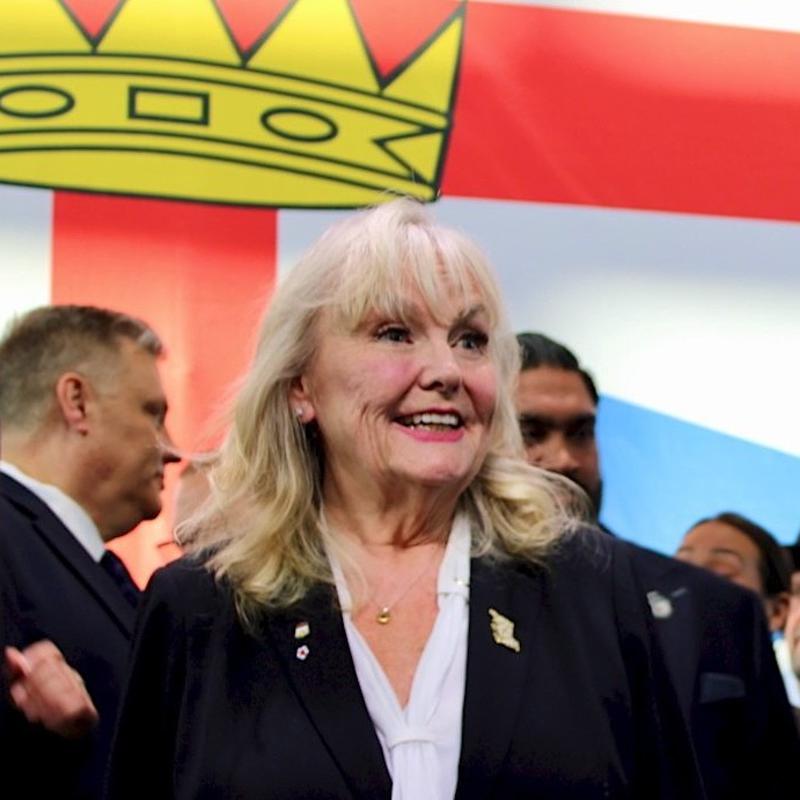
Leader Kerry-Lynne Findlay commits to a MAGA approach to winning power.

Jen St. Denis 17 Jul 2026The Tyee

Jen St. Denis is a reporter and senior editor with The Tyee. You can follow her on Bluesky, Instagram or TikTok.Our journalism is supported by readers like you. Click here to support The Tyee.

SHARE:


110

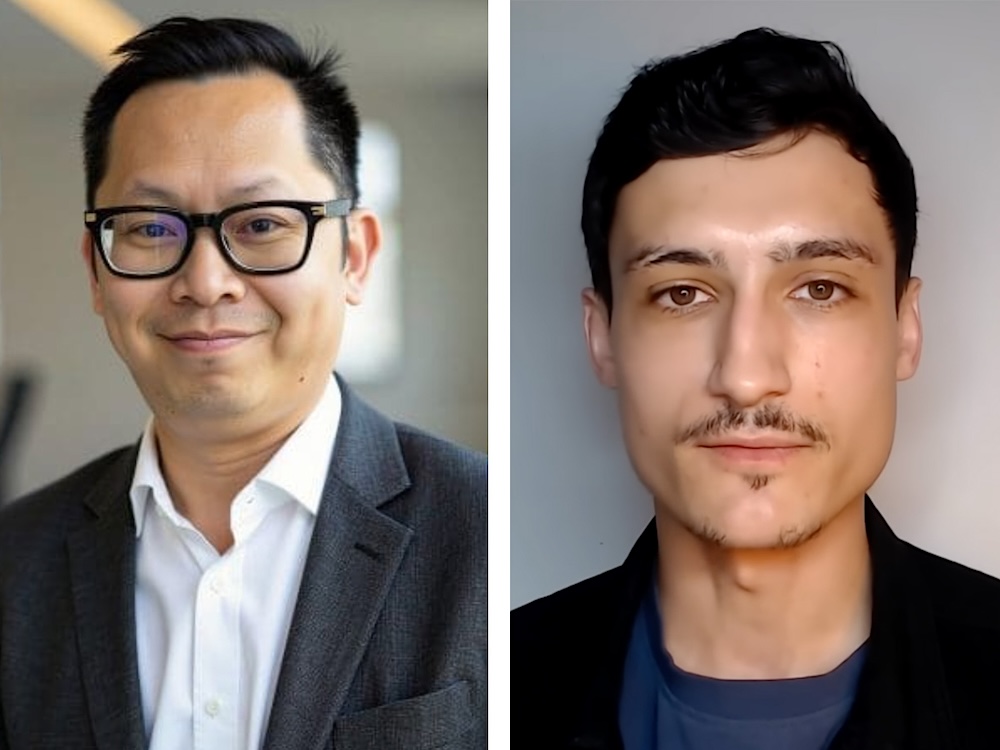
Apollo Chung, left, is the Conservative Party of BC’s director of operations. Cosmin Dzsurdzsa is the party’s caucus communications director. Images via an archived version of the Republican Party of Alberta website and YouTube.


Listen to this article
7 min


The Conservative Party of BC has hired Apollo Chung, a member of the separatist Republican Party of Alberta, as director of operations and Cosmin Dzsurdzsa, a former writer for Juno News, as caucus communications director.

Announcements, Events & more from Tyee and select partners
Inside WestJet Flight Attendants’ Decision to Strike

In a typical month, they work up to 35 unpaid hours.
CONTEST: See Aysanabee and More at ‘Come Toward the Fire’

One lucky Tyee reader will receive four tickets to the closing concert, hosted by Dallas Goldtooth, on Sept. 20 at the Chan Centre.

The BC NDP released the information based on an internal government directory, sending out a press release that criticized the hires as bringing “Trump-style politics” to B.C.

In response to a request for an interview, Dzsurdzsa called The Tyee a “far-left smear outlet” and “literal trash, not journalism.”

Stewart Prest, a lecturer in political science at the University of British Columbia, said the decision to hire Chung and Dzsurdzsa is one more signal the party is abandoning traditional Conservative politics in B.C. and choosing an approach close to the MAGA republicanism of the United States.

The hires come after Kerry-Lynne Findlay, a former Conservative MP who has championed socially conservative positions, won the B.C. Conservative leadership race on May 30.

“This is not a coincidence or a one-off,” Prest said. “This is very much a deliberate strategy at this point — that’s clear.”

Critics inside Conservative politics have been pointing out Chung’s connection to Findlay’s campaign for months. On April 28, Anthony Koch — a Conservative strategist who was part of the Conservative Party of BC team during the 2024 provincial election — posted questions about Chung’s role inside the Findlay campaign.

“Want to know who KLF’s de facto campaign manager is right now? Meet Apollo (a.k.a. Paul) Chung,” Koch posted. “Someone should ask Ms. Findlay if using ‘B.C. talent’ includes hiring an Alberta Separatist.”

Koch made the comments as one of Findlay’s opponents, Caroline Elliott, was criticized for hiring Ontario-based political strategist Kory Teneycke.

After the leadership vote results were announced, a video posted to Facebook showed Findlay’s raucous after-party at a hotel, with guests appearing to chant Chung’s name.

Prest said the party’s decision to hire Chung shows a divide between the B.C. and federal Conservatives. Federal Conservative Leader Pierre Poilievre has defended a united Canada as the Alberta separatism movement agitated to hold a referendum.

The Republican Party of Alberta has developed a “five-step plan to achieve Alberta’s separation,” and its leader, Cameron Davies, has travelled to the United States to drum up support for an independent Alberta from Donald Trump-aligned politicians and officials.

While other figures inside the Alberta separatist movement have accused Davies of supporting Alberta’s absorption into the United States as the “51st state,” Davies has denied this.

“I think it is not an easy one to explain away, because for those who are truly committed to the idea of a strong and united Canada with Alberta as an important component within the federation, it really shouldn’t be possible to find common cause to work with someone who takes the other side of that debate,” Prest said.

“It’s a pretty cut-and-dried question. Do you think Alberta should be part of Canada or not?”

Chung was listed as the party’s executive director on its website and was the financial officer for some candidates.

And as recently as 2021 he was a constituency assistant for current NDP Finance Minister Brenda Bailey.

Dzsurdzsa has held several jobs for right-wing media outlets. In 2019 he was working at the Post Millennial when Canada’s National Observer reported he’d previously worked for Free Bird Media, a blog that platformed white supremacists Richard Spencer and Faith Goldy.

The National Observer also reported that Dzsurdzsa had written for Russia Insider, a site that had been described as “propaganda” for the Russian government by the BBC and Newsweek.

Following publication of the National Observer story, the Post Millennial said it had cut ties with Dzsurdzsa.

Prior to being hired by the Conservative Party of BC, Dzsurdzsa was working for Juno News, which was previously known as True North News.

Dzsurdzsa recently defended Juno News’ decision to conduct a video interview with Daniel Tyrie, the leader of an organization called the Dominion Society of Canada that calls for deportation of 21 per cent of the country’s population. Tyrie uses the term “remigration,” but extremism experts say it’s more accurate to call the idea “ethnic cleansing” because groups who use the term “remigration” usually focus on deporting non-white people.


Findlay Steers BC Conservatives Hard Right to Her Party’s Perilread more

In his interview with Juno News, Tyrie said he’s “very clear about what a Canadian is.”

“All these groups that established Canada, this ethnic continuity that we’re talking about, these people can be called white people,” Tyrie said.

In a post on X, Dzsurdzsa said having a debate about “remigration” shows “genuine vitality on the Canadian right right now: remigrationists and restrictionists, Alberta sovereigntists and Canadian nationalists. We’re stronger for it.”

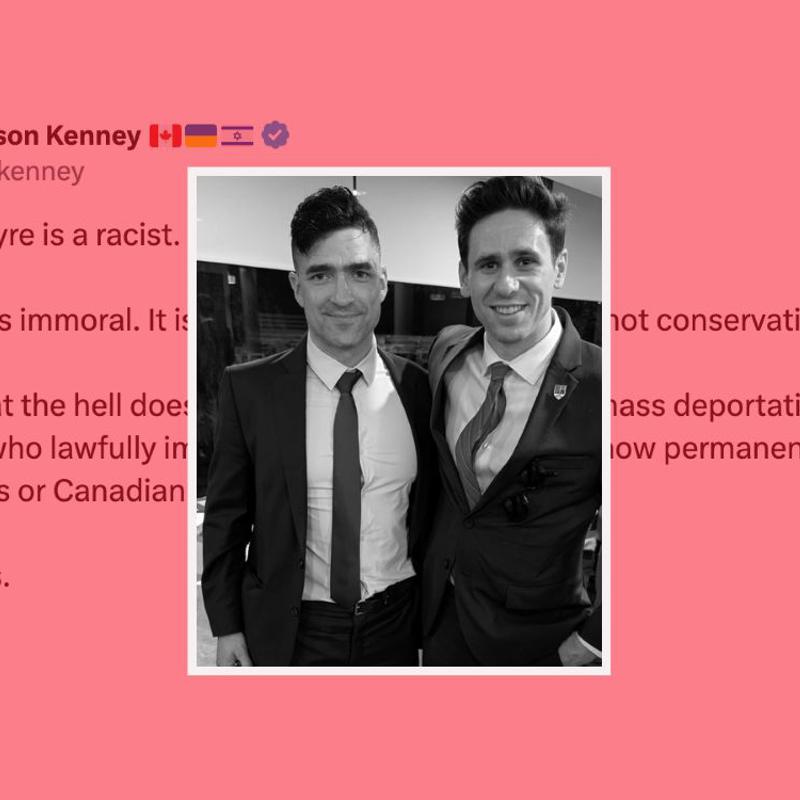
The post was in response to former Alberta premier Jason Kenney, who called Tyrie “racist” and criticized Juno News for interviewing him.

Dzsurdzsa is married to Lindsay Shepherd, a former Conservative Party of BC staffer who was fired after she complained on social media about having to view flags, posters and T-shirts that commemorate residential school survivors.

Dzsurdzsa was not shy about cheering Findlay’s win and gleefully promoted her on X using AI-generated images. He also mused that legacy media appeared to have no influence over the leadership vote result and urged Conservative politicians to “take advantage” of independent outlets rather than speaking with reporters from mainstream media.

Prest noted that it’s outside of journalistic norms for a reporter to promote a specific candidate and then quickly take a job with the party.


A Racist Group Is Trying to Gain Legitimacy in Canadian Politicsread more

Prest said Canada’s political history has shown that when Conservative parties are successful forming government, they focus on the economy and government spending.

“When they embrace these much more radical political projects, then they turn an election from a choice between a fiscally responsible opposition and a government everyone’s tired with, to a polarizing political project versus a government everyone’s tired with,” Prest said.

“And much more often than not, people will give that government a good hard look when the alternative is radical and is pursuing a lot of projects that really aren’t what most people are interested in.”

But if the current form of the Conservative Party of BC is successful in winning the next election, Prest said, the party has given every indication that it will move to implement sweeping changes.

“It will be, I think, a government that moves in the direction of some of the things that we do see in the United States — not just with Donald Trump, but in that Republican world more broadly.” 

Homeownership expenses are on a tear

 Homeownership expenses are on a tear

illustration of house and money bag

Pm Images/Getty Images

On the spectrum that runs from gross hyperbole to established fact, the statement “everything about owning a home is more expensive” currently sits far closer to the latter than it has in a long time.

An analysis conducted by the Wall Street Journal found that costs went up in the following categories between 2019 and 2025:

  • Emergency repairs (up 175%)
  • Home maintenance (85%)
  • Insurance (72%)
  • Interest (35%)
  • Property taxes (31%)

Those cost increases have made it harder for middle-class Americans to join the ranks of homeowners. According to Redfin, homebuyers with a budget of $2,500/month in 2019 could have purchased a $517,500 home with 20% down at the then-common 3% interest rate without their budget spreadsheet throwing an #ERROR. Nowadays, with that same monthly budget, they could only afford a $384,000 home at the now-standard 6.5% interest rate.

Longtime homeowners feel the bite, too

In 2019, US homeowners spent an average of $9,000 per year on home improvement, maintenance, and emergency repairs. In 2025, they had to spend $12,500 for the same, according to Angi survey data.

While interest rates have risen, so have property valuations, keeping home prices high and igniting a cycle of property-tax reassessments in many parts of the country, raising taxes and straining affordability further.

What else is up? According to property management software Vantaca, HOA fees have gone up 51% from 2021 to 2025. And retail electricity rates. And labor and materials prices, which drive up maintenance and insurance costs.

Life is just a bowl of expenses: The current rate of inflation in the US is 4.2%, more than double the Federal Reserve’s traditional target of 2%. That means there are more demands on Americans’ budgets than there are relatives trying to log into their Disney+ account as the costs of food and housewares, as well as services like health insurance and childcare, rise alongside home expenses.

ESPN cuts big names in merger with NFL Network

ESPN cuts big names in merger with NFL Network

Ryan Clark of ESPN

Greg Fiume/Getty Images

Ryan Clark, Karl Ravech, and Cam Newton were among the on-air personalities let go by ESPN this week, as the Worldwide Leader and NFL Network consolidate their media talent before football season begins.

Yesterday’s layoffs are the result of the $3 billion deal the NFL and ESPN completed last February that gave the league a 10% equity stake in ESPN, while ESPN acquired NFL Network and NFL Red Zone. Most of the cuts affected behind-the-scenes employees, but the firing of Clark, an ESPN mainstay since 2015, was as public as they come:

  • Clark was informed of his impending departure Monday while on NFL Live, the day before ESPN had planned to let everyone affected know, and he left mid-show, per The Athletic.
  • The layoff follows a tense on-air incident on Get Up in September that rankled ESPN executives, according to The Athletic, in which Clark disagreed with NFL reporter Peter Schrager by saying, “That’s the non-player in you.”

Beyond the ESPN layoffs…parent company Disney cut hundreds of jobs in other divisions yesterday, with most of the firings happening at Pixar Studios and National Geographic. In April, Disney cut ~1,000 marketing positions across various platforms, citing lower streaming profits. 

RG Richardson Communications News

I am a business economist with interests in international trade worldwide through politics, money and banking. Interactive Internet VoIP and secure eMail Communications. The author of RG Richardson City Guides has over 300 guides, including restaurants and finance.